Quick Answer
Floral backdrops are the most versatile category in digital portrait photography. They work for maternity sessions, newborn portraits, family photos, senior portraits, boudoir, and fine art work. The best floral backdrops combine realistic depth of field with soft, natural color palettes that flatter every skin tone. Use them as composited backgrounds in Photoshop (shoot against gray, remove background, place on floral scene) or as printed physical backdrops for in-studio use. Either way, florals add elegance and a timeless quality that clients consistently love and order prints of.
This guide covers the types of floral backdrops available, which floral styles work best for each photography niche, how to light subjects for floral compositing, posing ideas that complement floral scenes, and how to build a versatile floral backdrop library.
Types of Floral Backdrops
Floral Walls and Panels
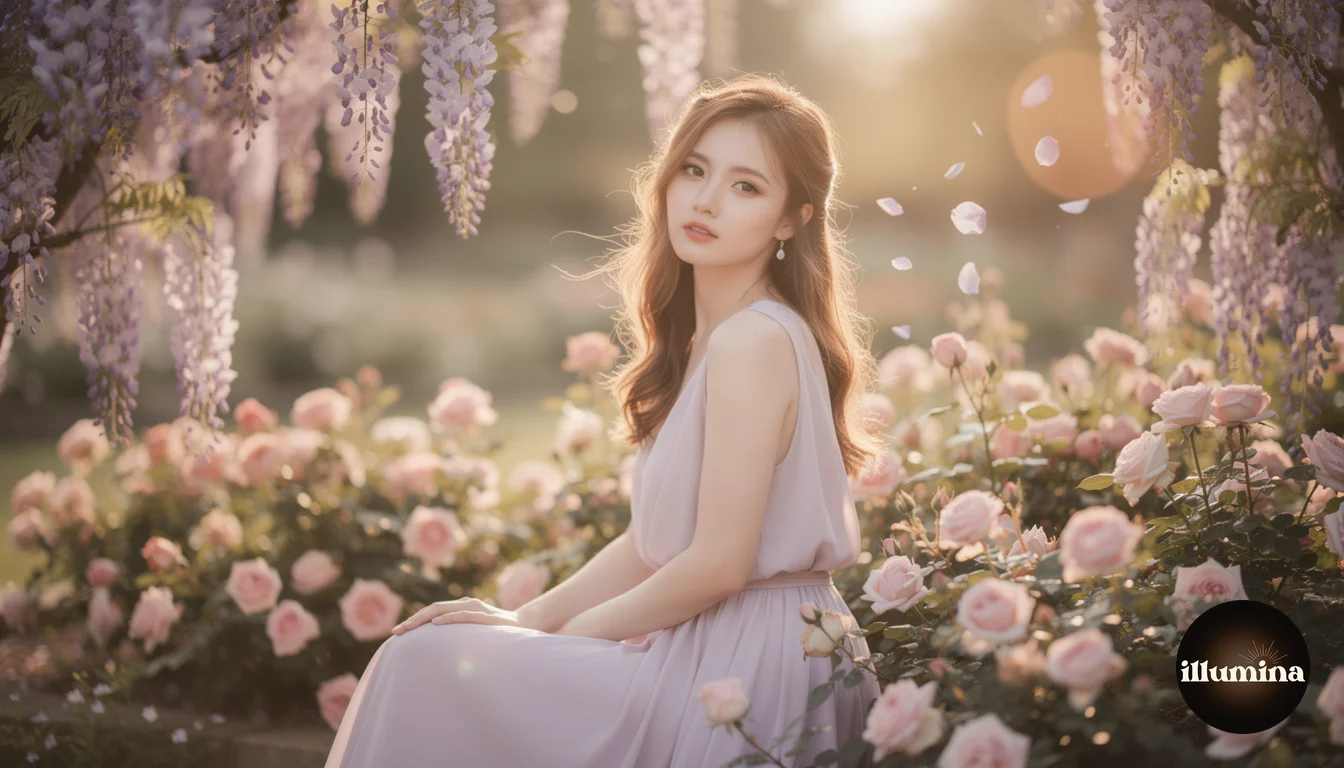
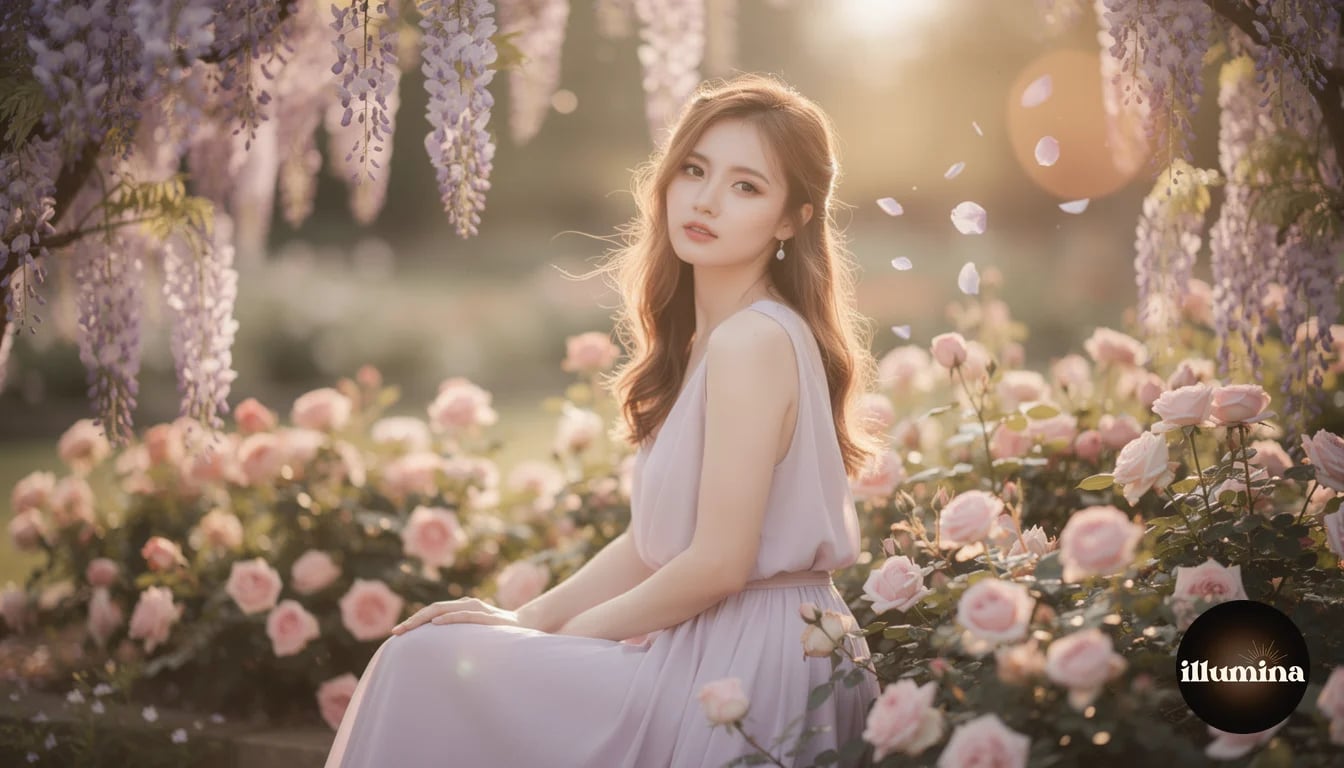
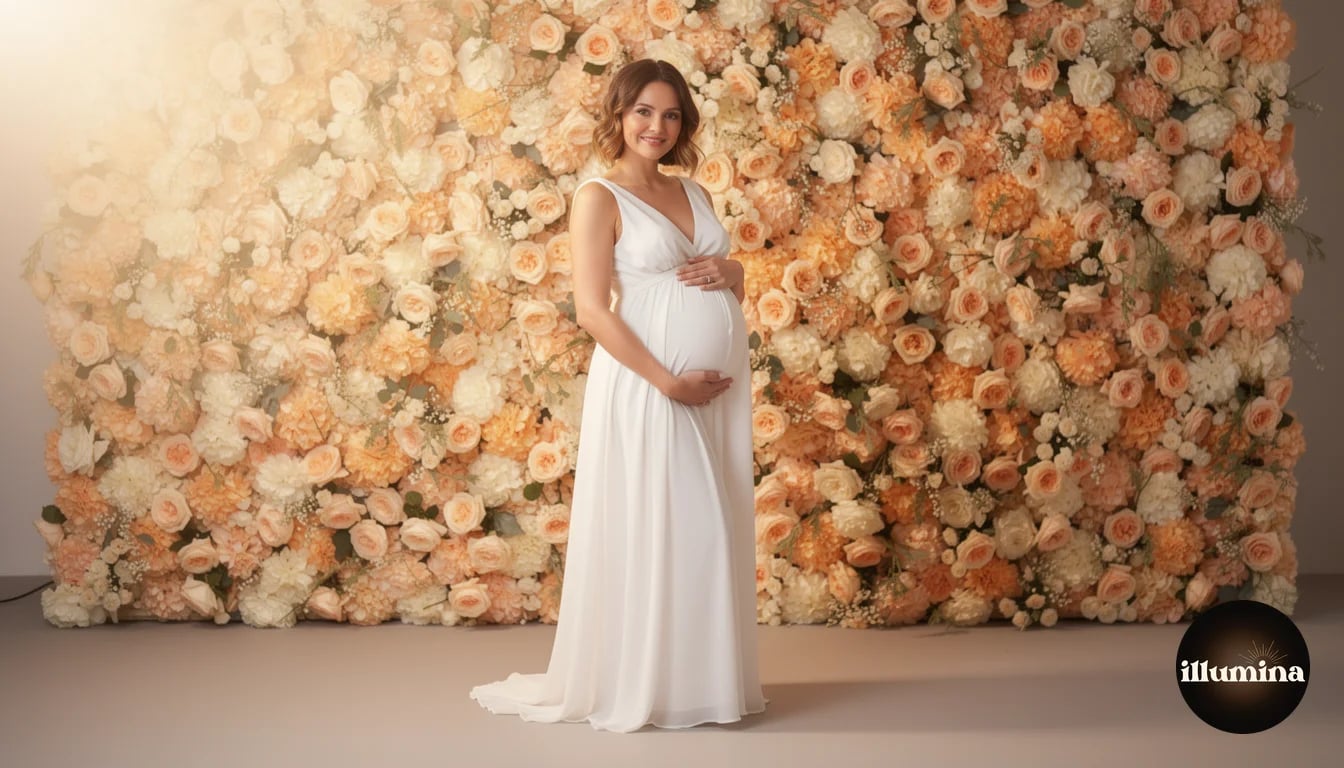
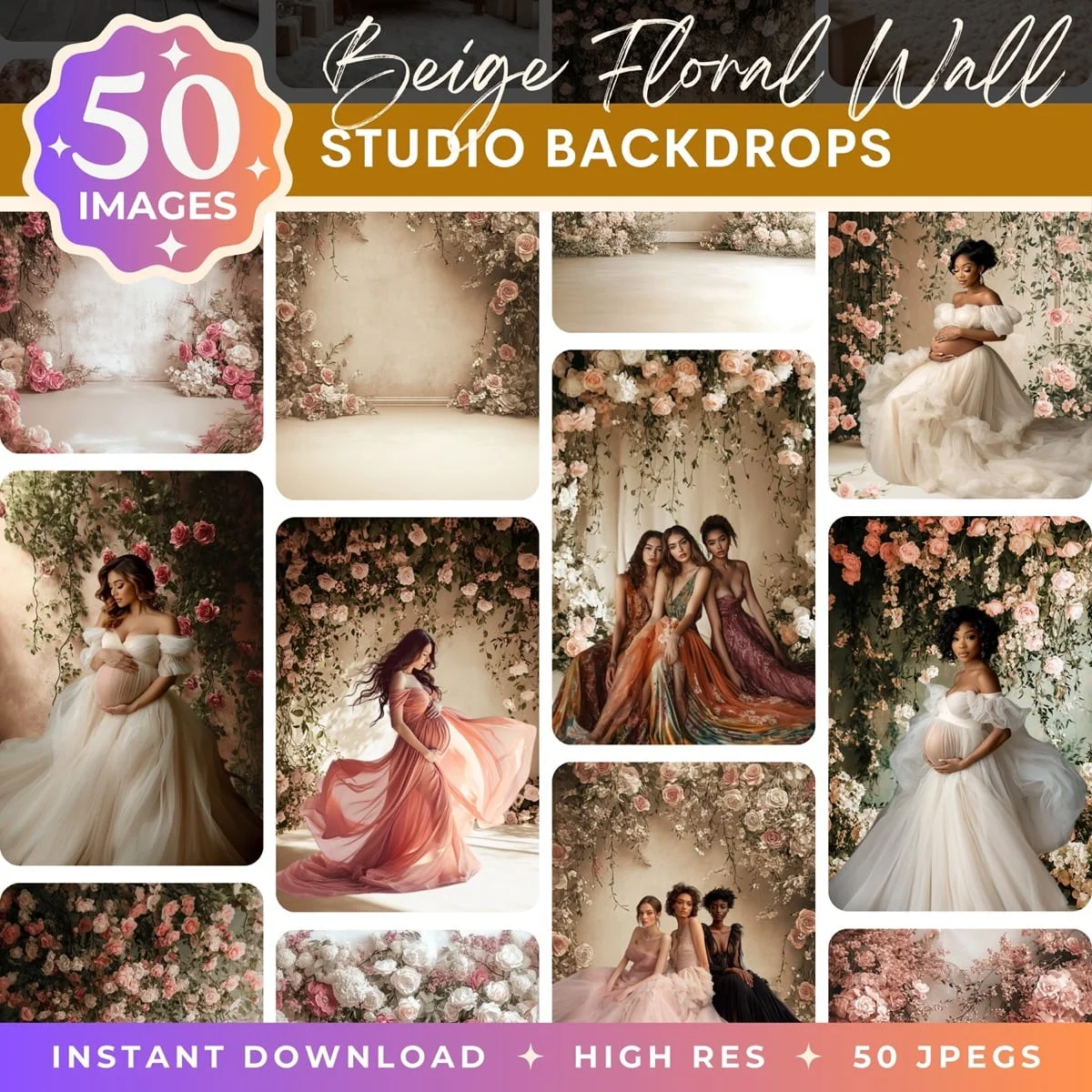
Dense arrangements of roses, peonies, hydrangeas, or mixed blooms covering the entire background. These create a lush, immersive look where the subject appears surrounded by flowers. Floral wall backdrops work best for maternity portraits, boudoir sessions, and fashion-influenced portraiture. The dense coverage means there are no distracting background elements, just color and texture that frame the subject beautifully.
Color palettes range from all-white (bridal, fine art) to blush pink and peach (maternity, newborn) to deep burgundy and wine (moody, editorial). The palette should complement the subject's skin tone and clothing. Warm skin tones photograph beautifully against cool-toned florals (lavender, blue hydrangea). Cool skin tones pair well with warm florals (peach roses, golden blooms).
Garden and Meadow Scenes
Natural outdoor settings with flowers growing in their environment: wildflower meadows, garden paths lined with roses, fields of lavender, orchards in bloom. These have more depth and context than floral walls, showing ground, sky, trees, and natural lighting. They work for any portrait genre but are especially effective for family photos, children's portraits, and lifestyle-style senior portraits.
The key advantage of garden scenes is believability. A subject composited onto a garden backdrop looks like they were photographed in a real garden. The natural depth, varied lighting, and organic imperfections of a real outdoor scene are much harder for viewers to identify as composited compared to a perfectly uniform floral wall.
Textured Floral Overlays
Rather than full-scene backdrops, textured overlays add floral elements to existing images. Rose petals scattered across the frame, out-of-focus blooms in the foreground creating bokeh, or flowering branches framing the top of the image. These work as additions to plain studio shots, adding floral elements without replacing the entire background.
Overlays are more subtle than full backdrops and give you creative control over how much floral influence appears in the final image. They layer on top of the subject rather than behind it, which creates a different spatial relationship and avoids the need for background removal entirely.
Fine Art and Painted Floral
Backdrops inspired by classical oil paintings, botanical illustrations, or impressionist floral still lifes. These are not photorealistic; they are intentionally artistic, creating a fine-art quality that works for creative portraiture, newborn sessions styled as Renaissance paintings, and editorial work. The painterly quality adds a timeless dimension that photographic backdrops do not achieve.
Matching Florals to Photography Niches
Maternity Photography
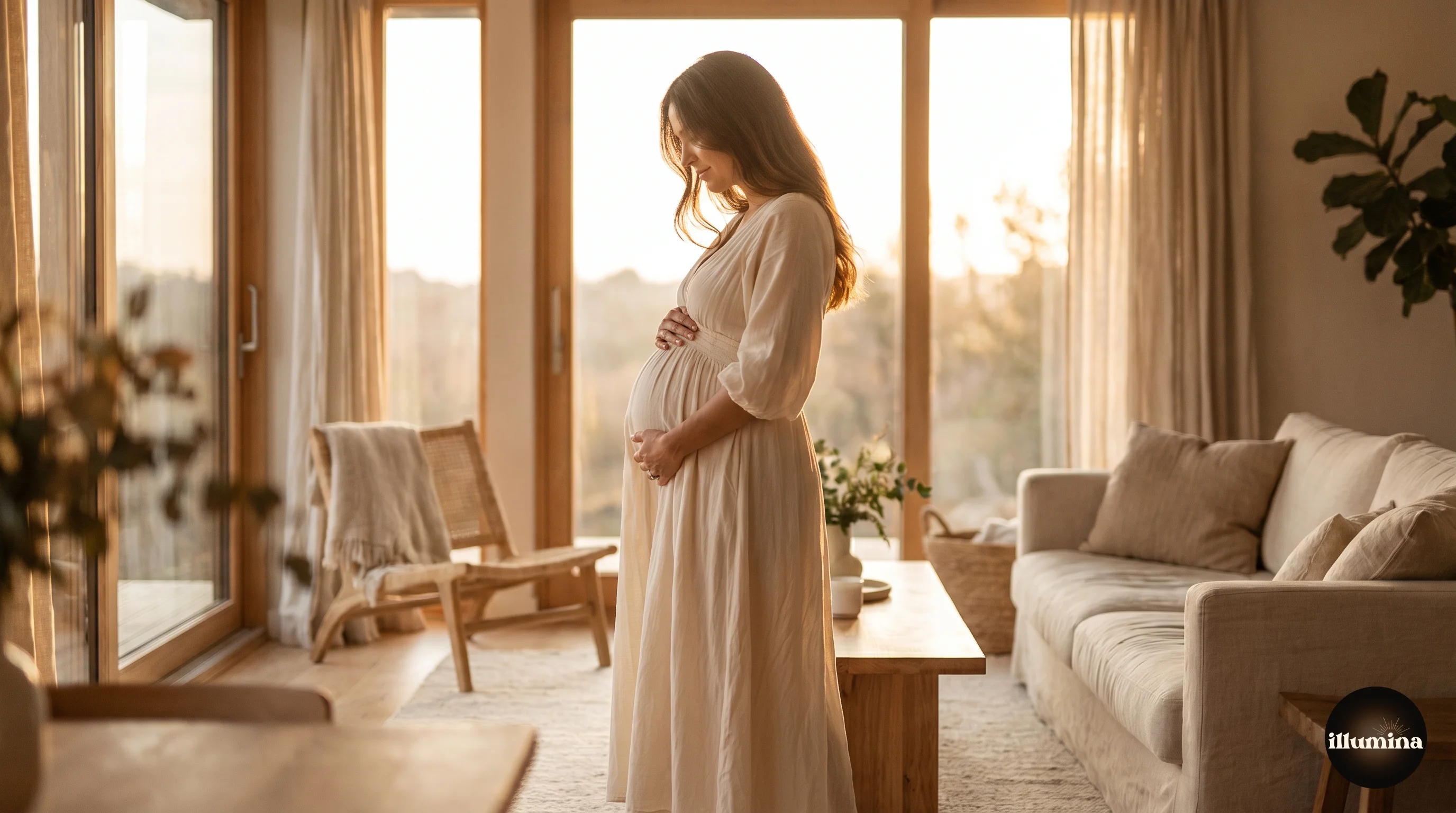
Soft, romantic florals dominate maternity sessions. Blush pink, cream, and peach roses. Wisteria and peonies. Garden gates draped in climbing flowers. The softness of the floral palette mirrors the tenderness of the subject matter. Avoid bold, saturated florals (bright red, vivid orange) for maternity work; they compete with the subject rather than framing her. The mother-to-be should be the brightest, most vibrant element in the image. Everything behind her should be softer and more muted.
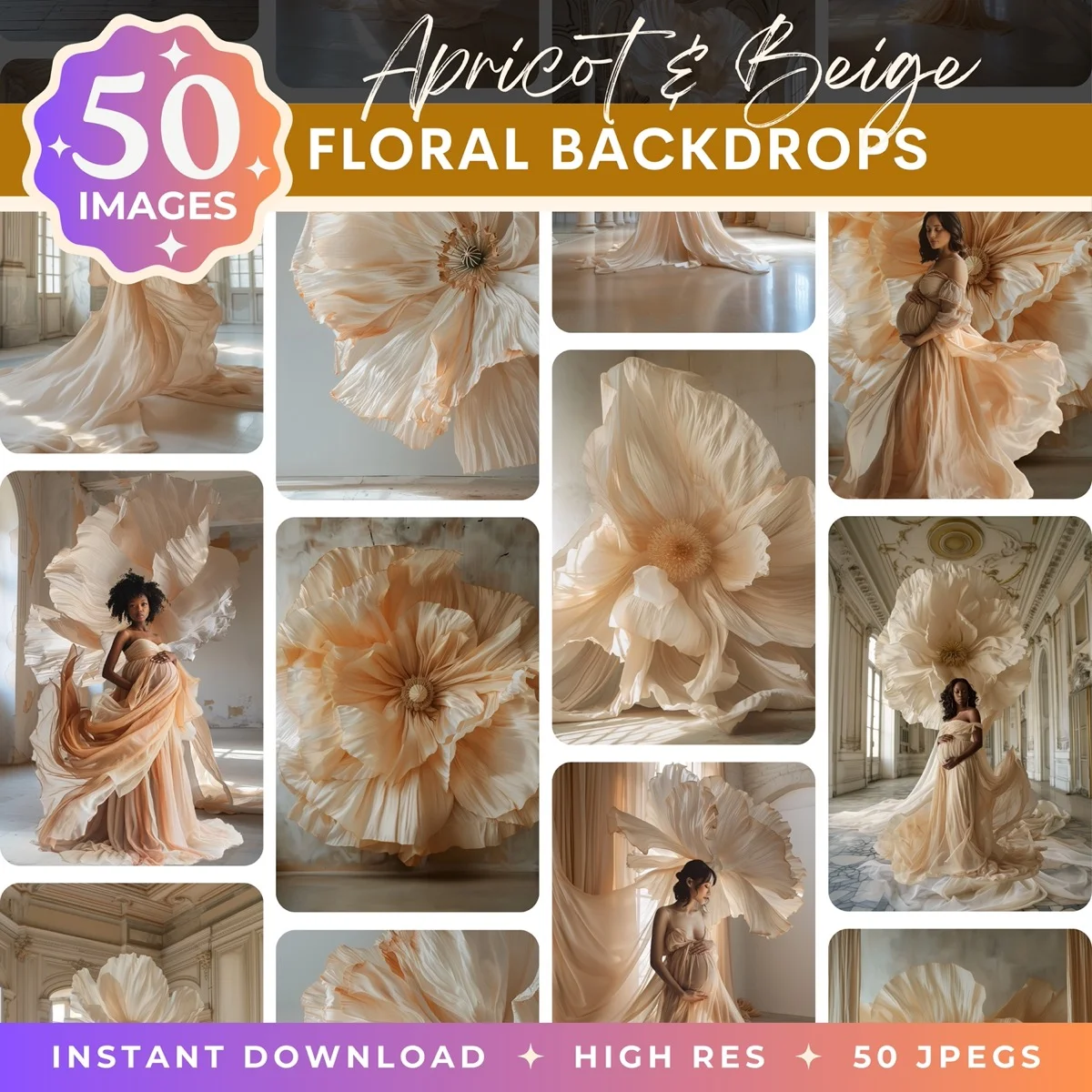
Our Apricot & Beige Floral collection is designed specifically for maternity and newborn compositing, with warm tones and soft focus that complement studio-lit subjects.
Newborn Photography
Newborn sessions need delicate, dreamy florals that do not overpower a tiny subject. Pastel flowers with lots of negative space work better than dense floral walls. Think: a single peony branch arching over the baby, a soft meadow with scattered wildflowers, or a creamy textured backdrop with subtle floral elements. Scale matters because a 7-pound baby next to life-size roses looks proportionally odd. Choose backdrops where the floral elements are either small-scale (tiny blossoms, baby's breath) or significantly out of focus (large roses rendered as soft bokeh shapes).
Family and Children
Natural garden scenes work best for families. A path through a blooming garden, a meadow at golden hour, or a park bench surrounded by flowering trees. These settings feel authentic and give the family space to interact naturally within the scene. Avoid overly formal or stylized floral arrangements for family work; they create a stiffness that contradicts the warmth families want in their portraits.
For children specifically, whimsical floral scenes (fairy gardens, flower-covered swings, enchanted forest clearings) create magical images that parents treasure. Kids interact naturally with these fantasy environments, and the playfulness of the scene encourages genuine expressions rather than forced smiles.
Senior Portraits
Modern senior portraits with florals tend toward editorial and fashion-influenced styles. A dramatic floral wall behind a confident senior. A meadow of wildflowers with cinematic color grading. An urban alleyway with unexpected vines and flowers growing through concrete. The florals add visual interest and sophistication without making the portrait feel childish or overly sweet. Seniors want to look cool, and the right floral backdrop achieves that when paired with the right styling and posing.
Let the client choose the floral style. Show them 5-6 options ranging from soft and romantic to bold and editorial. Their preference tells you exactly how they want to be perceived in their portraits, and delivering that specific vision builds loyalty and referrals.
Lighting for Floral Composites
Most floral backdrops simulate natural outdoor light: soft, directional, slightly warm. Your studio lighting should match this. A large softbox or octabox at 45 degrees provides the soft, directional quality that matches outdoor garden light. Avoid hard, specular lighting (bare flash, small modifiers) because it creates harsh shadows that look out of place against the soft, diffused quality of floral scenes.
Color temperature should be daylight balanced (5500K). Floral backdrops are almost always rendered in natural daylight tones, and matching your studio lights to this temperature ensures the subject blends seamlessly. If your lights are warm (tungsten), the subject will have an orange cast that clashes with the backdrop's natural tones. Our color matching guide covers the full workflow for correcting any remaining temperature mismatches in post.
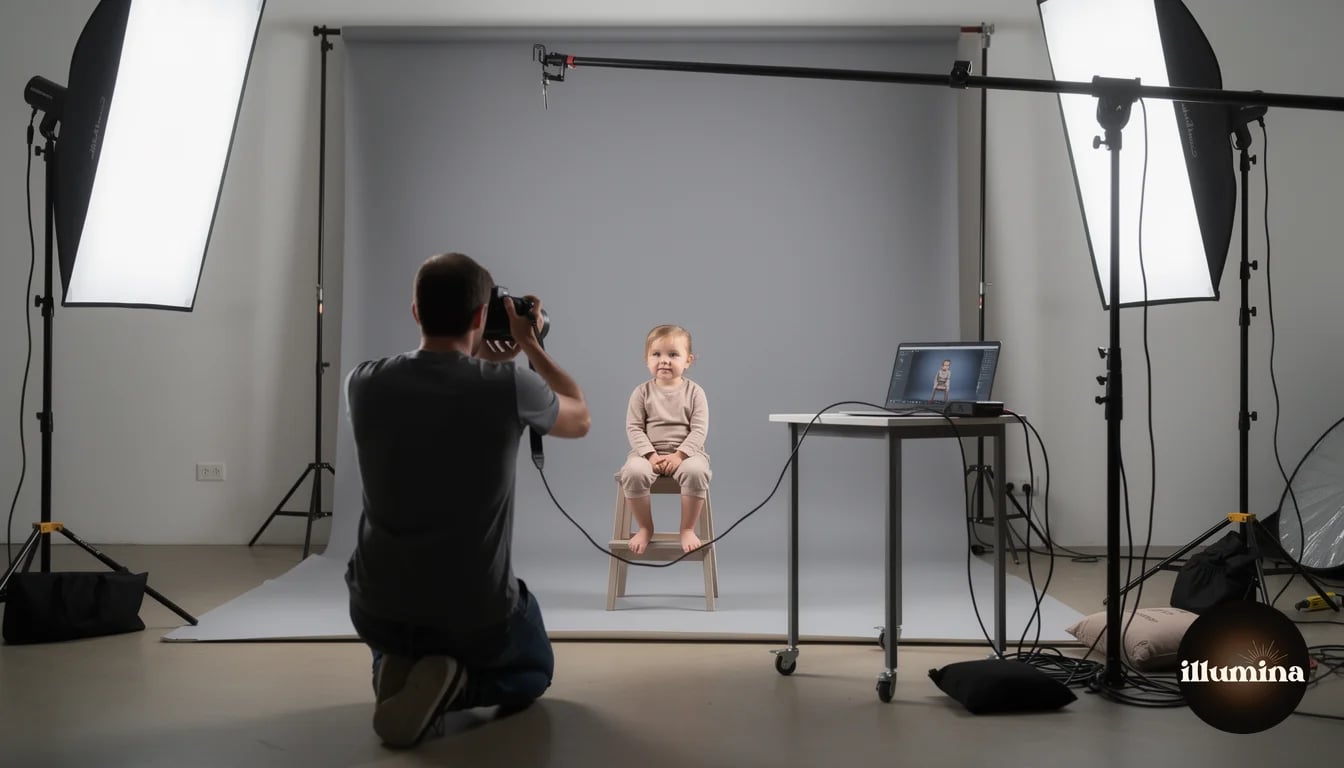
Add a hair light or rim light from behind to separate the subject from the gray backdrop during shooting. This creates a natural-looking edge highlight that mimics the backlit quality of outdoor golden-hour photography, which is exactly the lighting most floral backdrops depict.
Transform Your Photos
Give Your Photos the Wow Factor
Browse our collection of premium digital photo backdrops. 50 high-resolution print-ready backgrounds in each pack. Instant download.
Browse Backdrops
Building Your Floral Backdrop Library
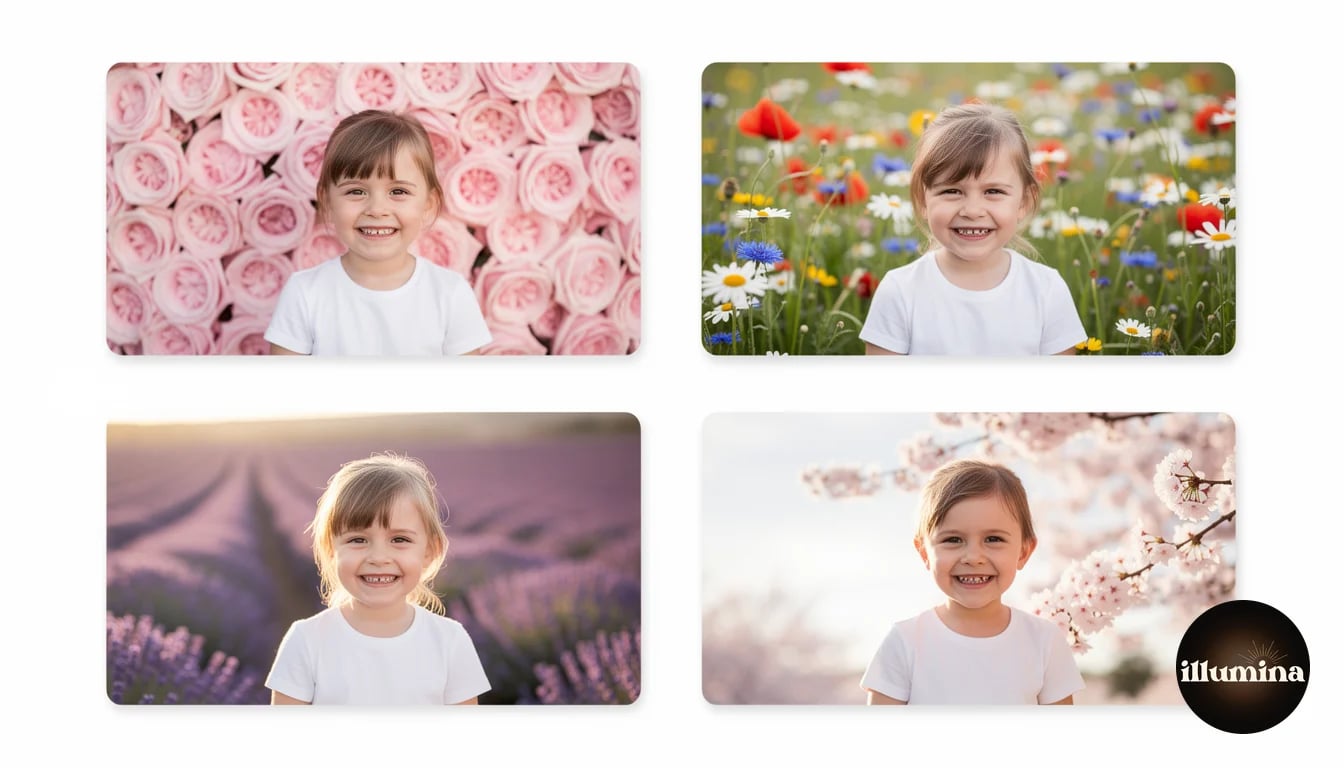
Start with a versatile core collection and expand based on client demand. A practical starter library includes: one blush/peach floral wall (maternity, newborn, boudoir), one wildflower meadow (families, children, seniors), one white/cream floral arrangement (bridal, fine art), and one seasonal floral (cherry blossoms for spring, autumn leaves with late blooms for fall).
These four covers 80% of the requests you will receive. As you identify which styles your clients gravitate toward, add variety in that direction. If maternity is your primary niche, expand with more wall and garden options in different color palettes. If children's portraiture is your focus, add whimsical and fantasy floral scenes.
Browse our complete collection to build a library that matches your photography style and client base. Every backdrop is designed at print-resolution with lighting that matches studio-lit subjects.
Seasonal florals are year-round sellers. Cherry blossoms in January, sunflowers in December, autumn leaves in March. Because you are compositing digitally, you can offer any season any time. This is a competitive advantage over location-dependent photographers who can only shoot cherry blossoms during two weeks in April.
Posing with Floral Backdrops
Floral backdrops invite softer, more relaxed posing than dramatic or sports-themed backdrops. Gentle angles, natural hand placement, and genuine expressions work better than power poses or rigid arrangements.
For maternity sessions against floral walls: the classic three-quarter turn with one hand on the belly and the other softly at the side. The curve of the body mirrors the organic shapes of the flowers. Flowing dresses in solid, muted colors (cream, blush, sage green) complement the floral palette without competing.
For families in garden scenes: walking together along a path, sitting on a blanket in a meadow, or standing in a loose group with natural interactions (holding hands, leaning on shoulders). The casual, connected posing matches the natural environment of the garden setting.
For newborns: minimal posing. A baby asleep in a soft wrap surrounded by (digitally added) flower petals, or cradled in a basket with floral elements composited around the frame. The simplicity of the pose lets the softness of the floral environment do the visual work.
For seniors: one shoulder toward the camera, chin slightly down, relaxed expression. Against a floral wall, this editorial pose creates fashion-magazine energy. In a meadow, a more dynamic pose (walking, looking over the shoulder, sitting in the grass) creates lifestyle-editorial energy. Match the pose energy to the backdrop energy.
Avoid having subjects hold real flowers that clash with the backdrop flowers. If the backdrop features pink roses and the subject is holding a bouquet of yellow sunflowers, the color clash is jarring. Either match the prop flowers to the backdrop flowers, or skip the props entirely and let the backdrop provide all the floral elements.
Editing Floral Composites
Floral composites benefit from a specific editing approach that enhances the romantic, ethereal quality of the backdrop while keeping the subject natural and grounded.
Start with color matching. Floral backdrops are typically warm-toned with soft contrast. Match your subject's color temperature to the backdrop using a Curves adjustment layer clipped to the subject. If the backdrop has a golden warmth, shift the subject slightly warmer. If the flowers have a cool lavender cast, add a subtle blue-purple to the subject's shadows. This integration step is what makes the composite feel like a single photograph rather than two images pasted together.
Lift the shadows gently. Floral portraits look best with an airy, light quality where the darkest tones are lifted above true black. This creates the dreamy, soft look that clients associate with floral imagery. In Curves, pull the black point up slightly (from 0 to about 15-20) to raise the shadow floor across the entire image.
Desaturate slightly and shift toward pastels. Most floral composites benefit from pulling overall saturation back 10-15% from camera defaults. This pushes vivid colors toward softer pastels that feel cohesive with the floral backdrop. Use the HSL panel to specifically target and soften any overly vivid tones, particularly greens (which can go neon) and reds (which can go harsh).
Add a subtle warm tone to the highlights. A Photo Filter adjustment layer (warming filter at 15-20% density) applied to the entire composite unifies the color palette and adds the golden glow associated with natural light portraiture. This is one of those finishing touches that takes five seconds to apply but makes the image feel professional rather than assembled.
For the mask edges, floral composites are more forgiving than other genres because the organic, irregular shapes of flowers and foliage visually distract from any minor edge imperfections. A slightly rough mask edge that would be obvious against a solid-color backdrop becomes invisible against a complex floral background. This makes floral backdrops excellent for photographers who are still building their masking skills.
Seasonal Floral Strategies
Different flowers peak at different times of year, and aligning your offerings with seasonal demand maximizes both relevance and revenue.
Spring (March through May): Cherry blossoms, tulips, wisteria, magnolias, and wildflower meadows. Spring is the strongest season for floral backdrops because families are booking spring sessions, Easter photos, and Mother's Day portraits. This is when to push floral options hardest in your marketing.
Summer (June through August): Sunflowers, lavender fields, garden roses, and tropical blooms. Summer florals tend to be bolder and more saturated than spring options. Senior portrait season overlaps with summer, making bold floral walls popular for editorial-style senior sessions.
Fall (September through November): Autumn florals combine late blooms (chrysanthemums, dahlias) with changing foliage. The warm amber and burgundy tones of fall florals work beautifully for family sessions and mini sessions. Fall mini sessions with floral-accented autumn scenes are a strong revenue category.
Winter (December through February): Holiday florals (poinsettias, pine and berry arrangements, white winter roses) and evergreen arrangements. Winter is also the time for fine-art floral work: dark, moody still-life-inspired backdrops with deep reds, emerald greens, and gold accents.
The beauty of digital floral backdrops is that you are not limited by actual growing seasons. Offer cherry blossoms in November for a client who wants spring portraits as holiday gifts. Provide sunflower fields in February for a couple planning summer wedding invitations. Your backdrop library exists outside of time, and marketing that flexibility is a competitive advantage.
Create themed mini session packages around seasonal florals. A "Spring Bloom Mini" in March, "Sunflower Sessions" in July, "Autumn Garden Minis" in October. Each package features 2-3 backdrop options from that season's floral collection, a 15-20 minute session, and 10-15 edited composites. Price at $150-200 per mini session and book 8-10 per day. The seasonal theme creates urgency (limited time offering) and the floral aesthetic sells itself on social media where transformation posts and beautiful final images generate shares and bookings.
Cross-promote floral sessions with related products. Partner with local florists to offer fresh flower crown props that match your digital floral backdrops. The physical flowers in the subject's hair extend the floral theme into the foreground and create a more immersive final image. The florist gets exposure to your client base, you get professional-quality props, and the client gets a complete floral experience.
Build a floral portfolio page on your website dedicated exclusively to floral portrait work. Group images by niche (maternity, newborn, family, senior) and by season. This page becomes a landing destination for clients searching specifically for floral portrait photography, which is a growing search category as digital backdrops make the style more accessible to photographers outside of areas with natural bloom locations.
Elegant floral scenes for every portrait niche
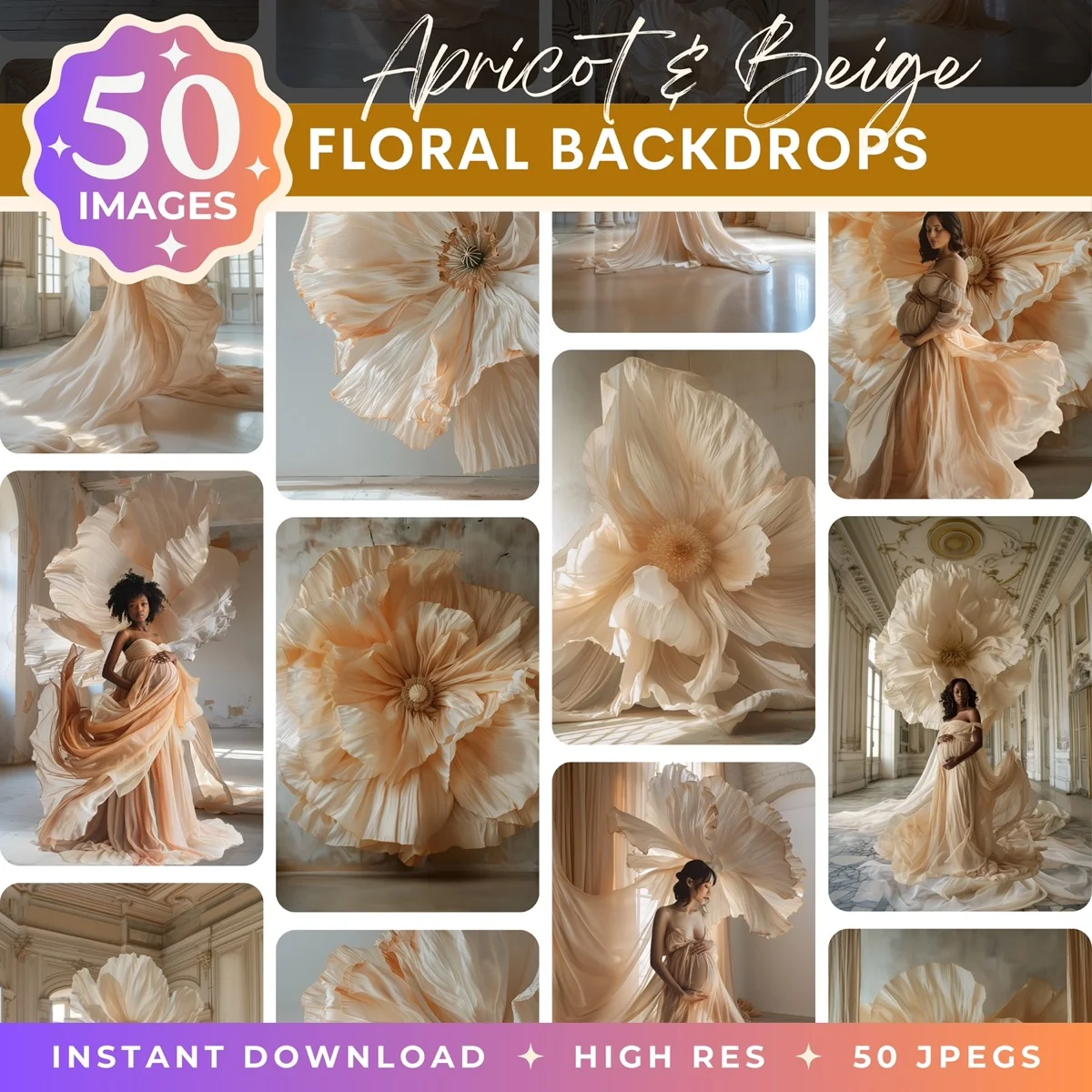
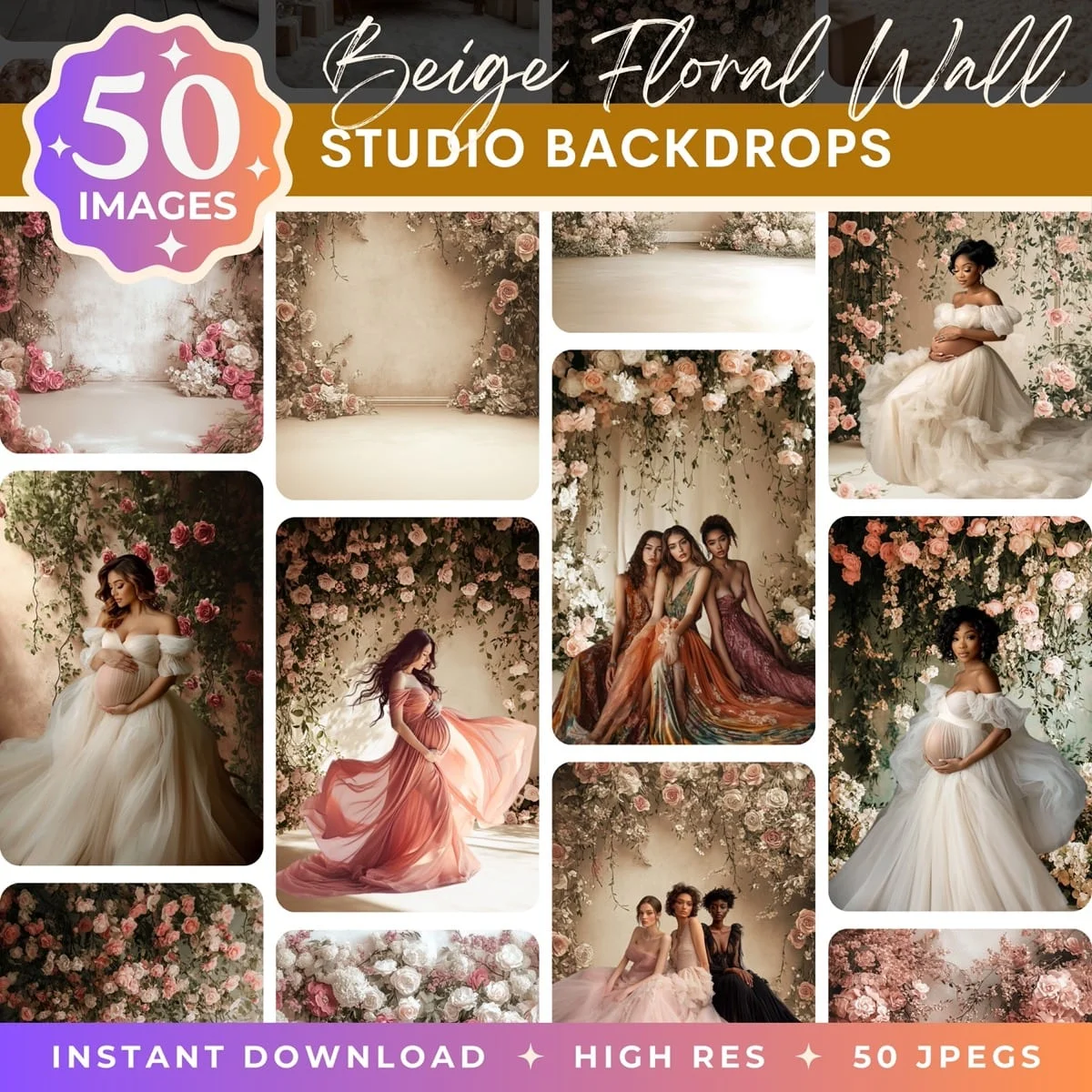
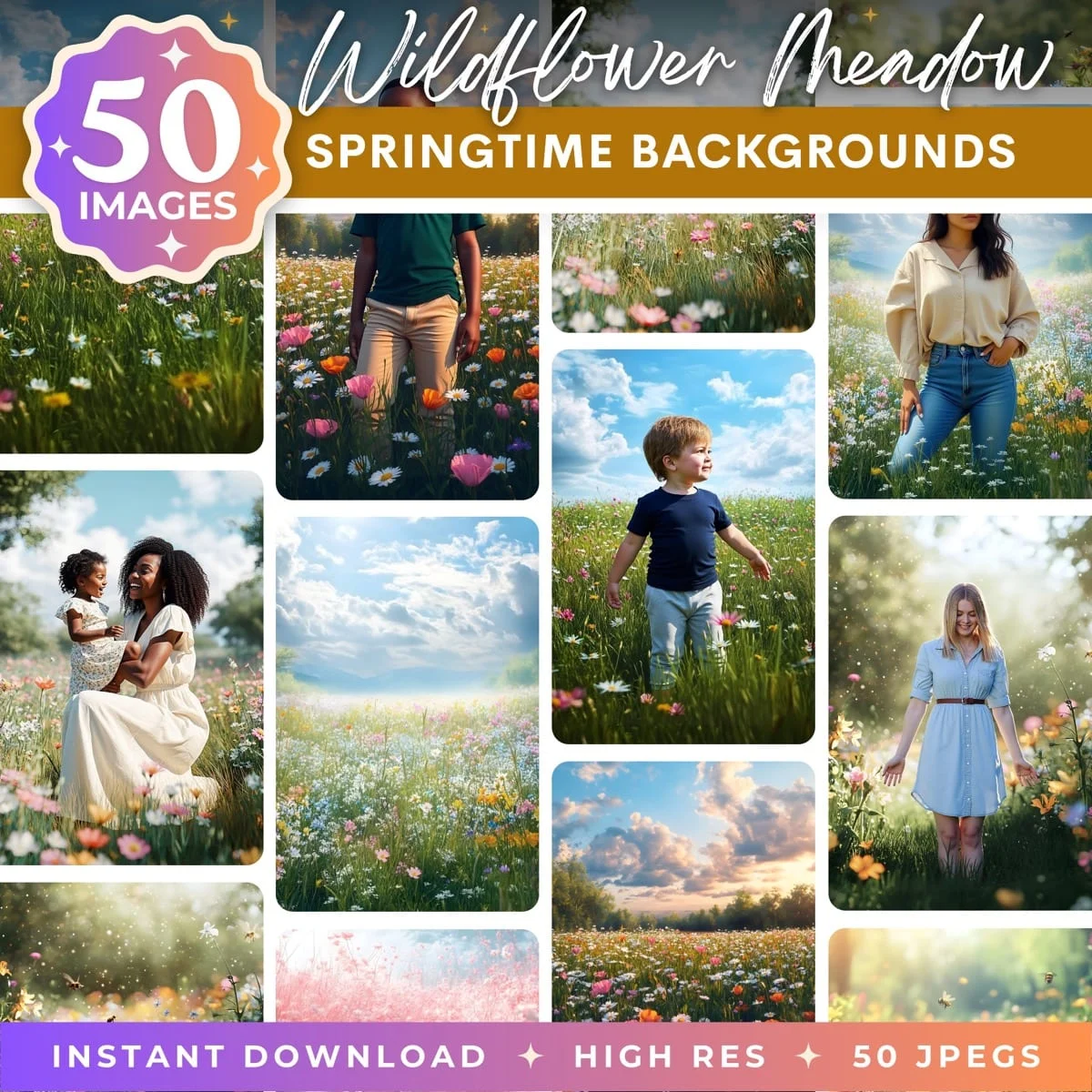
Floral backdrops endure as the most requested category in portrait photography because flowers are universally beautiful and emotionally resonant. They work across every portrait niche, every season, every age group, and every skill level. Build a core library of four to six floral scenes, match your lighting to outdoor daylight, and offer clients the bloom-filled portraits they are searching for, regardless of what is actually growing outside your studio window.
Transform Your Photos
Give Your Photos the Wow Factor
Browse our collection of premium digital photo backdrops. 50 high-resolution print-ready backgrounds in each pack. Instant download.
Browse Backdrops