
Quick Answer
Sports trading cards are one of the most profitable add-on products in youth sports photography. Photograph each player against a plain backdrop, composite them onto a dramatic digital background, add the card layout (name, number, team, stats) in Photoshop or Canva, and print on heavy card stock. Parents buy them for $15-30 per set (usually 8-10 cards), and the cost to produce is under $2 per set when printed in volume. A single team of 15 players at $20 per set generates $300 in product revenue on top of your session fees, with about 30 minutes of template work and batch processing.
This guide covers the photography setup, template design, digital backdrop compositing, printing specifications, pricing strategy, and marketing approach for adding sports trading cards to your photography business.
Why Sports Trading Cards Sell
Kids love trading cards. They collect them, trade them with teammates, and display them in their rooms. Parents love them because they are an affordable keepsake that captures their child's sports participation at a specific age and season. Coaches buy sets for end-of-season gifts. Grandparents buy sets because grandparents buy everything with their grandchild's face on it.
The psychology behind trading card purchases is different from standard portrait buying. With portraits, parents deliberate over which images to buy, how many to print, and what size to order. With trading cards, the decision is simple: yes or no. The price point ($15-30 per set) is low enough that it feels like an impulse buy, not a considered investment. This makes trading cards one of the highest-conversion products in sports photography because the barrier to purchase is almost nonexistent.
Trading cards also serve as marketing. When a kid brings their cards to school and shows friends, those friends ask "where did you get those?" Every set of cards is a 10-piece advertising campaign distributed by your most enthusiastic brand ambassador: a proud young athlete.
Photography Setup
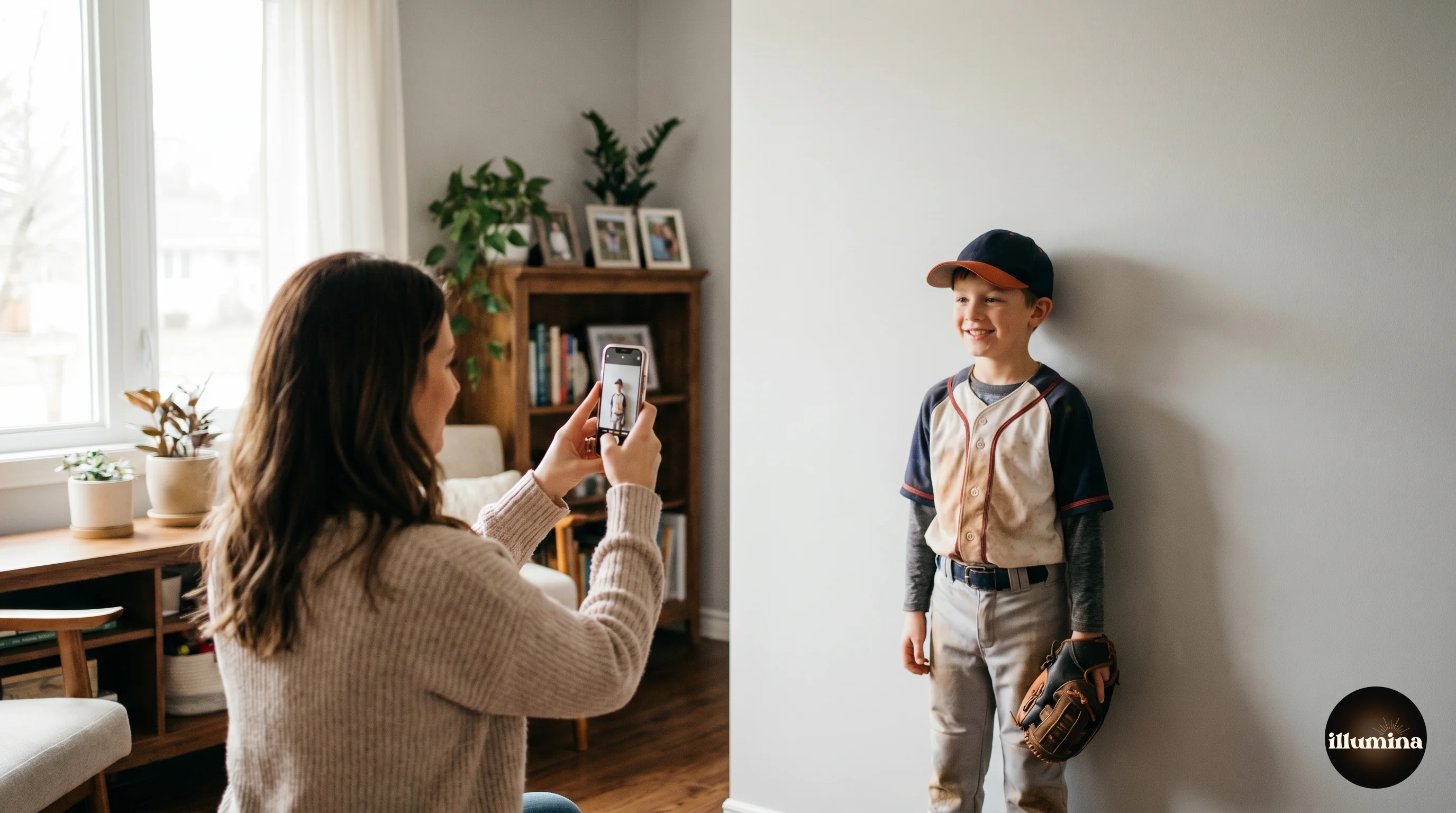
The shooting setup for trading card portraits is identical to any digital backdrop composite session. Gray seamless backdrop, two lights (main softbox at 45 degrees, fill reflector opposite), camera at the player's eye level.
Shoot two poses per player: one action pose (batting stance, shooting form, throwing motion) and one portrait pose (arms crossed, hands on hips, ball held at chest). The action pose goes on the front of the card. The portrait pose can go on the back or serve as an alternate card design.
Consistency across the team matters more than individual creativity. Every player should be lit the same way, positioned at the same distance from the camera, and shot at the same focal length. This consistency means your template and compositing workflow applies identically to every player without individual adjustments, which is what makes batch processing possible.
Shoot at f/5.6 to f/8 for maximum sharpness across the subject. Trading cards are small (2.5x3.5 inches standard), so every pixel of sharpness counts. A slightly soft image that looks fine at 16x20 becomes noticeably blurry at trading card size because the viewing distance is much closer.
Shoot every player against the same backdrop at the same focal length. This is not a creative decision. It is an efficiency decision. When every source image is consistent, your Photoshop action or batch process runs without intervention. One template, one action, 15 finished cards in 30 minutes. Inconsistency means manual adjustment for every player, which kills your per-card profit margin.
Template Design
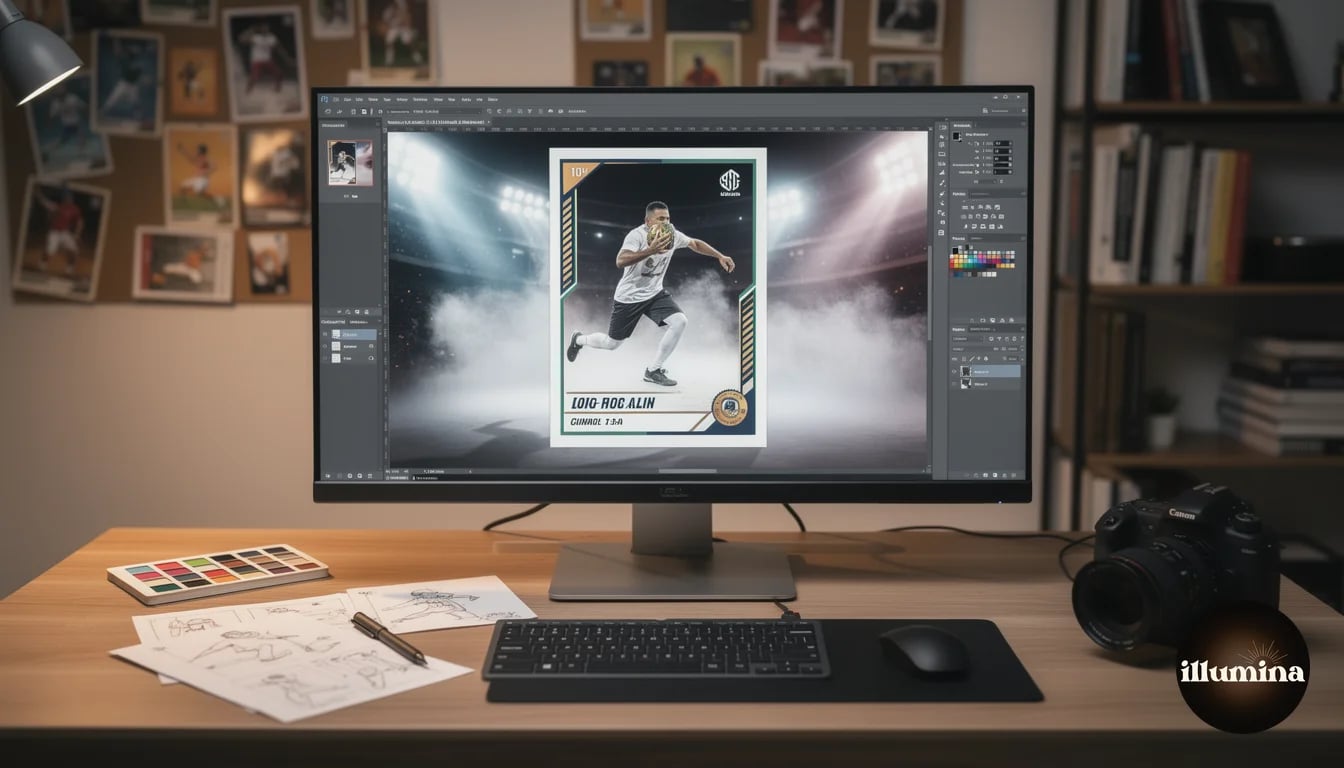
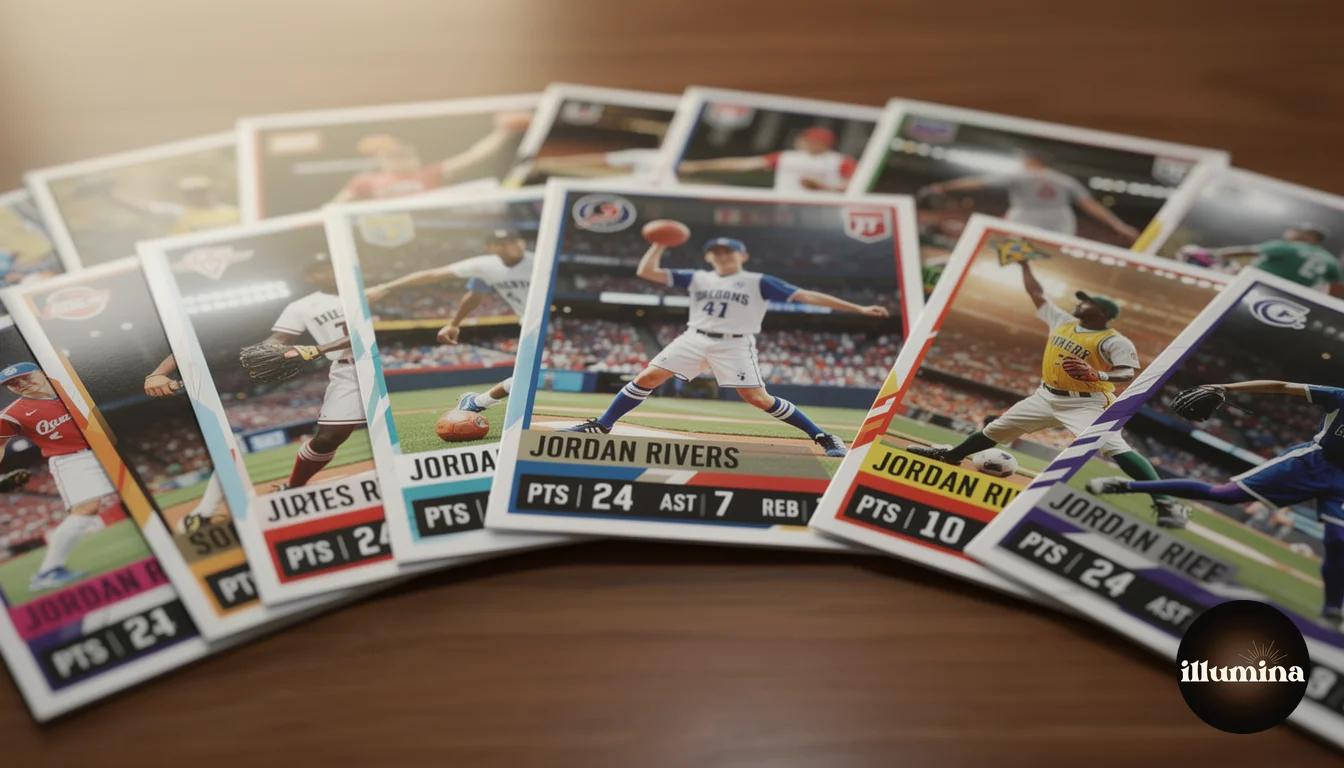
A trading card template has four elements: the background (digital backdrop), the player (composited subject), the frame/border (card design), and the text (name, number, team, position, stats).
Card Dimensions
Standard trading card size is 2.5 x 3.5 inches (63.5 x 88.9 mm). At 300 DPI, your template canvas should be 750 x 1050 pixels plus bleed. Add 0.125 inches (38 pixels) of bleed on all sides, making your working canvas 826 x 1126 pixels. Design your content within the safe area (keeping text and important elements 0.125 inches inside the trim line) to ensure nothing gets cut off during printing.
Background and Backdrop
The digital backdrop fills the entire card behind the player. Dramatic, bold backdrops work best at trading card size because subtle, detailed scenes lose their impact when shrunk to 2.5x3.5 inches. Fog and lights, fire and smoke, stadium tunnels, and abstract energy effects all read clearly at small scale. Detailed outdoor scenes (parks, forests, fields) become muddy blobs at card size and should be avoided.
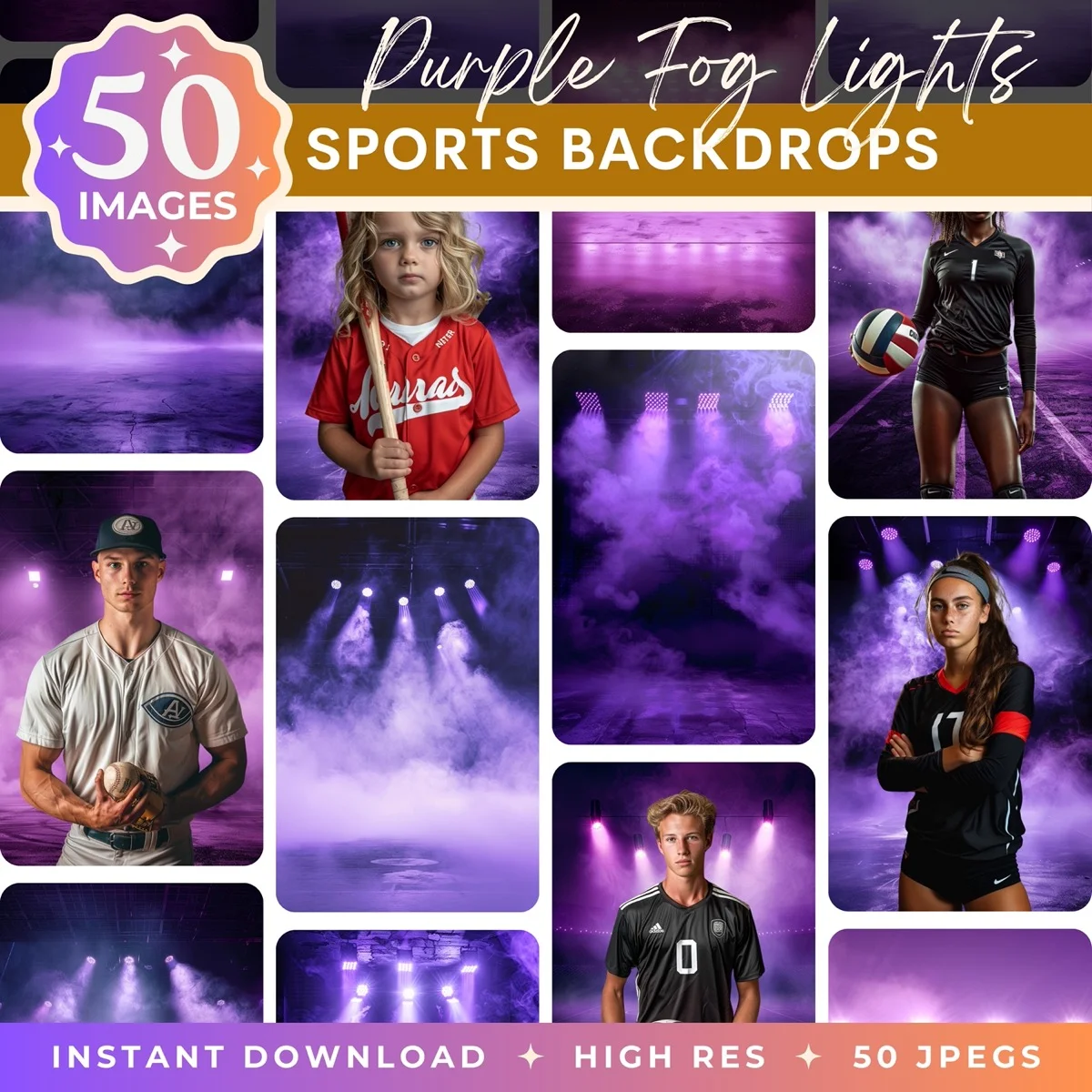
Use backdrops from our Fog & Lights or Tunnel & Lights collections, which are designed for dramatic sports compositing that works at both poster and card sizes.
Frame and Border Design
The frame gives the card its identity. It should include the team colors, a clean border that separates the image from the edge, and designated areas for text. Keep the design clean and bold. Fine details, thin lines, and small decorative elements disappear at trading card scale. Thick borders, bold color blocks, and high-contrast design elements maintain readability.
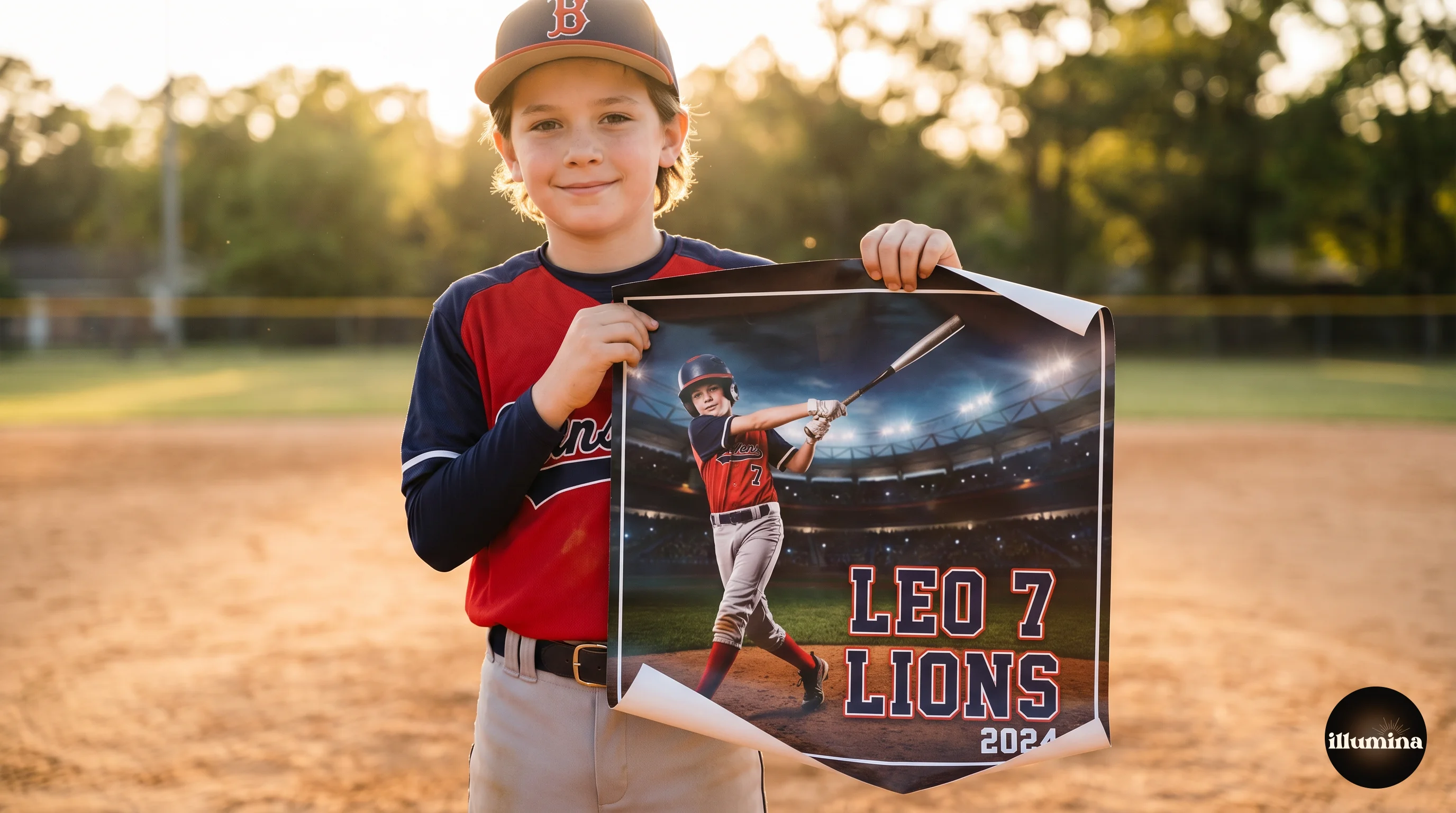
Design one template per team and reuse it for every player. The template has smart object layers for the player photo and the backdrop, and editable text layers for the player's name, number, and position. Swapping players is a matter of replacing the smart object content and updating the text. Each card takes 2-3 minutes once the template is built.
Typography
Use bold, clean fonts. Player names should be at least 14pt equivalent at final print size. Numbers and stats should be at least 10pt. Avoid script fonts, thin weights, or decorative typefaces that become illegible at small sizes. Sans-serif fonts (Bebas Neue, Impact, Montserrat Bold) work best for sports cards because they are readable at any size and convey athletic energy.
Transform Your Photos
Give Your Photos the Wow Factor
Browse our collection of premium digital photo backdrops. 50 high-resolution print-ready backgrounds in each pack. Instant download.
Browse Backdrops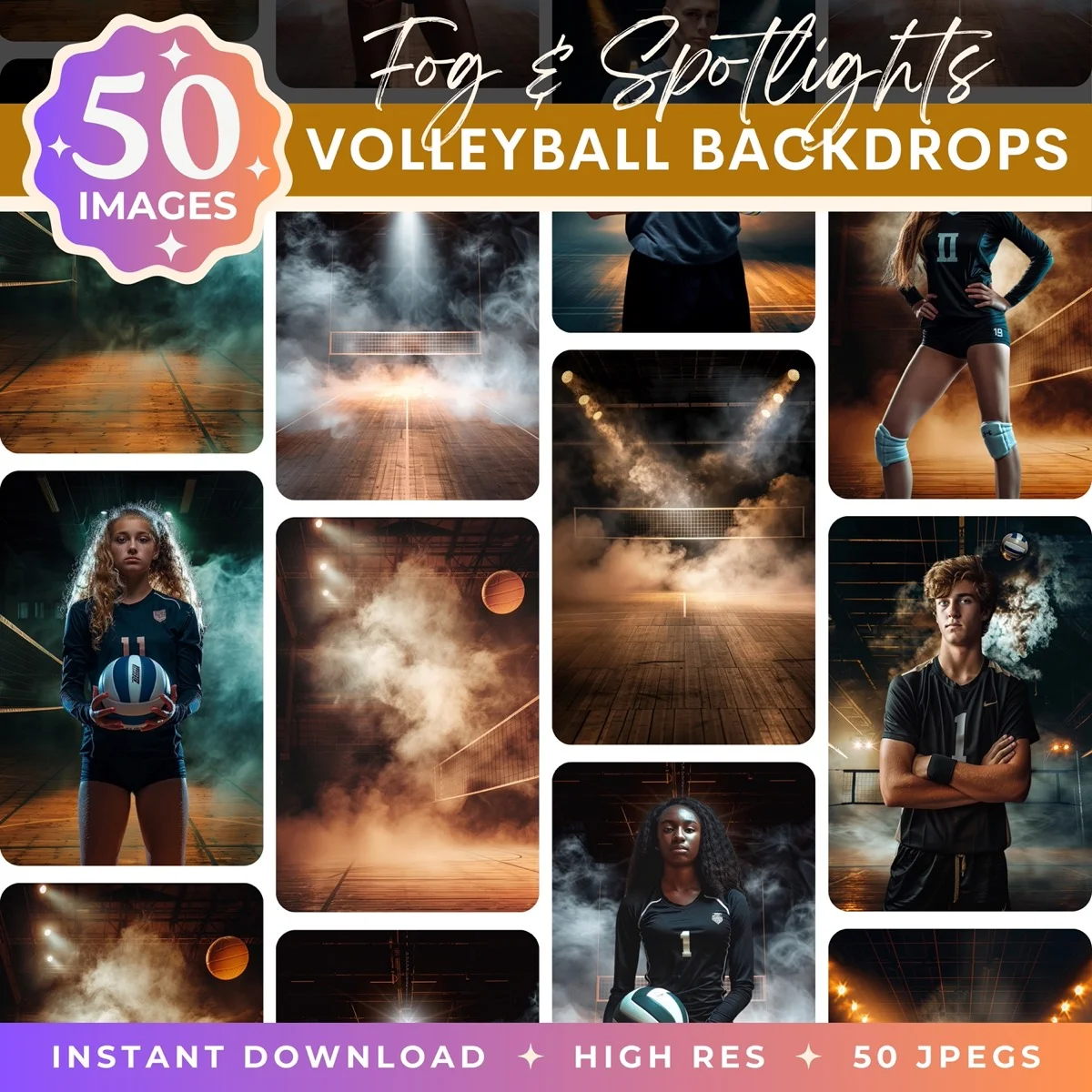

Compositing for Cards
The compositing workflow for trading cards is the same as any digital backdrop composite but with tighter quality requirements because the small format magnifies imperfections.
Selection quality needs to be perfect. At card size, a halo or rough edge that would be invisible on a 16x20 print becomes a visible artifact. Use Photoshop's Select Subject followed by careful refinement in Select and Mask. Pay particular attention to hair, jersey edges, and any held equipment (bats, balls, helmets). The Photoshop background removal tutorial covers the full selection workflow.
Color matching is critical. The player's skin tones and uniform colors need to sit naturally within the backdrop's color palette. Use a Curves adjustment clipped to the player layer to match temperature and contrast. The color matching guide walks through this step in detail.
Add a contact shadow beneath the player to ground them in the scene. Even at card size, the absence of a shadow creates a floating-cutout look that undermines the dramatic quality of the backdrop.
Create a Photoshop action for your compositing workflow. Record the steps: open player image, select subject, refine mask, copy to card template, resize and position, apply curves adjustment, add shadow layer. Run the action for each player and make minor adjustments as needed. The action handles 80% of the work automatically, and the remaining 20% is fine-tuning that takes 1-2 minutes per card.
Printing Sports Trading Cards
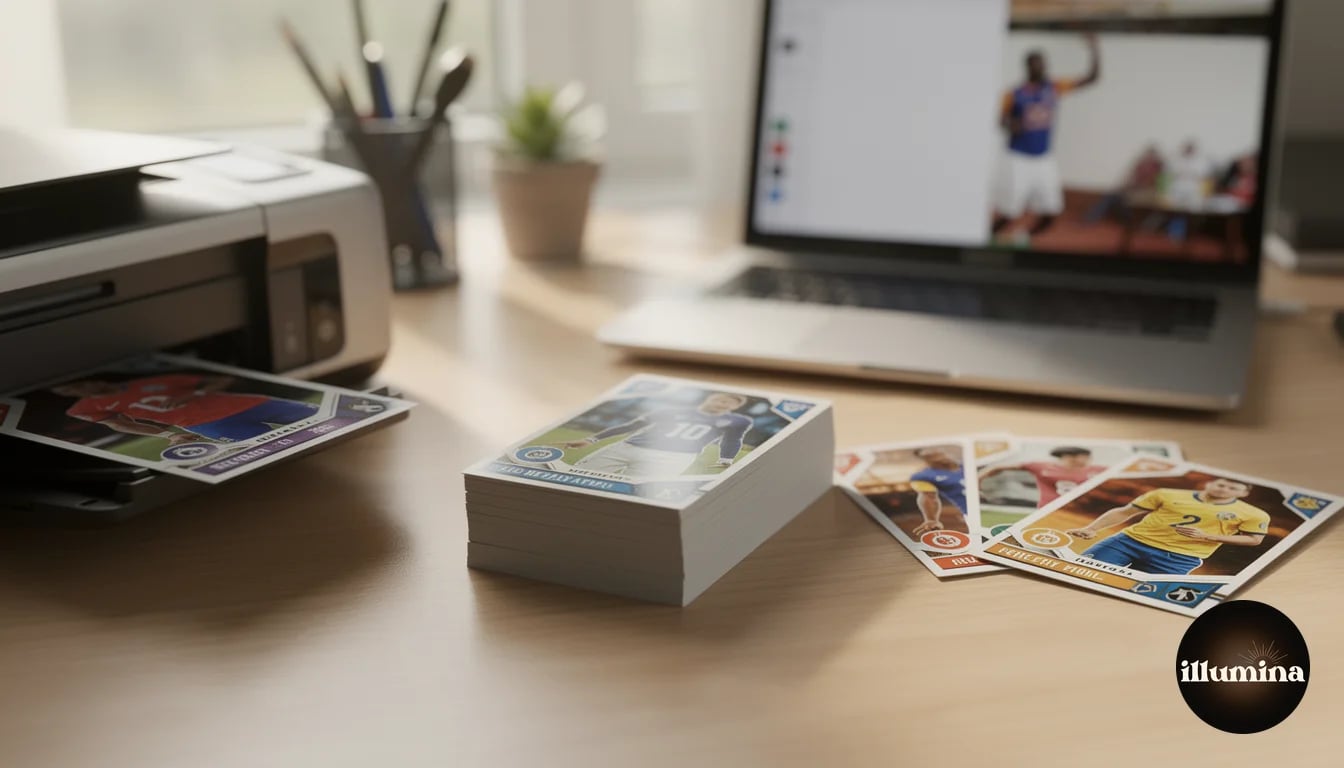
Trading cards require heavy card stock, precise cutting, and optional finishing (gloss coating, UV spot, rounded corners). Standard photo labs do not offer these specifications, so you need a specialty printer.
For small runs (1-5 teams), print-on-demand services like GotPrint, Moo Business Cards (custom size option), or Vistaprint offer heavy card stock printing with custom sizes. Order as "custom cards" at 2.5x3.5 inches on 16pt card stock with gloss or matte finish. Cost runs $0.10-0.25 per card depending on quantity and finish.
For larger runs (10+ teams, leagues), commercial print shops offer better per-unit pricing. Provide print-ready PDF files at 300 DPI with crop marks and bleed. Cost drops to $0.05-0.10 per card at quantities of 500+. Some sports photography suppliers (like H&H Color Lab or Sports Image Group) offer trading card printing services specifically designed for photographers, with templates and bulk pricing.
Packaging matters. A set of 8-10 cards in a clear cellophane sleeve with a team header card looks professional and gift-ready. The packaging costs pennies per set but elevates the perceived value significantly. A rubber-banded stack of loose cards feels like a craft project. A sealed pack feels like a product.
Pricing and Selling
Trading card pricing should be simple and impulse-friendly. Common pricing: set of 8 cards (one of each design) for $20-25. Add-on pricing when bundled with a portrait package: $15-18 per set. Team pricing (every player gets a set): $12-15 per set when the coach or league orders for the entire team.
The team/league package is the highest volume opportunity. Approach the coach or league administrator and offer a package where every player gets a set of trading cards included in the team photography fee. The per-set cost is lower, but you sell to every player on every team rather than waiting for individual parents to opt in. A league of 10 teams with 15 players each at $12 per set is $1,800 in trading card revenue alone.
Sell trading cards alongside your standard portrait packages, not instead of them. Position cards as a fun add-on that kids love, which parents can add to any portrait order for a flat fee. The low price point means most parents say yes, and the incremental revenue adds up quickly across a season of team photography.
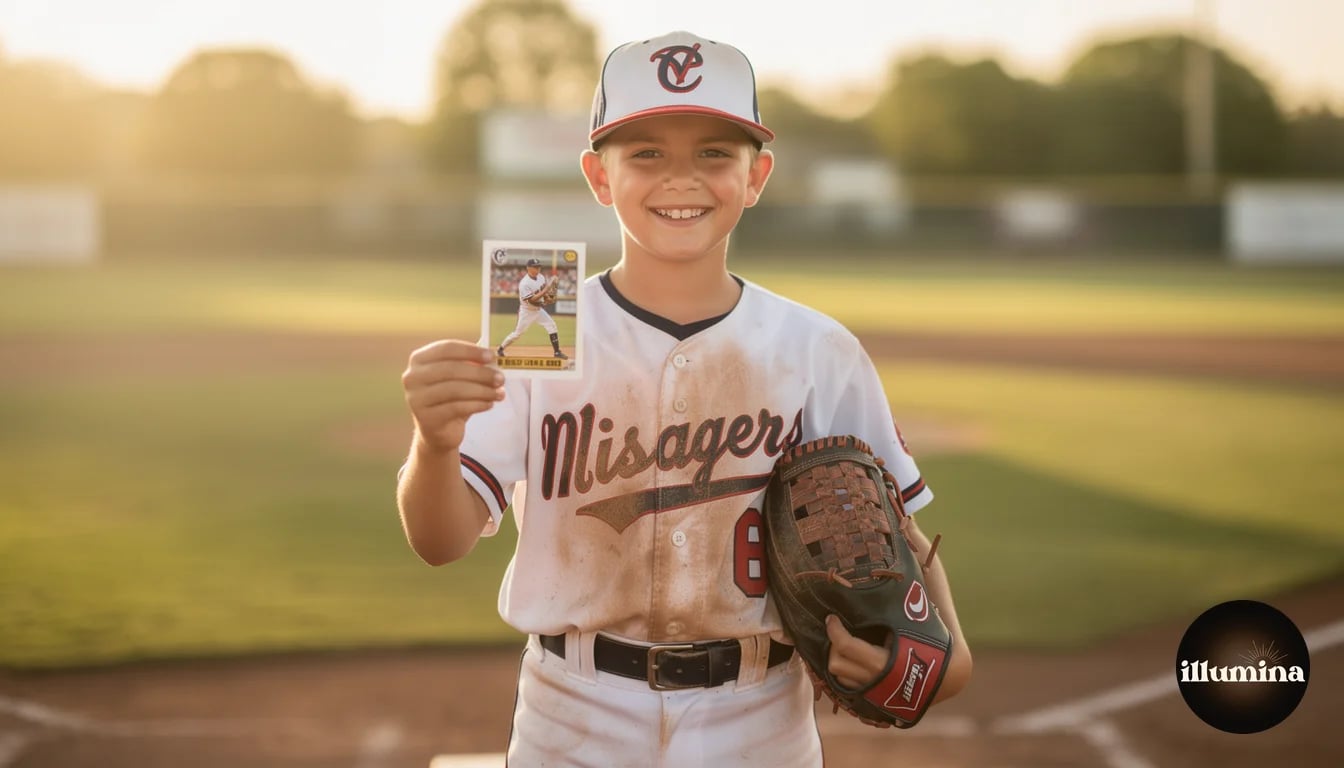
Give each player one free sample card at the team photo session. Hand the player their card, watch their face light up, and let the parents see the quality in person. The sample card costs you $0.15 to print and generates a $20 sale at a conversion rate that makes every other marketing channel look expensive by comparison. Kids who hold their own trading card always want the full set.
Expanding the Product Line
Once your trading card workflow is established, the same compositing and template approach extends to other products.
Sports posters (8x10 or 11x14). Same composite, different layout. The player on a dramatic backdrop with their name, number, and team in bold typography. Posters sell for $15-30 and cost $2-5 to print. Many parents order both a poster for the bedroom wall and a card set.
Magazine covers. A custom magazine cover layout with the player as the cover athlete. "Sports Illustrated" inspired layouts with headlines like "Player of the Year" or the team's actual season stats. These print at 8.5x11 on glossy stock and sell for $20-35. The novelty factor is extremely high, and kids lose their minds seeing themselves on a magazine cover.
Memory mates. A traditional sports photography product: the team photo and individual portrait combined in a single composite layout. Memory mates are a staple of school and youth sports photography, and they integrate seamlessly into a trading card workflow because the compositing skills are identical.
Calendar cards. A wallet-sized card with the player on one side and their team's game schedule on the other. Practical and collectible. Parents keep these in their wallets, coaches hand them out at games, and the team schedule format means they get used all season long.
Working with Teams and Leagues
The most efficient way to sell trading cards is through team and league relationships rather than individual parent sales. When you secure a team or league contract, every player becomes a customer automatically, and your revenue scales with roster size rather than individual marketing effort.
Approach coaches first. Attend a practice or game, bring sample cards from a previous team, and explain the offer. Most coaches love the idea because it gives their players something special and makes the coach look thoughtful for arranging it. Offer the coach a free set as a thank-you for organizing the team's participation.
For league-level deals, contact the league administrator or board of directors. Present a proposal that includes team photography (standard portraits and team photos) plus trading cards as a bundled product. League deals are the largest single contracts in youth sports photography because they cover 8-15 teams at once. A league of 10 teams with 15 players each, where every player receives a card set included in the league photography fee, generates $1,500-2,500 in trading card revenue alone, plus the portrait session fees on top.
Timing matters. Contact teams and leagues 4-6 weeks before the season starts. This is when coaches are planning, uniforms are being ordered, and administrative decisions about photography are being made. Reaching out mid-season means decisions have already been made and another photographer may have already been booked.
Deliver cards quickly. Parents and kids want the cards while the season is active, not three months later. Build your workflow to deliver finished cards within 2-3 weeks of the photo session. Fast turnaround generates word-of-mouth during the season when other teams and parents are paying attention.
Offer reorder options. After the initial delivery, send parents a simple online form to order additional sets (for grandparents, relatives, or the player's own collection). Reorders require zero additional photography or compositing work. You print and ship from existing files. Pure profit at 90%+ margin.
Dramatic scenes for trading cards, posters, and composites
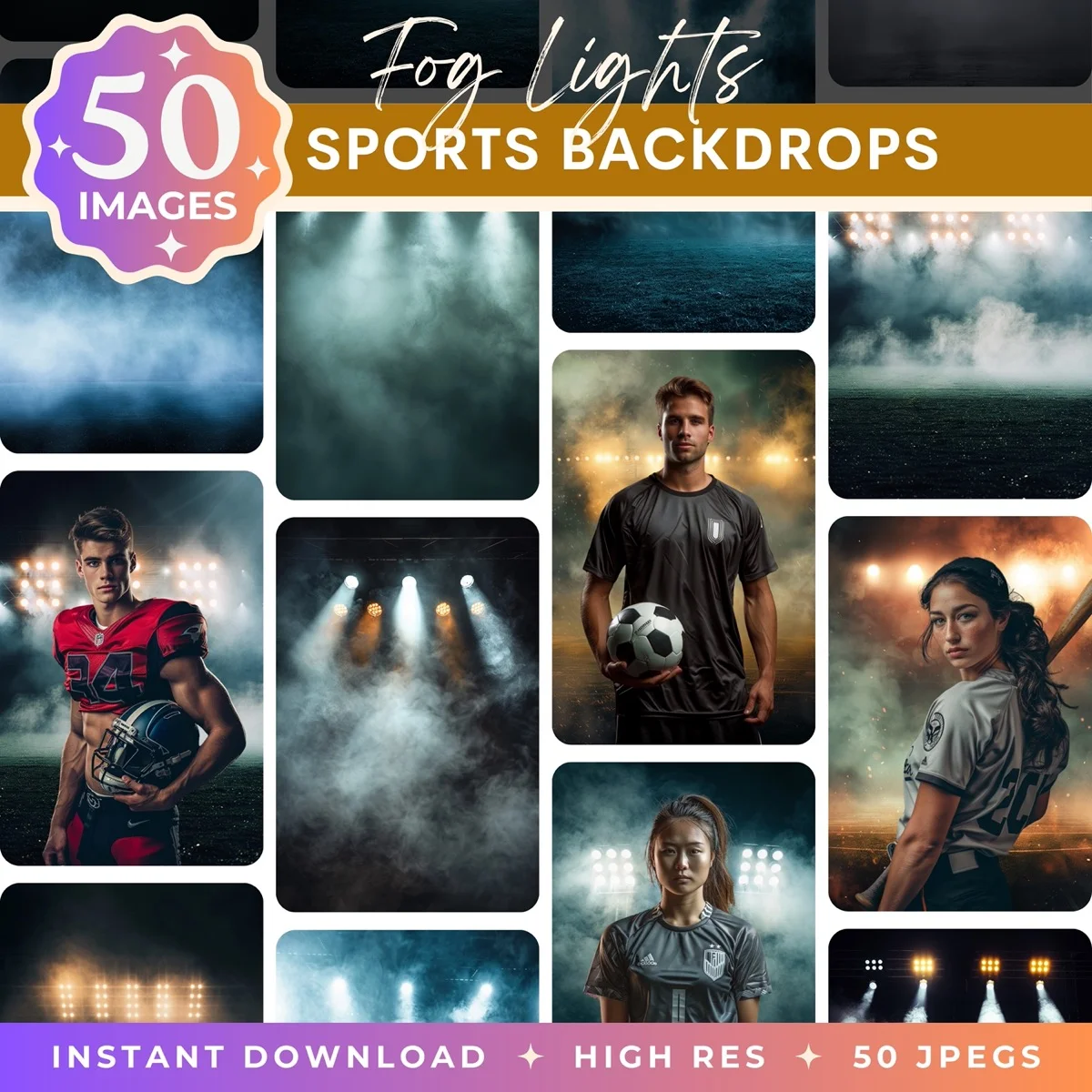
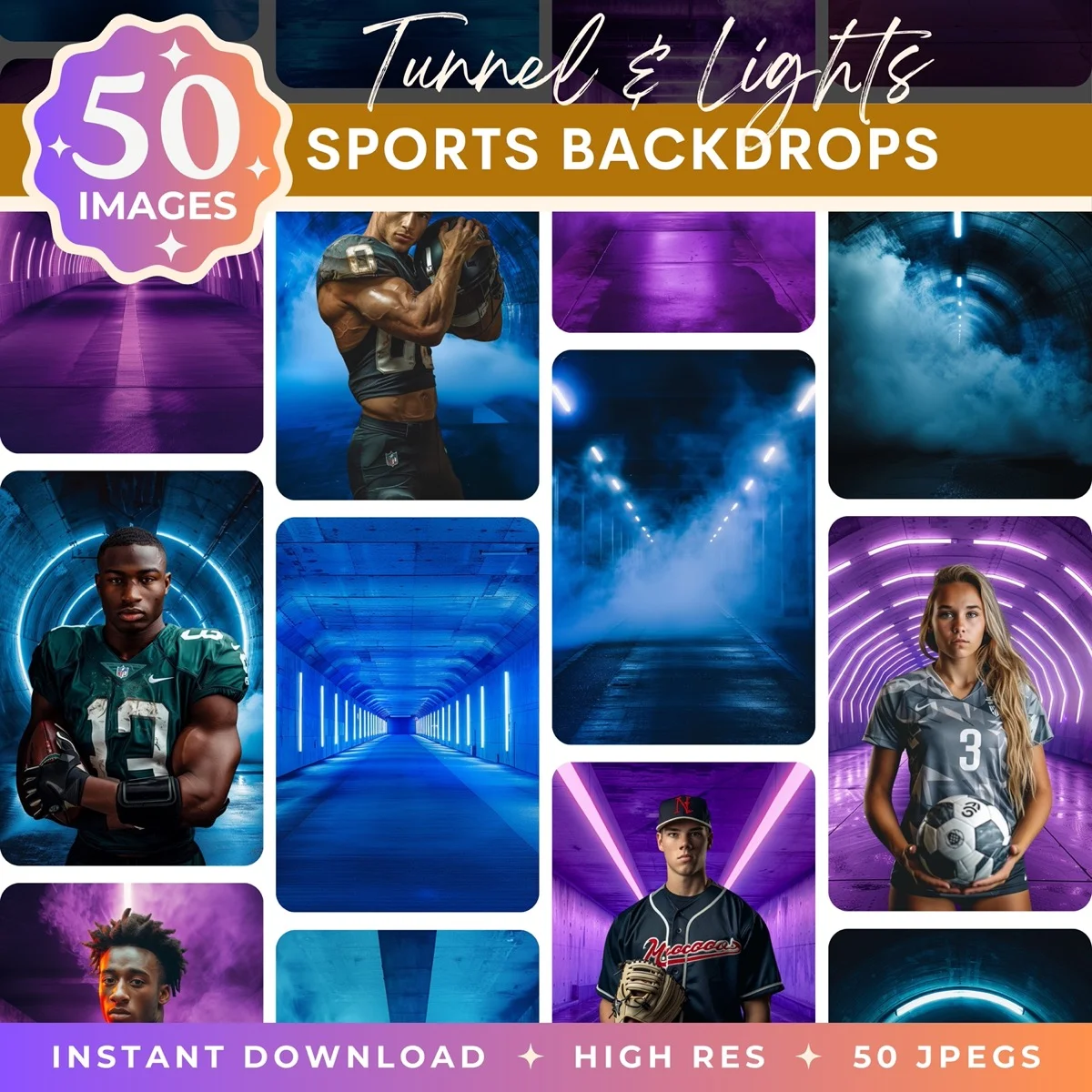
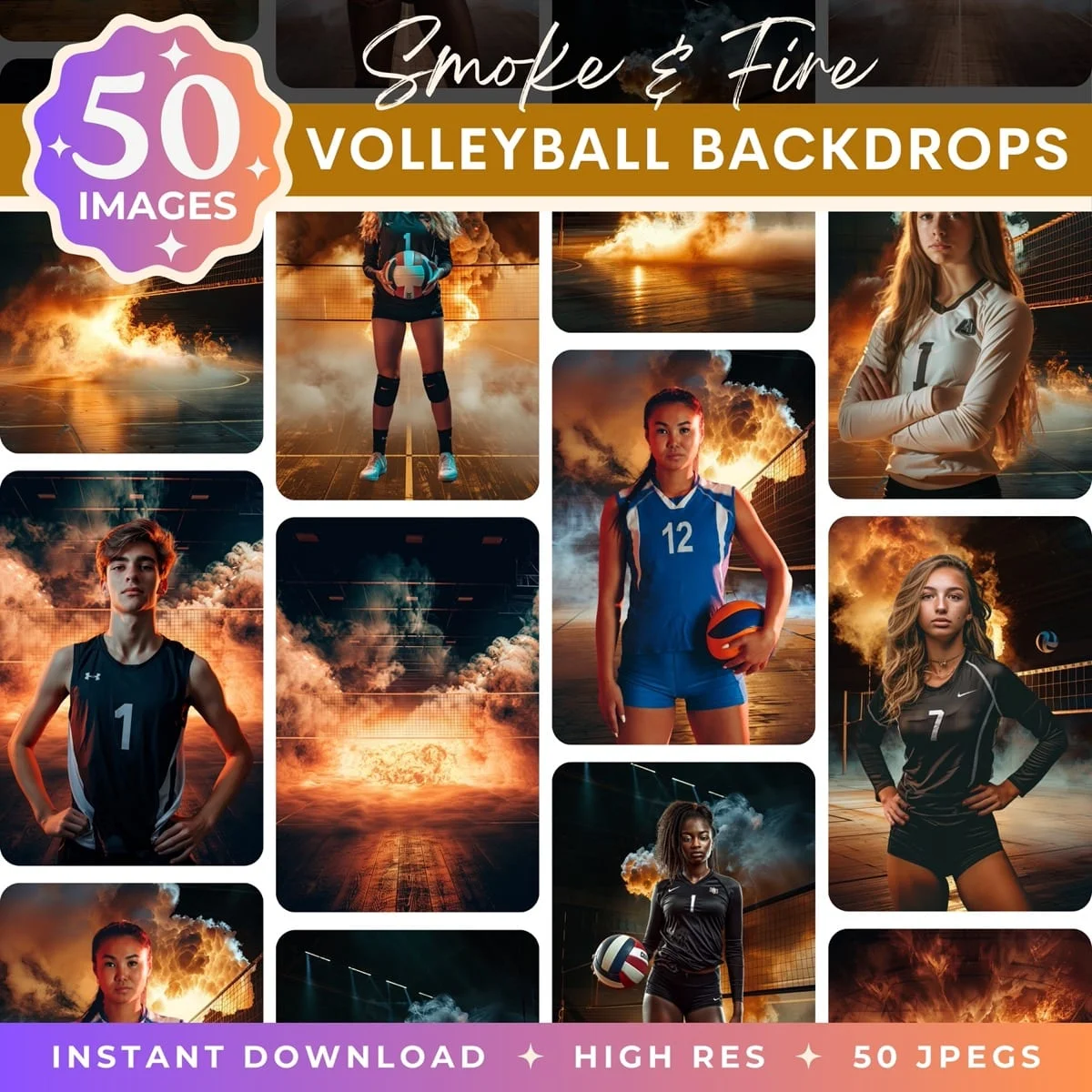
Sports trading cards are the perfect entry point into sports photography products. They are fast to produce, cheap to print, easy to sell, and wildly popular with kids and parents alike. Build one template per team, master the batch compositing workflow, and offer cards as a standard add-on to every team photography session. The per-card profit margin is small, but the volume across a full season of teams turns trading cards into one of the most reliable revenue streams in sports photography.
Transform Your Photos
Give Your Photos the Wow Factor
Browse our collection of premium digital photo backdrops. 50 high-resolution print-ready backgrounds in each pack. Instant download.
Browse Backdrops