
The Quick Answer
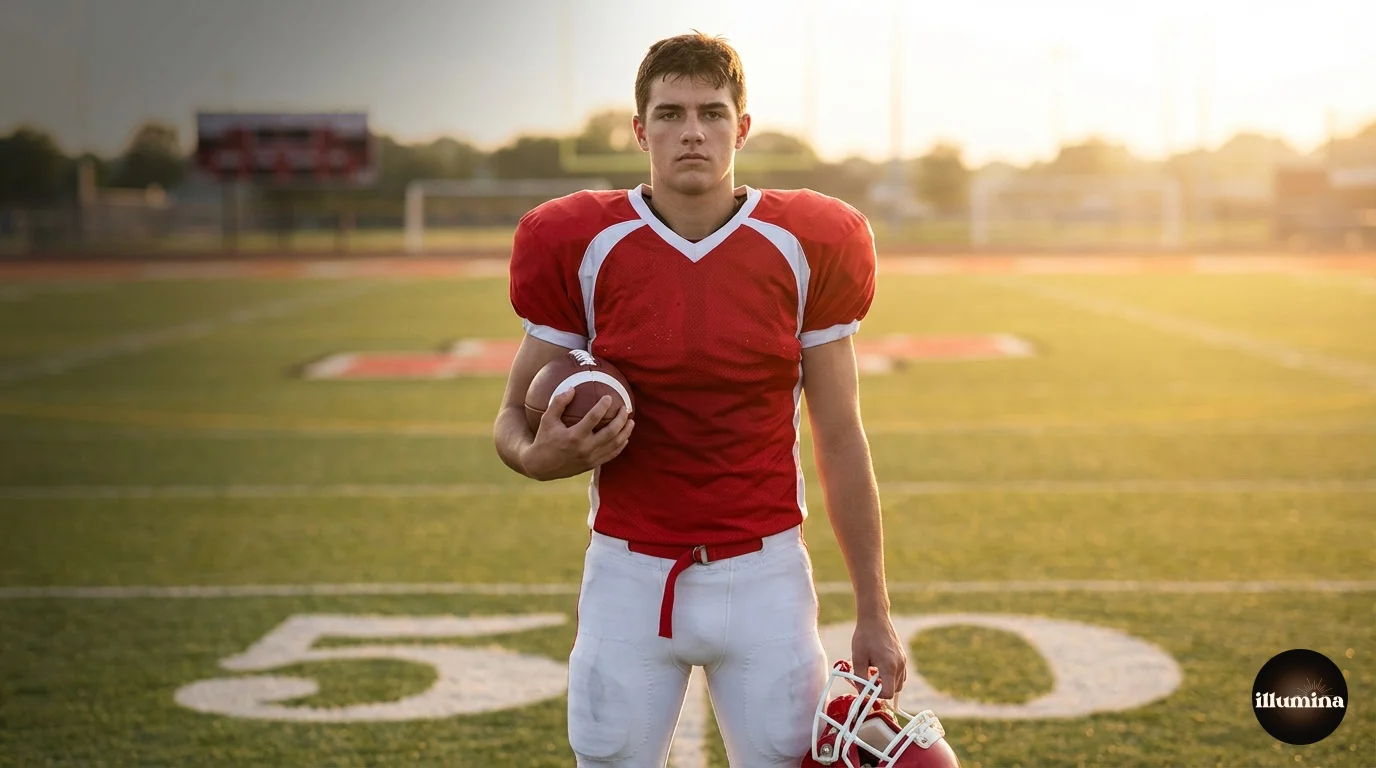
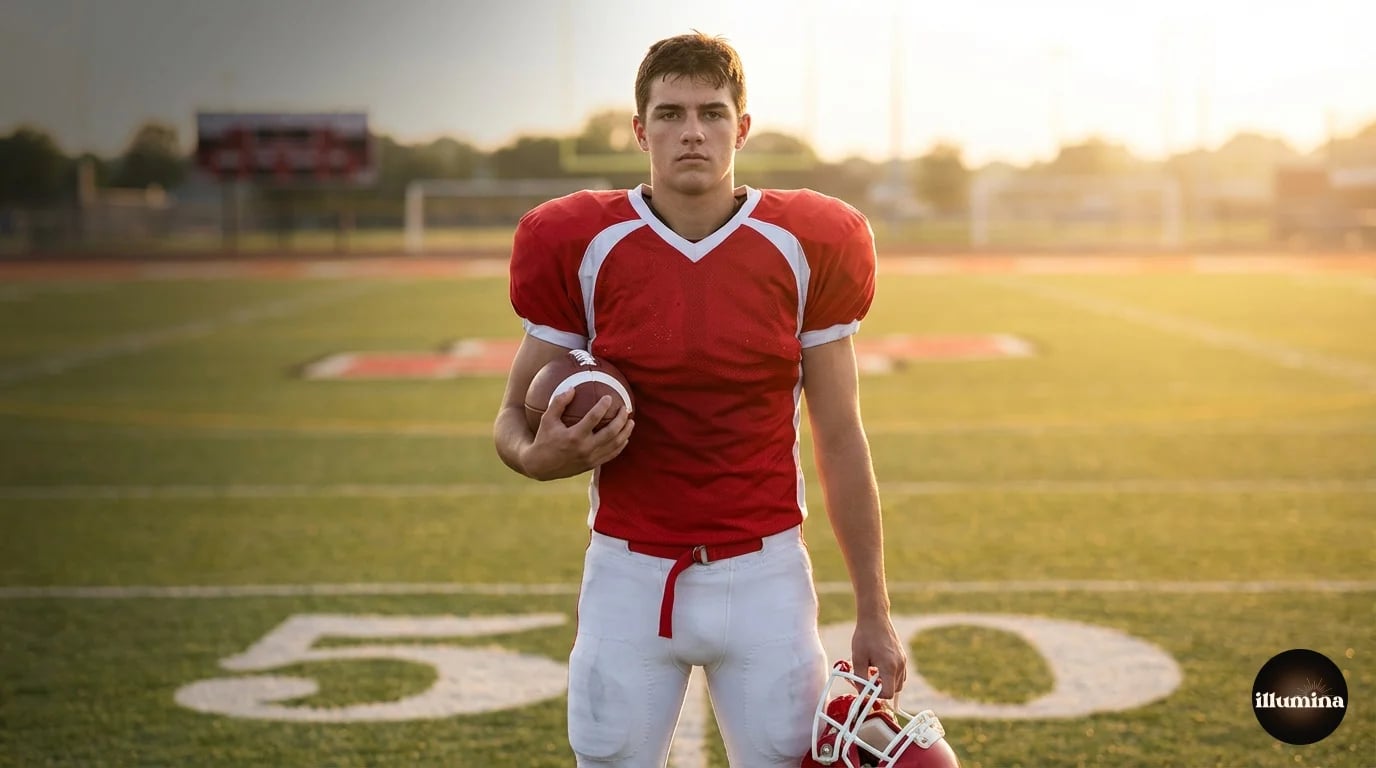
Football portraits work best when they lean into what makes the sport visually distinct: the helmet, the pads, the field markings, and the physicality. A player in full gear with their helmet off, tucked under one arm, ball in the other, standing on the 50-yard line at golden hour is a portrait that sells itself. For the stadium composite look that's exploded in youth sports photography, shoot in a studio or gym and drop the player into a dramatic stadium scene with lights and fog.
This guide covers individual and team pose ideas for every position, field and stadium location tips, equipment as props, the composite workflow for football, and how to handle the unique challenges of photographing players in helmets and heavy pads.
Individual Player Portraits
Helmet Off, Ball in Hand
The signature football portrait. Player standing tall, helmet tucked under one arm or held at their side, football in the other hand. Full uniform with pads visible under the jersey. Eyes at the camera, serious game face. This is the shot that goes on the team banner, the school website, and the recruitment profile. Get it right first, then move to the creative stuff.
Shoot from slightly below eye level to make the player look imposing. The pads already add size to the shoulders, and a low angle amplifies that. If the player is young and small (peewee or junior), the low angle helps them look bigger than they are, which is exactly what they want.
Helmet On, Game Ready
Full helmet with the cage or visor, chin strap buckled, eyes visible through the face mask. This is the intensity shot. The helmet obscures most of the face, which means the eyes have to do all the work. Have the player stare directly through the cage at the camera. If the visor is tinted, tilt the head slightly so the light catches one eye. The mystery of the partially hidden face is what makes helmet-on portraits dramatic.
One challenge: overhead light creates shadows inside the helmet that turn the face into a dark void. Use a reflector or a low fill light below the face mask to bounce light up into the helmet opening. Even a white poster board on the ground beneath the player's chin helps. Without fill, you're photographing a helmet, not a person.
Bounce light up into the helmet. A reflector or white surface below chin level fills the shadows inside the face mask and makes the eyes visible. Without it, the helmet turns the face into a dark cave and the portrait loses all connection with the viewer.
The Heisman Pose
One arm extended straight out in a stiff-arm, ball tucked in the other arm, body leaning forward in a running stance. It's the most recognizable football pose in America and every player from age 6 to college wants a version of it. Have the player lean into it with real weight on their front foot. A half-hearted Heisman looks awkward. Full commitment looks powerful.
The Quarterback Drop
For QBs: ball cocked behind the ear, eyes downfield, front foot planted, back foot on the toe. This is the throwing stance and it's immediately recognizable. Shoot from the side at about 45 degrees so the throwing arm, the ball, and the eyes are all visible. The release point (ball leaving the hand) is the peak action frame if you're shooting a real throw.
The Lineman Stance
Three-point or four-point stance, one hand on the ground, eyes up. This is the pre-snap position that linemen, linebackers, and defensive ends live in. Shoot from directly in front and low to the ground. The wide shoulders, the low center of gravity, and the intense eyes make this one of the most physical-looking poses in sports. It doesn't photograph well from the side, so get in front of the player and shoot along the ground plane.
The Catch
Ball in mid-air, player reaching with both hands fully extended, eyes locked on the ball. This works as a static posed shot (someone tosses the ball from just off-camera) or as a real catch in burst mode. The fully extended body makes for a dynamic frame, especially at a low angle with sky in the background. Wide receivers and tight ends look their best in this pose because it showcases their wingspan.
The Running Back Juke
Ball tucked tight under one arm, body leaning hard to one side as if cutting around a defender. Free arm extended out in a stiff-arm motion. This is all about body angle. A player standing straight up holding a ball looks like they're waiting for a bus. A player leaning 30 degrees with their weight shifting looks like they're about to break a tackle. Have them plant one foot and lean into the cut hard enough that they'd fall if they stopped. That commitment to the angle is what makes the pose look real.
Team and Group Photos
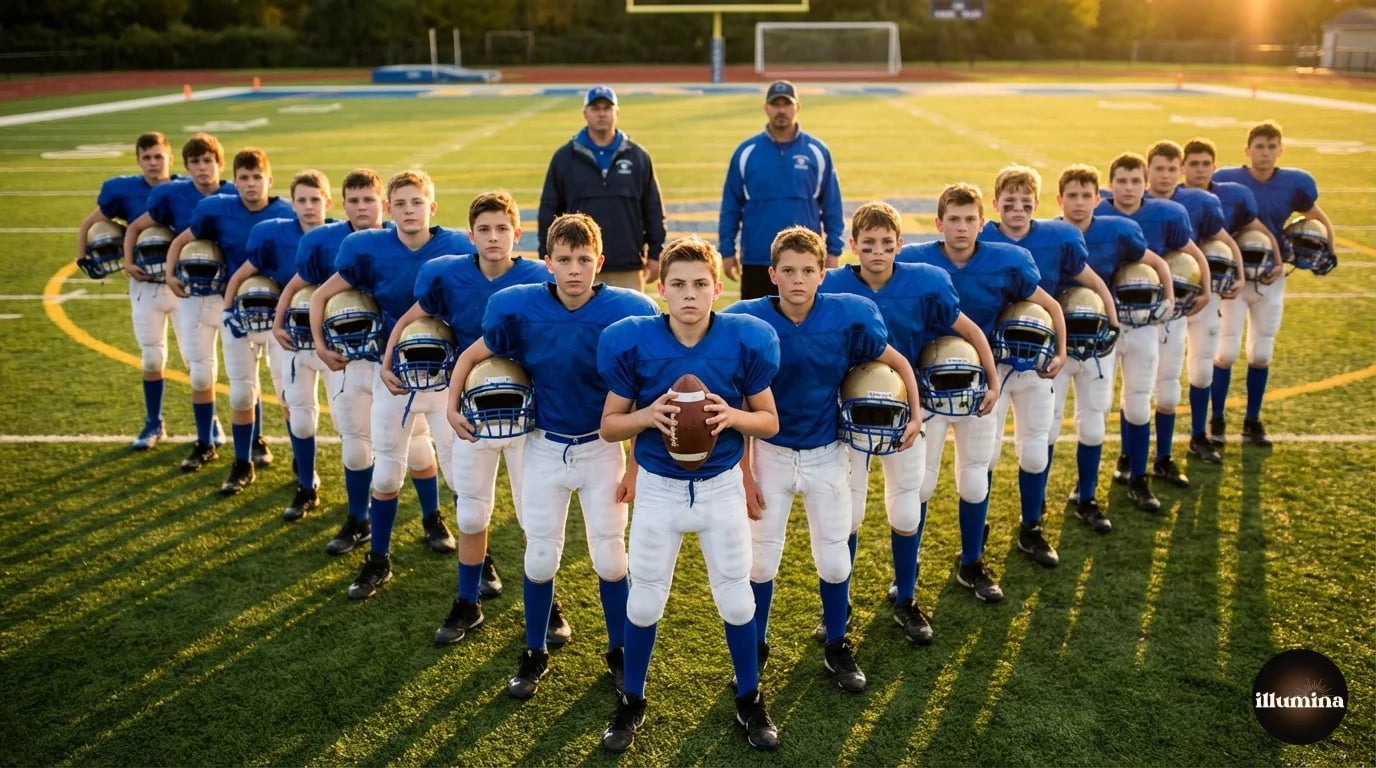
The Lineup
Everyone on the 50-yard line (or the team's logo at midfield if there is one), three rows deep, tallest in back. Helmets off for one version, helmets on for another. Coaches at the ends. Take ten frames. This is the documentation shot and it's non-negotiable. Every parent wants it, every sponsor expects it, and the league usually requires it.
The Tunnel Walk
Team walking toward the camera in a line or wedge formation, helmets on, walking with purpose. Shoot from a low angle at the end zone looking down the field. This is the movie-poster shot. The visual weight of 20-40 players in full pads walking together is inherently dramatic. Don't tell them to smile. Tell them to look like they're walking onto the field for the championship. The intensity reads on camera.
The Huddle
Everyone circled up, hands in the center, shot from above if possible. If you can get on top of the press box or a scissor lift, the top-down huddle shot is spectacular. If not, shoot from the edge of the circle looking across the hands to the players on the opposite side. The crossed arms and stacked hands are visually compelling from any angle.
Position Groups
Break the team into positions for sub-group photos: offensive line in a three-point stance together, receivers lined up catching imaginary passes, defensive backs in a zone coverage pose, quarterbacks with balls cocked. These position-group shots give variety to the gallery and let each group own their identity within the team.
Shoot position groups before the full team photo. Small groups are easier to coordinate and the players are fresher. By the time you've done five position groups and the full team photo, attention spans are running out. Front-load the creative work.
Location Tips
The football field is the obvious choice and it's usually the right one. The yard lines, end zones, goal posts, and press box provide built-in structure and context. A few specific spots that work best:
The 50-yard line. Center of the field, center of the action. The numbers painted on the turf give you a graphic element that grounds the player in the sport. Shoot from field level so the yard line numbers are visible in the foreground.
The end zone. The large painted team name or logo in the end zone makes for a natural branded backdrop. Position the player standing inside the name, shoot from low and wide. The scale of the letters framing the player looks impressive.
The goal posts. Player standing between the uprights, shot from behind with the field stretching out ahead. Or player leaning against a goal post with the field blurred behind them. The vertical lines of the posts add visual structure to the composition.
The tunnel or locker room entrance. If you have access, the walkway from the locker room to the field is a natural "entering the arena" backdrop. The transition from dark tunnel to bright field creates a dramatic lighting contrast. Silhouette the player at the tunnel opening for a striking editorial look.
The bleachers and press box. For a different perspective, have the player sit in the empty bleachers in full gear, helmet beside them, looking out at the field. It's a contemplative shot that contrasts with the intensity of the action poses. This works particularly well for senior portraits where the mood is "one last season." The empty stadium around a single player tells a story that an action shot can't.
For night games: if you can get to the field when the stadium lights are on but the stands are empty, the quality of stadium lighting at night is gorgeous for portraits. The overhead floodlights create dramatic top-down lighting with long shadows on the turf. Position the player on the field where the light falls brightest, shoot at a wide aperture to blur the lights into big round bokeh orbs, and the result looks like a professional sports broadcast still frame.
Transform Your Photos
Give Your Photos the Wow Factor
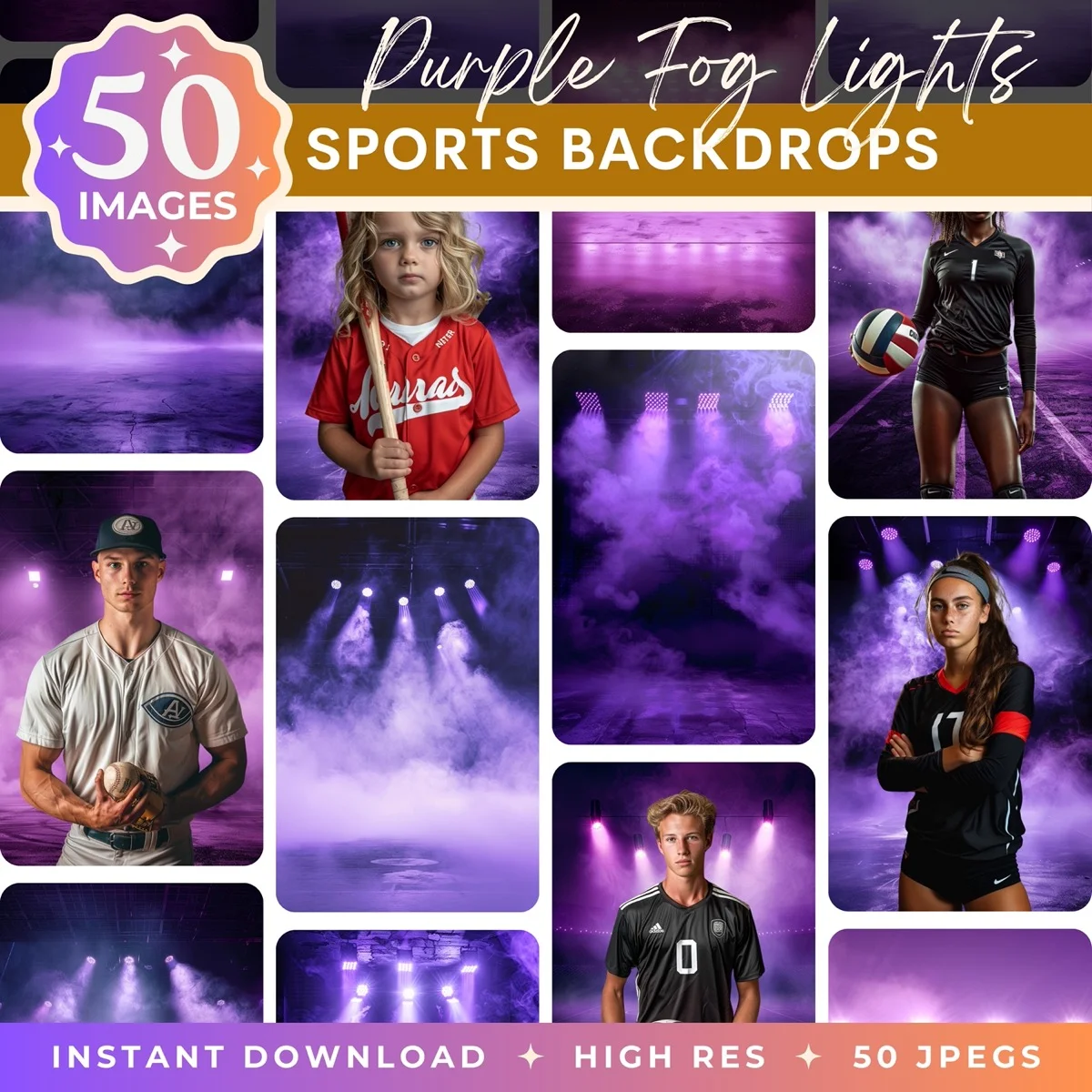
Browse our collection of premium digital photo backdrops. 50 high-resolution print-ready backgrounds in each pack. Instant download.
Browse Backdrops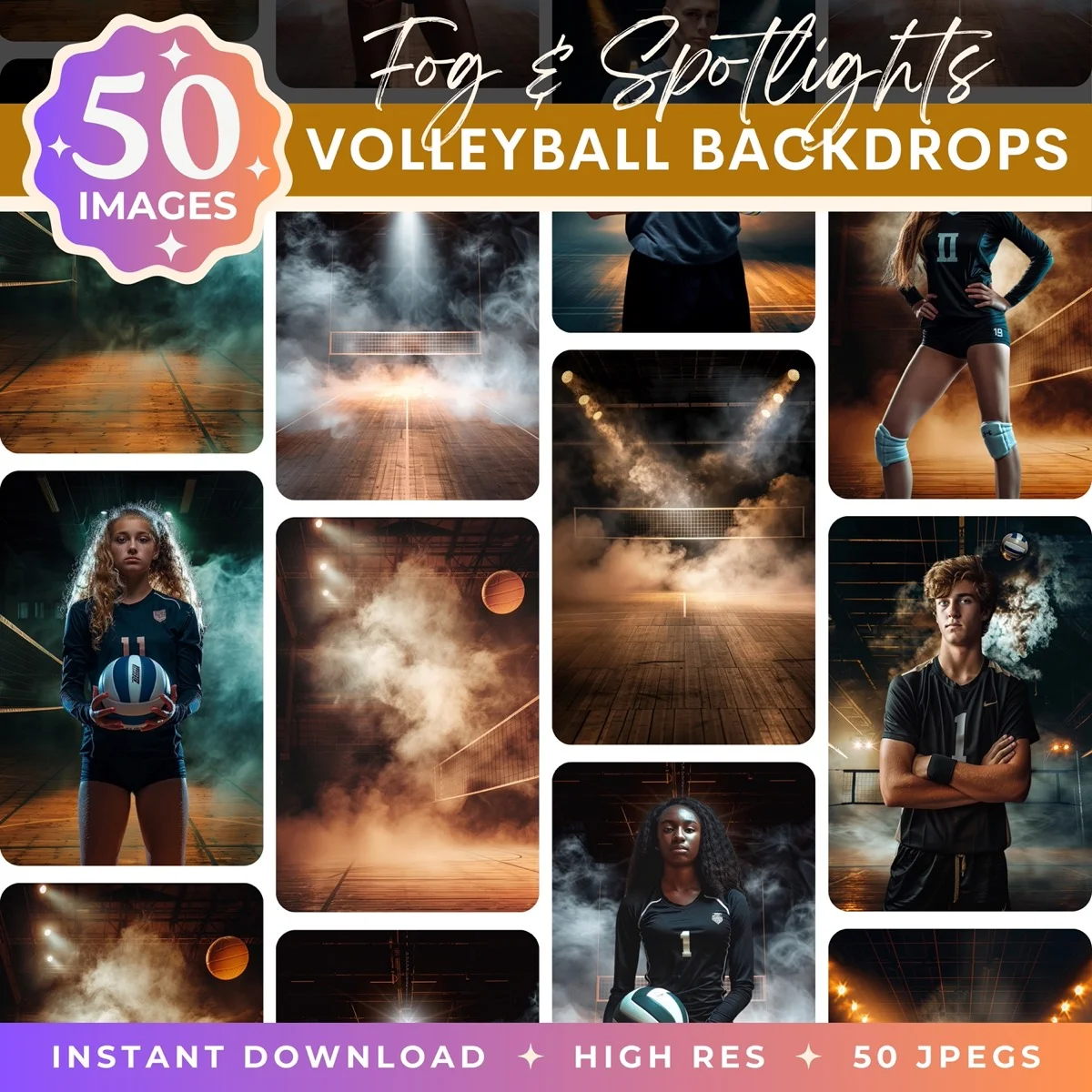


Working with Pads and Helmets
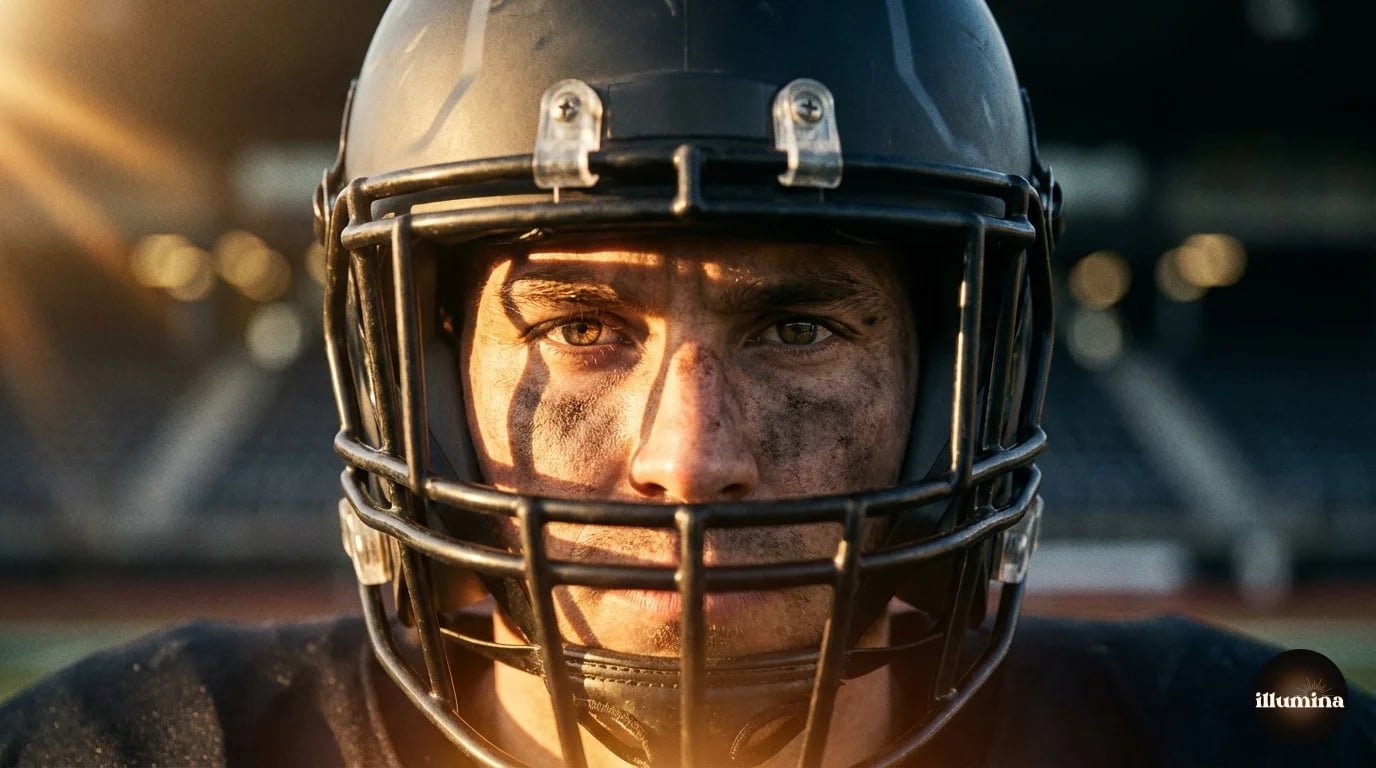
Football gear creates specific photography challenges that other sports don't have.
The helmet hides the face. Use fill light from below (reflector, white surface, low strobe) to illuminate inside the cage. A bare face visible through the mask creates connection. A dark shadow where the face should be creates nothing.
Pads make everyone look wider. This is usually a positive (players want to look big), but for smaller or younger players, the oversized pads can make them look swallowed by the gear. Angle them slightly (three-quarter turn rather than straight-on) to reduce the visual width and create a more dynamic silhouette.
Jerseys bunch and wrinkle. Pads push the jersey into unflattering folds. Have the player tug the jersey down and smooth it before each frame. A wrinkled, bunched jersey reads as sloppy even if the pose and lighting are perfect. For senior portraits and recruitment photos, some photographers use clips behind the jersey (hidden from camera) to pull the fabric taut.
Gloves and cleats matter. White gloves look sharp in photos. Muddy cleats look authentic. Both are fine, but make sure the choice is intentional. Clean gear for formal portraits, game-worn gear for action and intensity shots.
Compositing with Stadium Backdrops
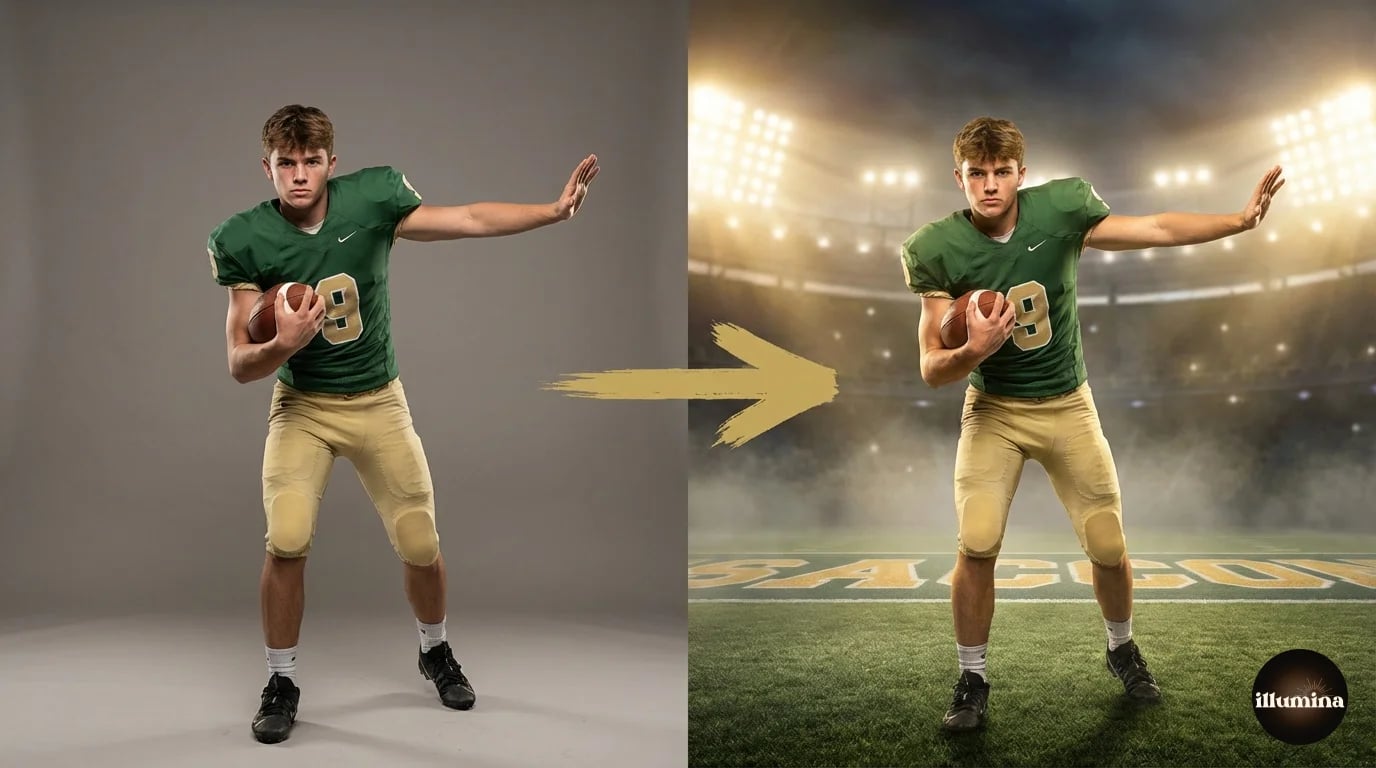
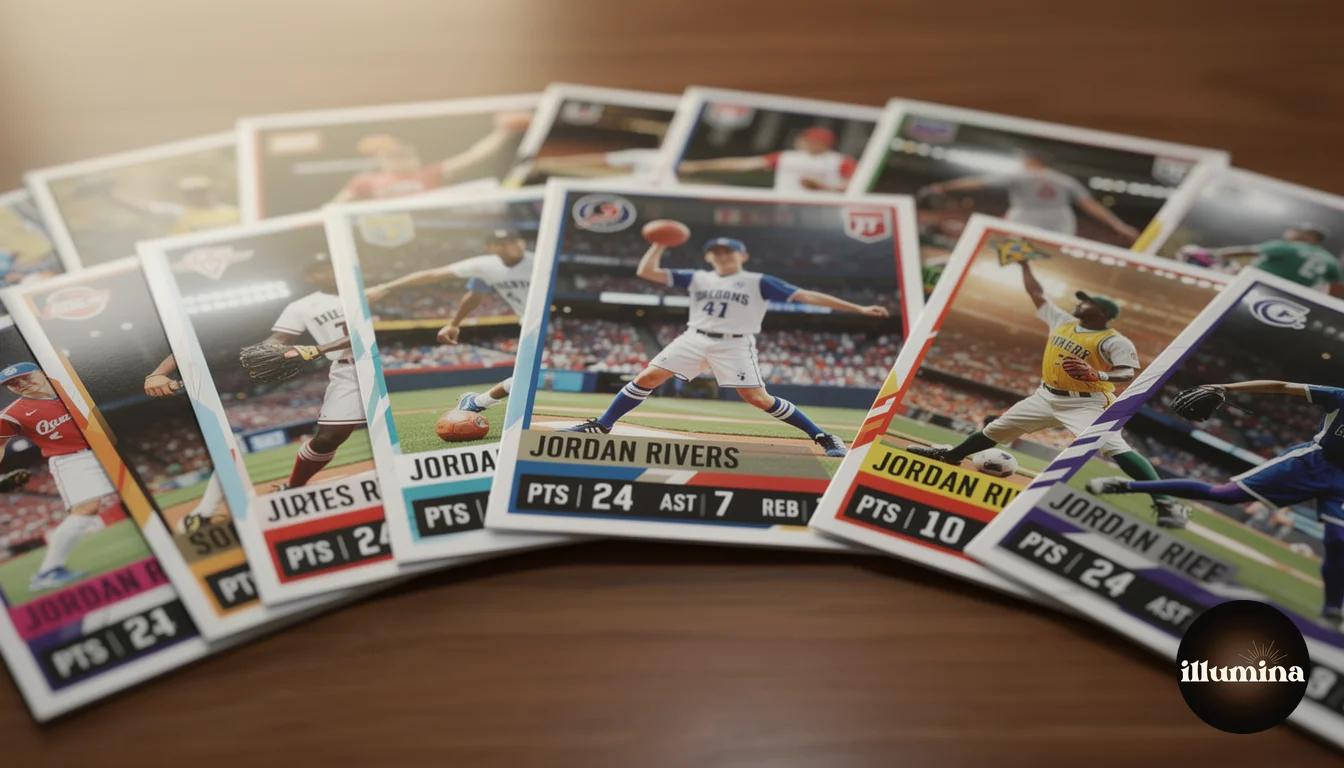
Stadium composites are where football photography gets exciting for both the photographer and the player. A kid in a small-town peewee league can look like they're playing under NFL lights. The visual impact is enormous, and it's the product that drives the most revenue in youth sports photography.
The workflow is identical to other sports composites: shoot against a gray backdrop, cut out the player in Photoshop or Canva, place them on the stadium backdrop, color match, add shadow and effects. Our sports composite guide walks through every step.
For football specifically, the helmet and pads create clean, hard edges that are easier to mask than hair or loose fabric. The cutout process is faster for football players than for most other subjects. The time you save on masking you can spend on effects: fog around the feet, stadium light flares from above, sparks if the poster calls for drama.
One thing to watch: the face mask cage creates a complex overlapping structure that automated tools sometimes struggle with. Zoom to 100% and check each bar of the cage against the backdrop. Missing bars or partially transparent cage wires are the most common football composite error and they're obvious to anyone who looks closely.
Check the face mask at 100% zoom before exporting. The cage bars create overlapping edges that selection tools often miss or partially erase. A missing bar in the face mask is the most visible masking error in football composites.
Game Day Action Shots
If you're photographing an actual game rather than a portrait session, position matters more than equipment. The sideline between the 20-yard lines gives you the best angle for running plays and tackles. The end zone gives you head-on shots of running backs and receivers coming toward the camera. Behind the quarterback (if the ref allows it) gives you the release and the downfield throw.
Shutter speed for football action: 1/1000 minimum. Football involves collisions, and the moment of contact between two players is the decisive frame. At 1/500 you'll get motion blur on the impact. At 1/1000 you'll freeze it. Use continuous autofocus (AF-C) locked on the ball carrier and shoot in burst mode. You'll take 300 frames in a half and keep maybe 20. That's normal for sports action.
The moments between plays are worth shooting too. A player's reaction after a big hit, the huddle breaking, the QB clapping at the line, a coach grabbing a player's face mask during a timeout speech. These candid moments tell the story of the game better than another running play from 60 yards away.
Common Mistakes
Shooting in midday sun. The helmet brim and face mask together create shadows so deep that no amount of fill light fixes them. Shoot in the last hour before sunset or under overcast skies. If midday is your only option, pull the player under the press box overhang or to the shaded side of the bleachers.
Ignoring the chin strap. A dangling, unbuckled chin strap looks sloppy in every photo. Either buckle it properly or remove the helmet entirely. There's no good version of a half-attached chin strap.
Identical poses for every position. A quarterback and a lineman shouldn't be posed the same way. The positions have different signature stances and the photos should reflect that. Ask each player their position before you pose them and give them something specific to their role.
Forgetting the parents. Same advice as every other sport: include at least one photo of the player with their parents. The parent drove them to every practice, washed the jersey every week, and sat in the rain for every game. They've earned a spot in one frame.
Only shooting the star players. The backup left guard deserves the same quality portraits as the starting quarterback. Some of the most appreciative families are the ones whose kid isn't in the spotlight but gets treated like a star during the photo session. Those are the families that come back next year and tell their friends.
Not cleaning the helmet before portraits. Face masks collect mud, grass, and sweat. A quick wipe with a damp cloth takes thirty seconds and the difference in the photos is significant. A clean helmet looks professional. A muddy helmet looks like the player just came off the practice field, which is fine for action shots but wrong for formal portraits.
Stadium scenes for football portrait compositing
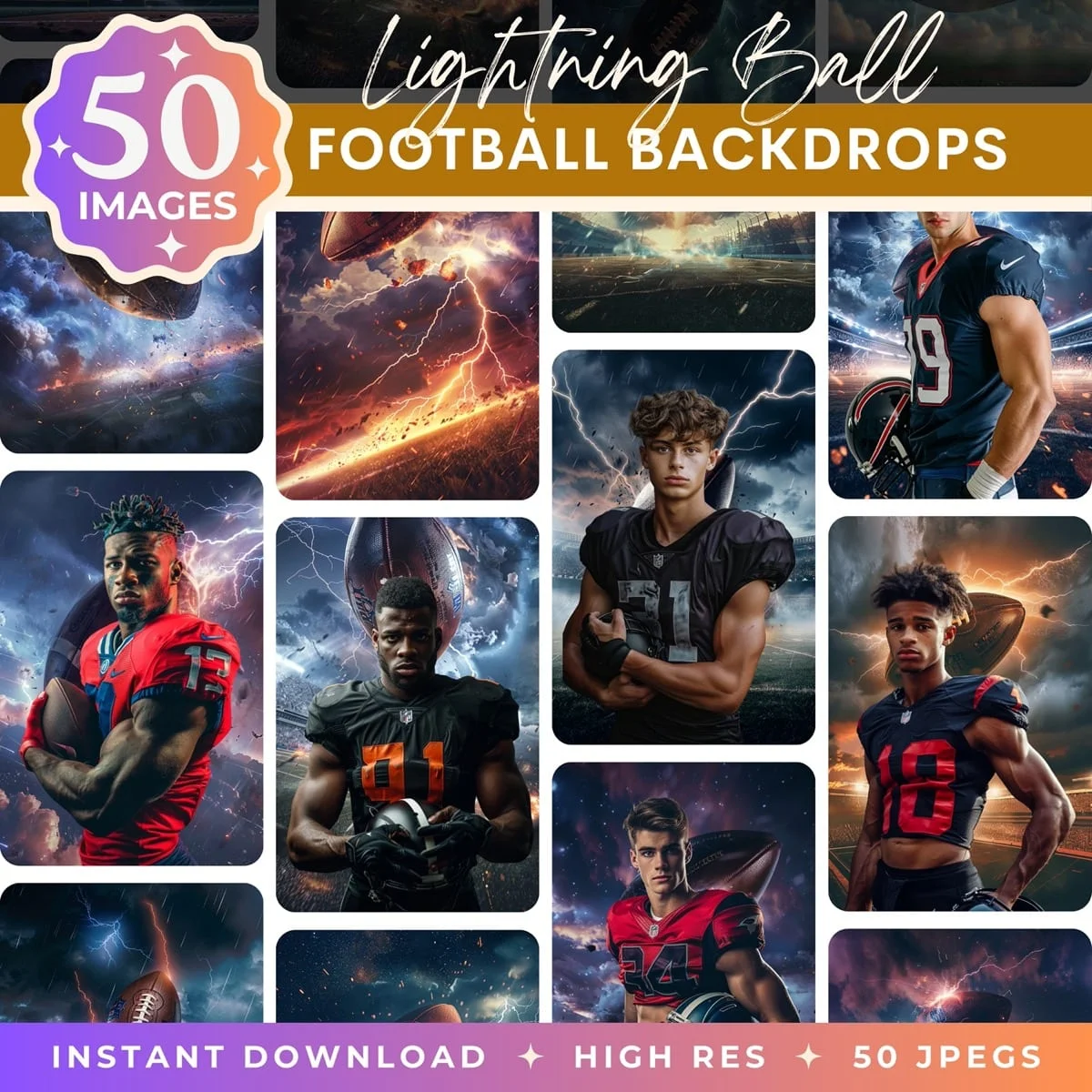
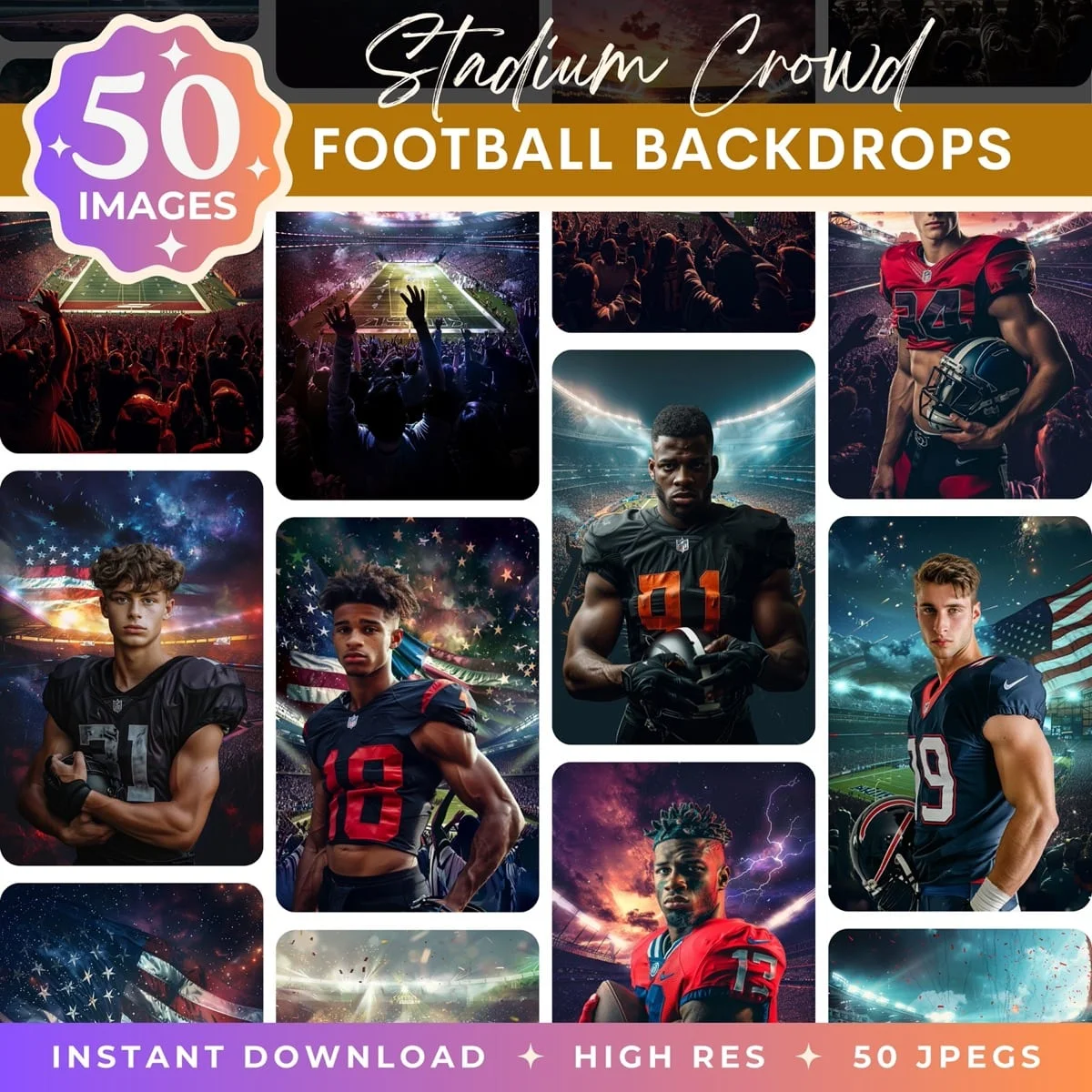
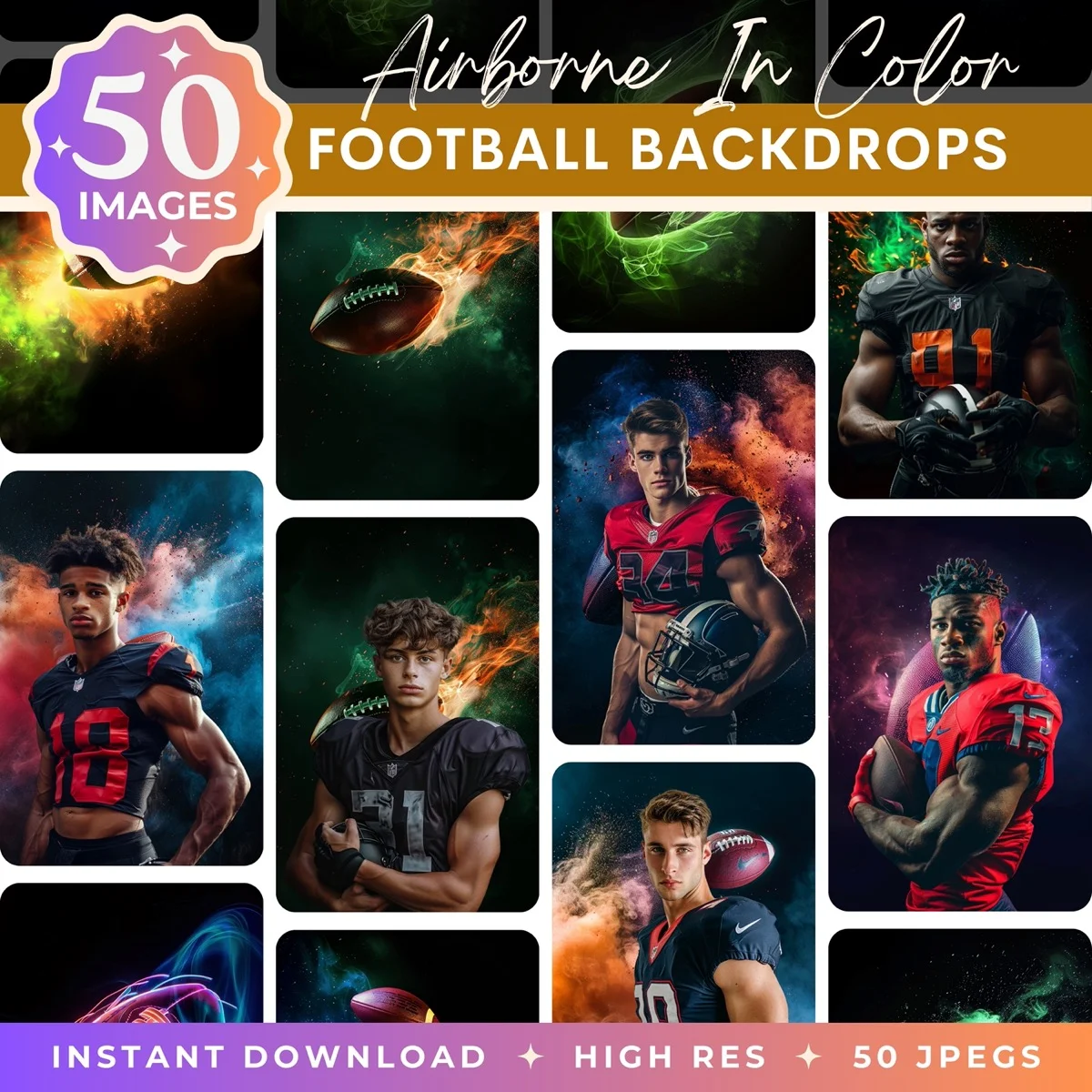
Football photography is built on gear, intensity, and environment. The sport gives you dramatic visuals without much effort. A kid in full pads on an empty field at sunset looks like a magazine cover. Your job is to put them in the right light, in the right pose, and get out of the way. The sport does the rest.
Transform Your Photos
Give Your Photos the Wow Factor
Browse our collection of premium digital photo backdrops. 50 high-resolution print-ready backgrounds in each pack. Instant download.
Browse Backdrops