
The Quick Answer
Great baseball team photos start with a clean field or dugout, late afternoon light, and players who know what to do with their hands. For individual portraits, the classic bat-on-shoulder and mid-swing poses still look great, but the real standouts come from stadium-style composites where you shoot the player in a studio and drop them into a dramatic backdrop. For team shots, skip the bleacher lineup and try a V-formation on the field with bats and gloves as props.
This guide covers individual pose ideas, team and group setups, the gear and location choices that make the biggest difference, and how sports photographers are using digital backdrops to create the stadium composite look without access to a stadium.
Individual Player Portraits
Individual shots are where you can get creative. The player has your full attention, there's no coordinating twelve kids, and you can spend time getting the pose and expression right.
The Batting Stance
The most popular baseball portrait pose and the one parents specifically ask for. Player in full batting stance, weight loaded on the back foot, bat cocked and ready, eyes focused on an imaginary pitcher. Shoot from a low angle (knee height or lower) to make the player look powerful. This works for every age from tee-ball to varsity.
The key to making it look real instead of staged: tell the player to imagine a pitch coming. Their eyes change, their grip tightens, their body leans in. A player just holding a bat looks like a mannequin. A player expecting a fastball looks like an athlete.
The Follow-Through
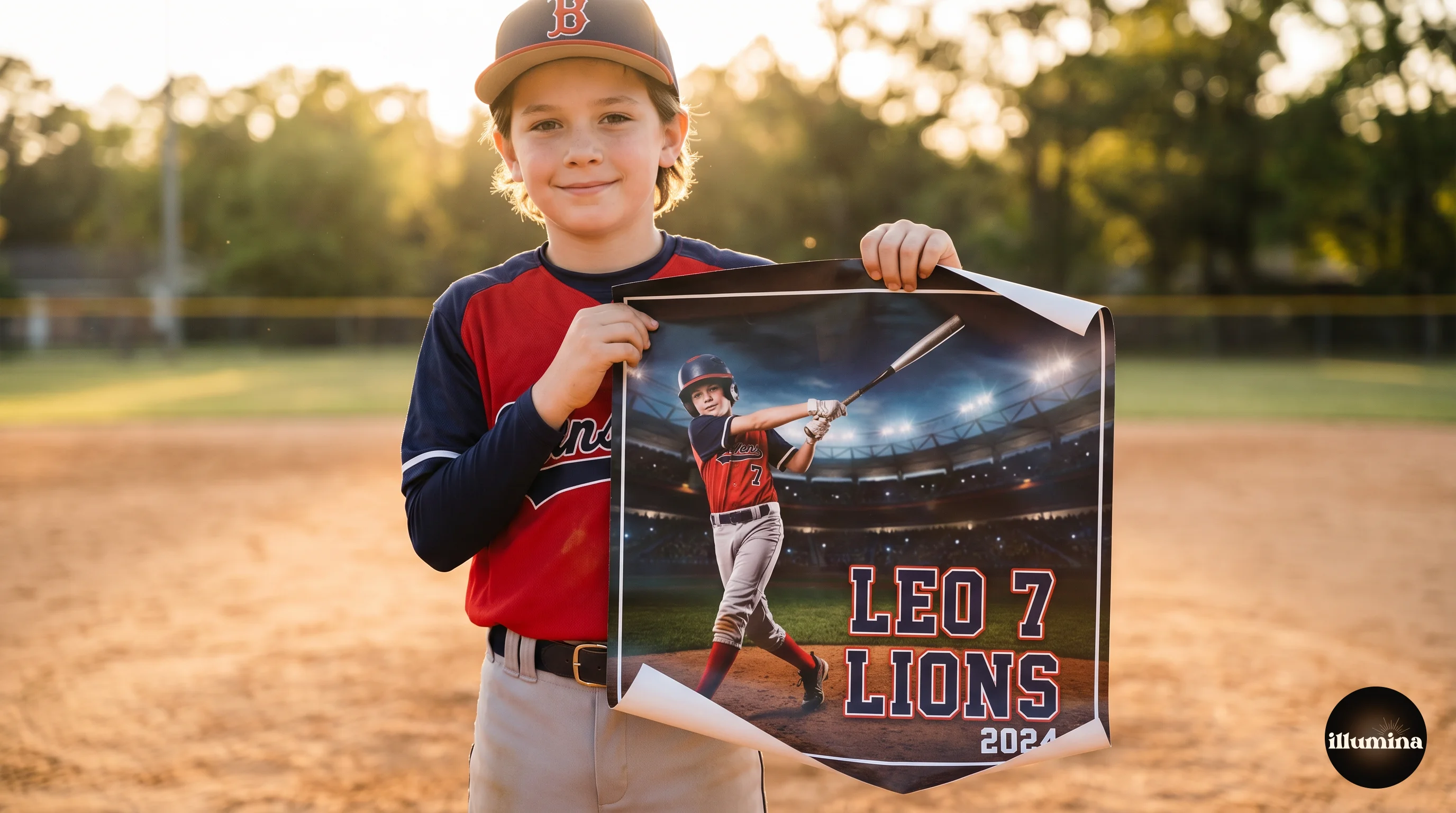
Capture the end of a swing with the bat wrapped around behind the player, weight shifted to the front foot, eyes tracking the imaginary ball. This is harder to hold as a static pose because it feels unnatural to freeze mid-swing. The trick: have the player do a real slow-motion swing and shoot in burst mode. You'll catch the natural follow-through position without anyone having to hold an uncomfortable pose. This is one of those shots that looks incredible on a sports poster when composited onto a stadium backdrop.
Bat on Shoulder
Casual, confident, classic. Player standing with the bat resting on one shoulder, other hand on hip or at their side, looking at camera with a slight smile or serious game face. This is the relaxed counterpart to the intense batting stance. Works well as a secondary shot in a portrait package. It's also the easiest pose for younger kids who can't hold a batting stance for more than three seconds.
The Fielding Pose
Glove low and ready, body in an athletic crouch, eyes up. This works great for infielders and catchers. For pitchers, the wind-up is the money shot: leg lifted, arm back, full stretch. Again, have them do the real motion slowly rather than trying to freeze at the peak. Real motion looks real. Held poses look held.
Shoot from below eye level for power, at eye level for connection. A low angle makes a 10-year-old look like a major leaguer. Eye level makes them look like a kid you'd want to coach. Both are good. Just pick the one that matches the mood you're going for.
The Intense Close-Up
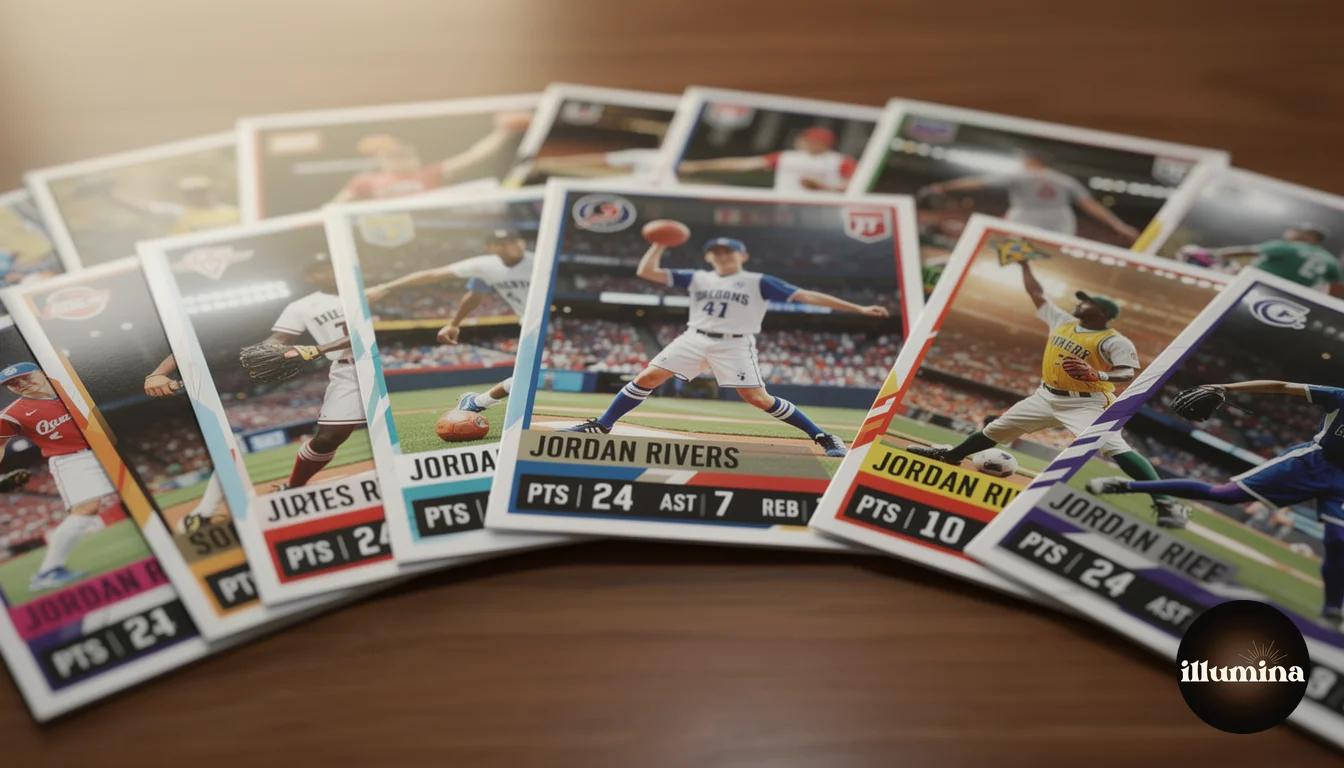
Tight crop on the face, hat brim casting a shadow across the eyes, dirt on the cheeks if you can swing it. This is the sports card look. Works best with dramatic lighting (strong side light from the left or right) and a dark or blurred background. It's a one-shot setup that takes thirty seconds and parents love it because it looks like a magazine cover.
Team and Group Photos
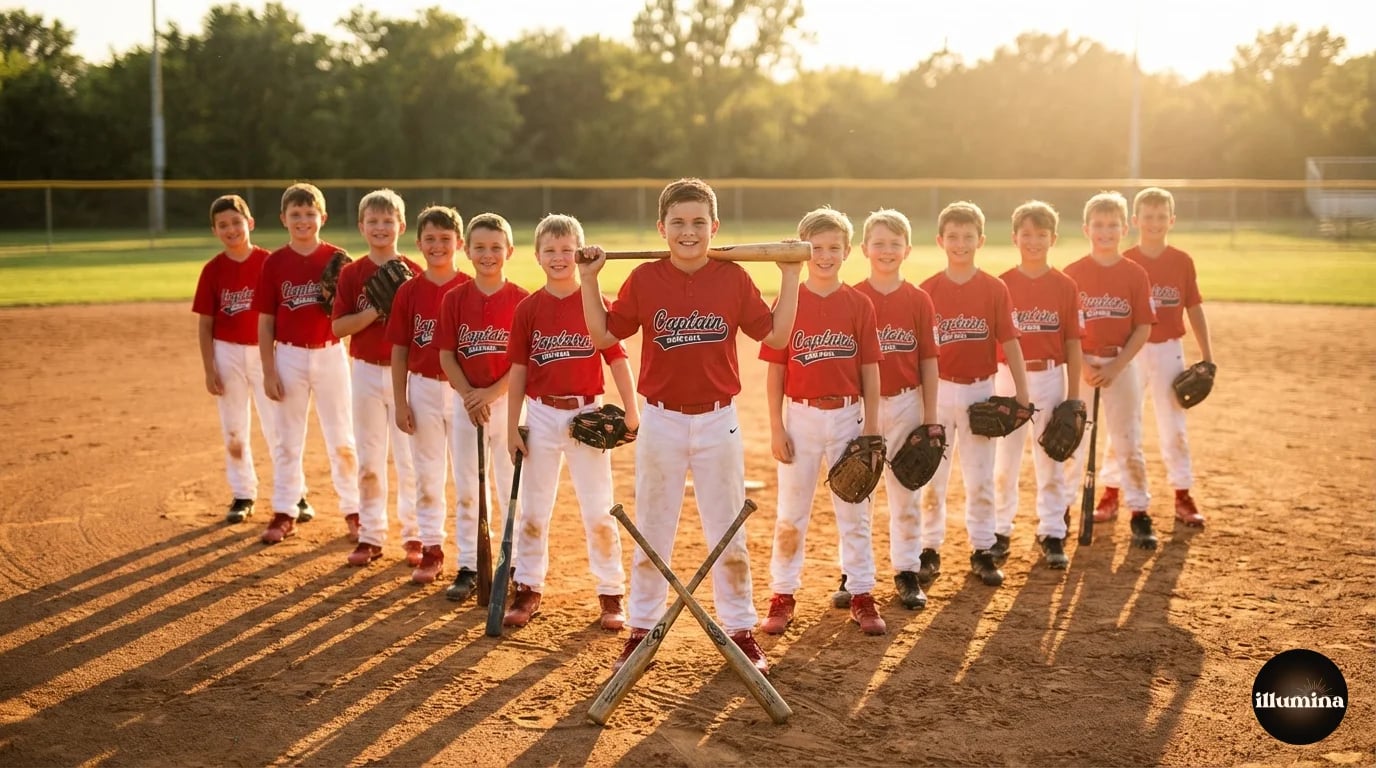
Team photos are logistics nightmares disguised as photo sessions. Twelve to twenty kids, varying heights, at least one who won't stop moving, a coach who's trying to help but is standing in the worst possible spot, and a sun that's doing whatever it wants. Here's how to get through it.
The Classic Formation
Two or three rows, tallest in back, shortest in front, coach at one end. It's predictable and every team photo looks the same, but it's expected and it's what ends up on the team banner and in the trophy case. Get it done first. Take ten frames. Move on to the creative stuff.
The V-Formation
Team forms a V-shape with the captain or pitcher at the front point, players fanning out behind. Bats crossed in the front, gloves visible, hats on straight. This looks more dynamic than the standard lineup and photographs well from a slightly elevated angle (stand on a small step ladder or the dugout bench).
The Dugout Shot
Everyone crammed into the dugout, leaning on the railing, some standing, some sitting, a few hanging out the side. It's casual and it captures the real energy of the team better than any formal lineup. The dugout also provides open shade, which solves your lighting problems. Let the kids be themselves in this one. The less direction, the better.
Walking Onto the Field
Team walking in a line from the dugout toward the camera, bats on shoulders, gloves in hand. Shoot from a low angle on the first base line. This has a dramatic, movie-poster quality that kids and parents both love. Tell them to walk slowly and look at the camera. Two or three frames of this and you'll have a team photo that nobody else in the league has.
Take the team photo first, while everyone is still clean. After practice or a game, uniforms are dirty, hair is sweaty, and half the team has already left. Shoot the team photo before anything else and you'll have everyone present and looking their best.
Location and Timing
The baseball field itself is the obvious location and usually the right one. Home plate, the pitcher's mound, the outfield fence, the dugout, the on-deck circle. Each of these works as a natural backdrop that immediately says "baseball" without any explanation needed.
If you can get access to the field when it's empty (no other teams practicing, no games in progress), you'll have much more flexibility to move around and use different angles. Most leagues will let you book 30-60 minutes on the field for photos if you ask the coordinator ahead of time. Don't just show up during practice and try to squeeze photos in between drills. It doesn't work.
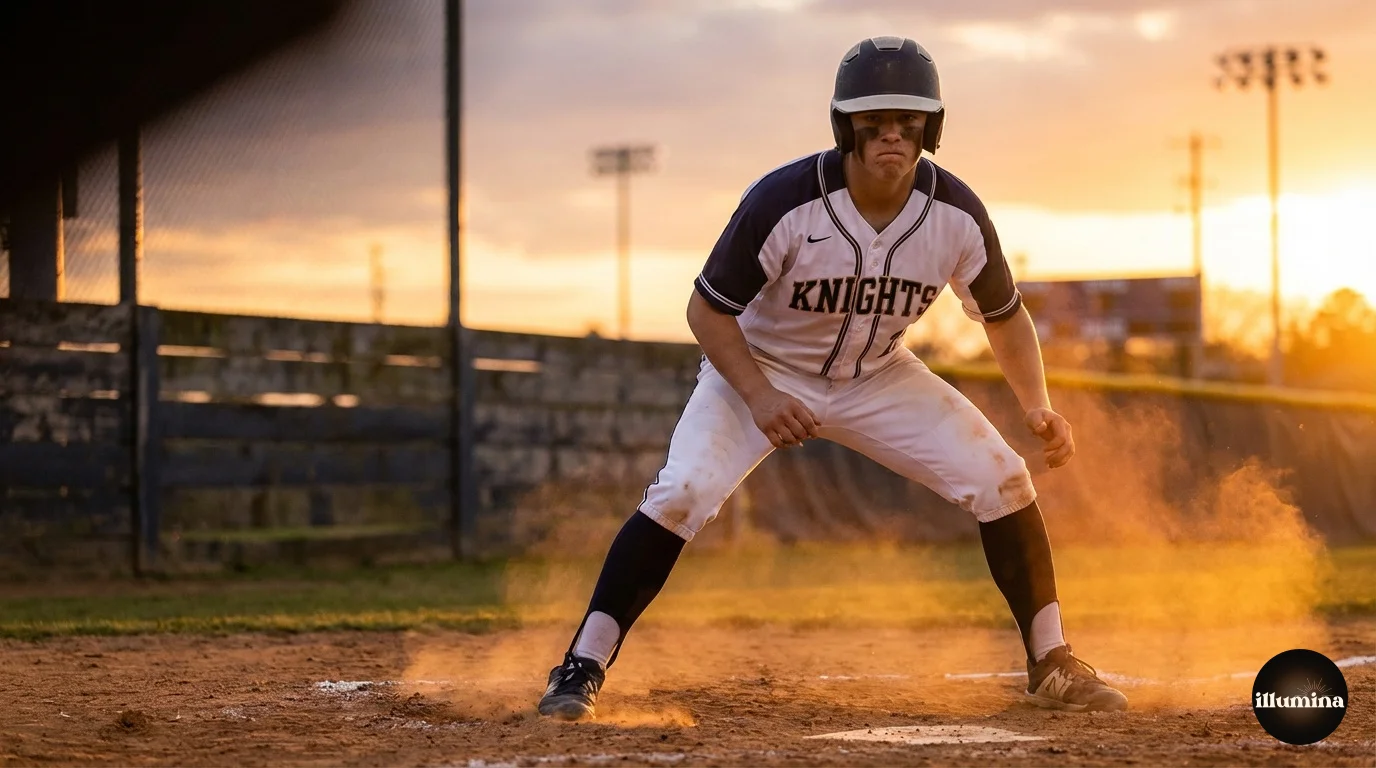
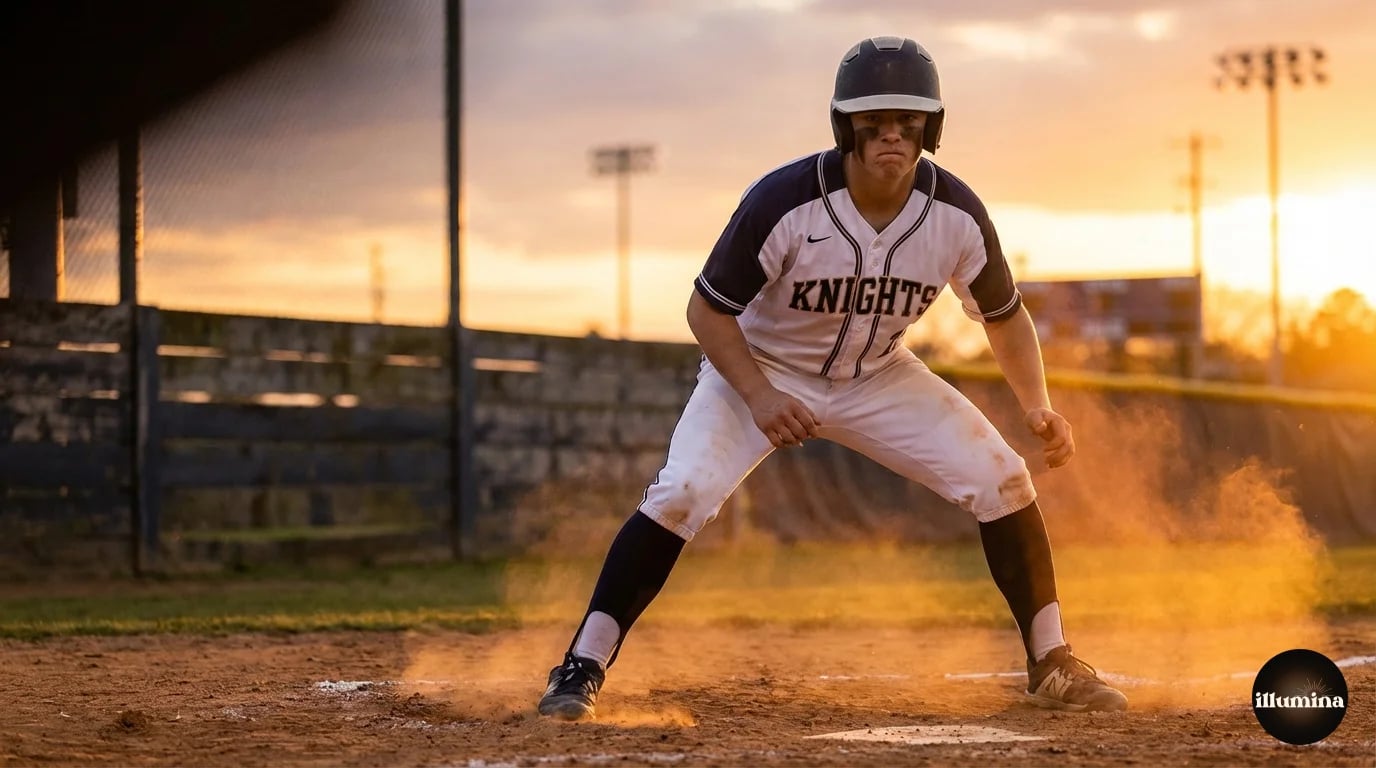
For timing, late afternoon is ideal. The light goes golden, the shadows are long and dramatic, and the field has that warm glow that makes everything look cinematic. Avoid midday. Midday sun on a baseball field is harsh, creates deep shadows under hat brims (hiding the eyes completely), and makes everyone squint. If your only option is a sunny afternoon, pull players into the dugout shadow or find shade along the first or third base line.
Gear and Camera Settings
You don't need professional gear to take good baseball photos, but a few things make a noticeable difference.
A lens in the 70-200mm range lets you compress the background and isolate the player from the field behind them. This is what creates that professional "player sharp, background blurred" look. If you're using a phone, portrait mode does a reasonable approximation.
Shoot in burst mode for action poses (swings, pitches, running). You'll take fifty frames and keep three. That's normal. The one frame where the bat is at the perfect angle and the player's expression is locked in is worth the other forty-nine.
For team photos, use a narrower aperture (f/8-f/11) so everyone is in focus from front to back. For individual portraits, open up to f/2.8-f/4 to blur the background and make the player pop.
A small step ladder is surprisingly useful. Shooting team photos from slightly above eye level is more flattering than shooting up from ground level, and it helps you see everyone in the back row. A two-step folding ladder takes up almost no space in your car.
Transform Your Photos
Give Your Photos the Wow Factor
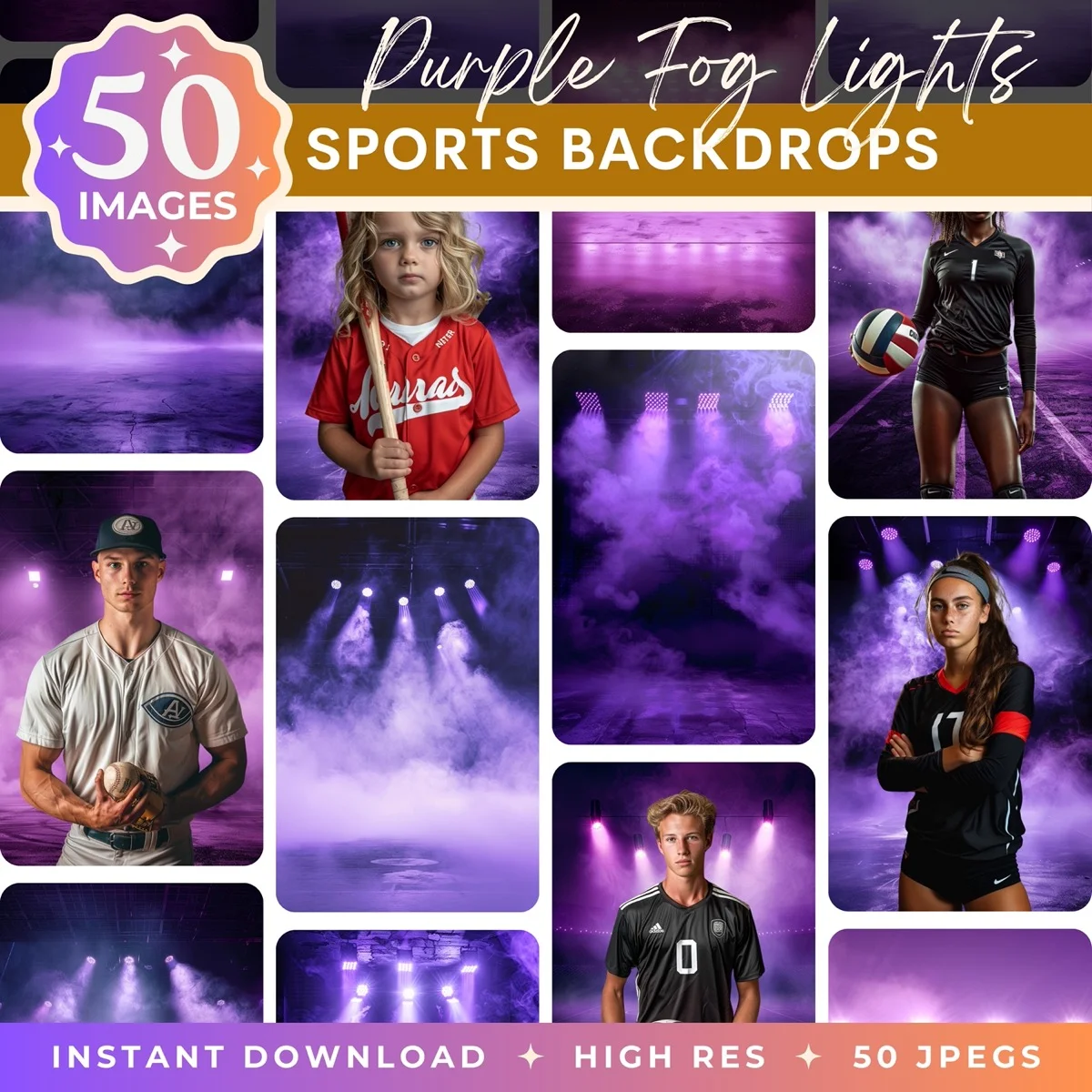
Browse our collection of premium digital photo backdrops. 50 high-resolution print-ready backgrounds in each pack. Instant download.
Browse Backdrops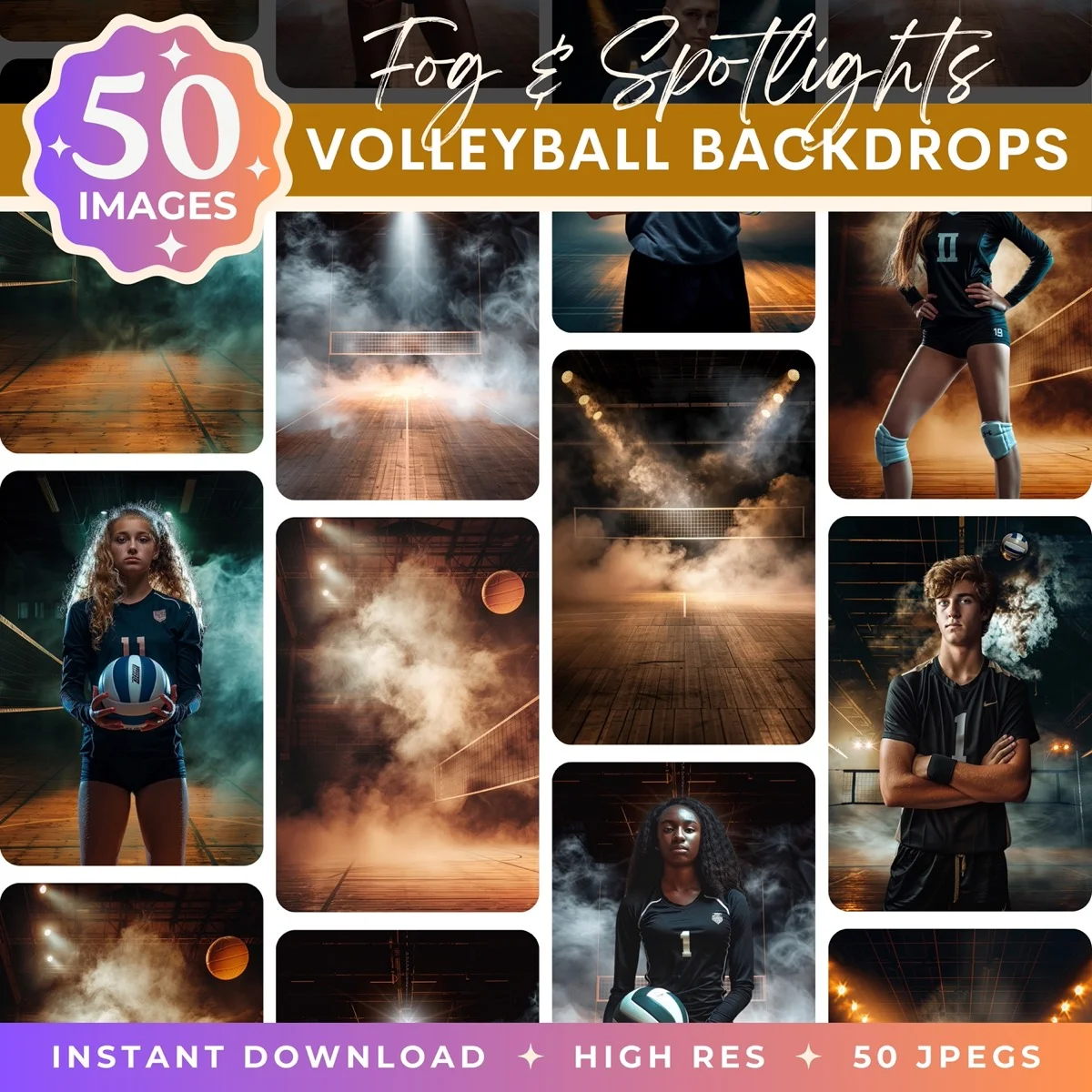


Compositing with Digital Backdrops
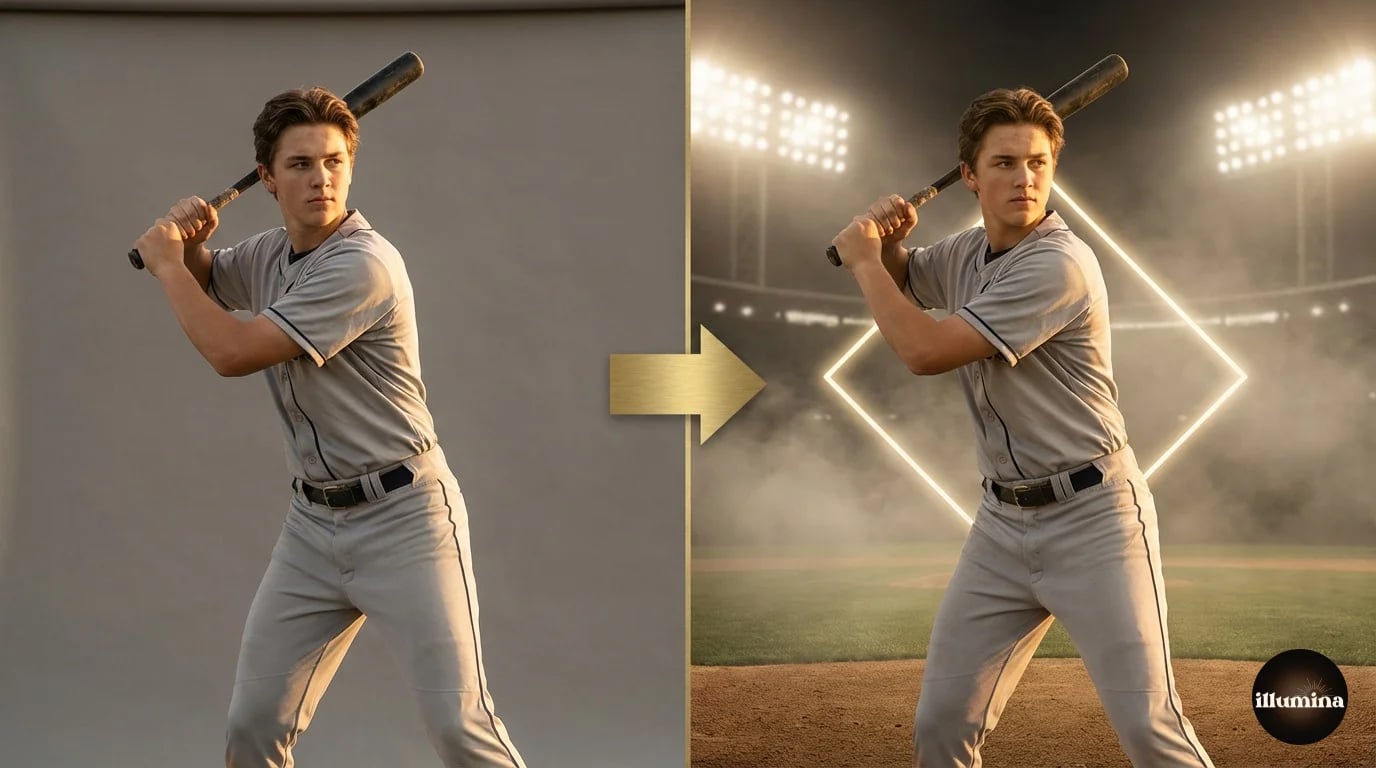
This is where the sports photography world has changed the most in the last few years. The stadium composite look, where a player appears to be standing in a professional stadium with dramatic lighting and fog effects, used to require access to a real stadium (which most youth photographers don't have) or extremely time-consuming Photoshop work.
Now the workflow is: shoot the player against a plain backdrop (gray, green, or white), remove the background, and drop them onto a pre-made stadium scene. The result looks like the player was photographed at a major league park. Parents love these because they look like professional sports posters, and photographers love them because they can produce them in volume without leaving the studio.
The key to a convincing composite is matching the lighting direction. If your studio light comes from the left, use a backdrop where the stadium lights also come from the left. Mismatched lighting direction is the first thing that makes a composite look fake. Our backdrops are designed with this in mind, with consistent lighting angles that match standard studio setups.
For the full compositing workflow, our Photoshop background removal guide covers the cutout process, and our Canva compositing guide walks through the no-Photoshop approach. Both work for sports composites.
Memory Mates and Sports Posters
Memory mates are the two-panel prints with an individual portrait on one side and the team photo on the other. They're a staple of youth sports photography and a significant revenue stream for sports photographers. Every parent buys at least one.
The individual portrait side is where composites really shine. A player composited onto a stadium backdrop with their name, number, and team logo looks dramatically more impressive than a plain field shot. Templates for memory mates are available in Photoshop and Canva, and the stadium backdrop does most of the heavy lifting visually.
Sports posters take this further: a single large format print (usually 16x20 or larger) with the player composited into a dramatic scene. Fog, stadium lights, sparks, smoke effects layered on top. These are premium products that sell for $30-80 per print and they're built entirely from a studio portrait plus a digital backdrop plus some layer effects. The markup is significant because the perceived value is high. If you're not offering composites yet, this is where to start. The ROI on a single backdrop pack pays for itself in one or two sales.
Working with Different Age Groups
Tee-Ball and Under-8
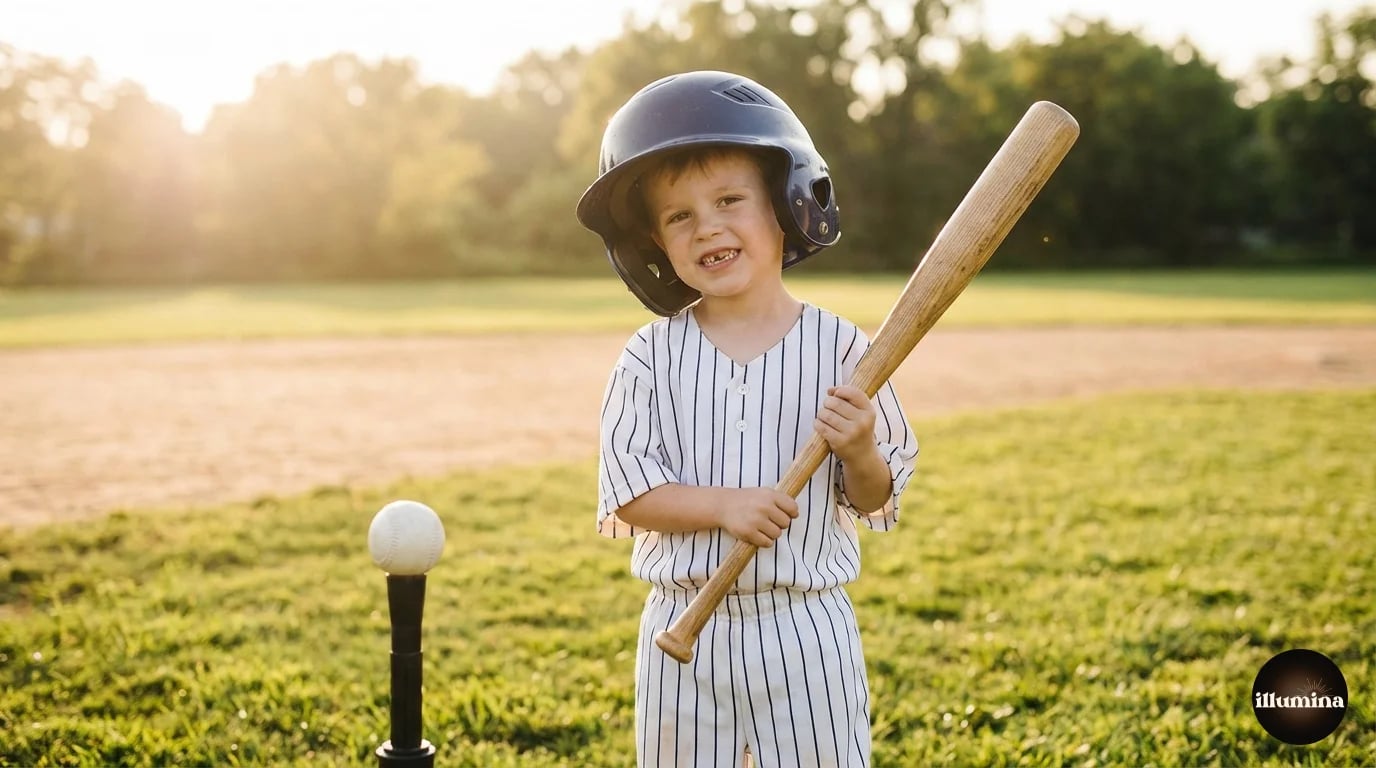
These kids are chaos and that's the charm. The helmet is too big, the bat is too heavy, and the glove is on the wrong hand half the time. Don't fight it. The best tee-ball photos lean into the cuteness: a tiny kid in an oversized uniform looking serious about a sport they barely understand. Keep sessions under 15 minutes. Bring fruit snacks. Accept that the bat-on-shoulder pose will last about four seconds before they start swinging at invisible balls.
Ages 9-12
This is the sweet spot. Kids are old enough to hold poses and follow direction but young enough to still be enthusiastic about photos. They can do real batting stances, fielding positions, and pitching windups. Give them clear instructions and they'll deliver. Keep the energy up. Compliment their stance. Tell them they look like their favorite player. You'll get genuine intensity in the eyes.
High School and Travel Ball
These players take it seriously and they want photos that look serious. Studio composites with stadium backdrops are particularly popular at this level because the players want to look like college recruits. Individual portraits should emphasize athleticism and intensity. Team photos should emphasize unity and competitiveness. This is where the dramatic low-angle shots and the intense close-ups really pay off.
Ask about college recruitment. High school juniors and seniors actively building recruitment profiles need specific types of headshots and action shots. If you know a player is trying to get recruited, offer to shoot a few frames specifically formatted for recruitment websites and social media profiles. It's a small extra effort that generates referrals.
Editing and Delivery
For individual portraits, light editing goes a long way. Bump the clarity slightly to sharpen the uniform details. Add a subtle vignette to draw the eye to the player. Warm the white balance a touch if you shot during golden hour and want to emphasize the warmth. Don't over-edit. Youth sports parents want their kid to look like their kid, not like a heavily filtered Instagram post.
For composites, spend the time on edge quality. Hair and hat edges are where composites fall apart on close inspection. Use Photoshop's Refine Edge or Canva's Erase brush to clean up any fringing. Add a very subtle drop shadow under the player's feet to ground them in the stadium scene. Without a shadow, they look like they're floating.
Deliver both print-resolution files (300 DPI, full size) and social-media-sized files (1080x1080 or 1080x1350). Parents will post these immediately and they'll appreciate not having to resize a 6000px file on their phone. If you're selling prints, offer the composites as 16x20 and 8x10 packages. The stadium composites are where the real margin lives because the perceived value is so much higher than a standard field portrait.
Common Mistakes
Shooting at midday on an open field. The hat brim shadow turns every face into a dark void. Wait for better light or pull players into shade.
Forgetting the details. Untucked jerseys, crooked hats, batting gloves hanging out of pockets, eye black smeared across the wrong part of the face. Check each player before you shoot. A quick once-over saves a reshoot.
Posing kids like adults. A seven-year-old doing an intense game face looks funny, not powerful. Let young kids be goofy and enthusiastic. Save the intensity for high school players who can pull it off.
Only shooting posed. Get some action too. A real swing during batting practice, a diving catch attempt, a pitcher mid-delivery. These are harder to capture but they tell a better story than any posed portrait. Burst mode is your friend.
Using the same angle for every shot. If every photo is from standing height looking straight ahead, the gallery gets boring fast. Mix in low angles, high angles, close crops, wide environmental shots. Variety is what makes a gallery feel complete.
Not getting the parents in the frame at all. At least one shot of the player with their parents belongs in every gallery. The kid is playing because the parent is driving them to practice three times a week and sitting in the sun for every game. Put them in one photo together. They earned it.
Stadium scenes for baseball portrait compositing



Baseball photos are some of the most rewarding sports photography you can do. The sport has built-in drama, the equipment doubles as great props, and the field itself is a natural backdrop. Get the light right, let the player's personality show through, and don't be afraid to try the stadium composite. That's where the wow factor lives.
Transform Your Photos
Give Your Photos the Wow Factor
Browse our collection of premium digital photo backdrops. 50 high-resolution print-ready backgrounds in each pack. Instant download.
Browse Backdrops