
The Quick Answer
The best family photos come from three things: coordinated (not matching) outfits, a location that means something, and enough time for people to relax in front of the camera. Shoot during golden hour for the most forgiving light. Give everyone something to do instead of standing in a line staring at the lens. And accept that the candid shots where someone's laughing at something that went wrong will be the ones you frame.
This guide covers outfit coordination, location ideas for every season, pose and grouping strategies from couples to large families, how to photograph kids without losing your mind, and how digital backdrops can give you studio-quality results anywhere.
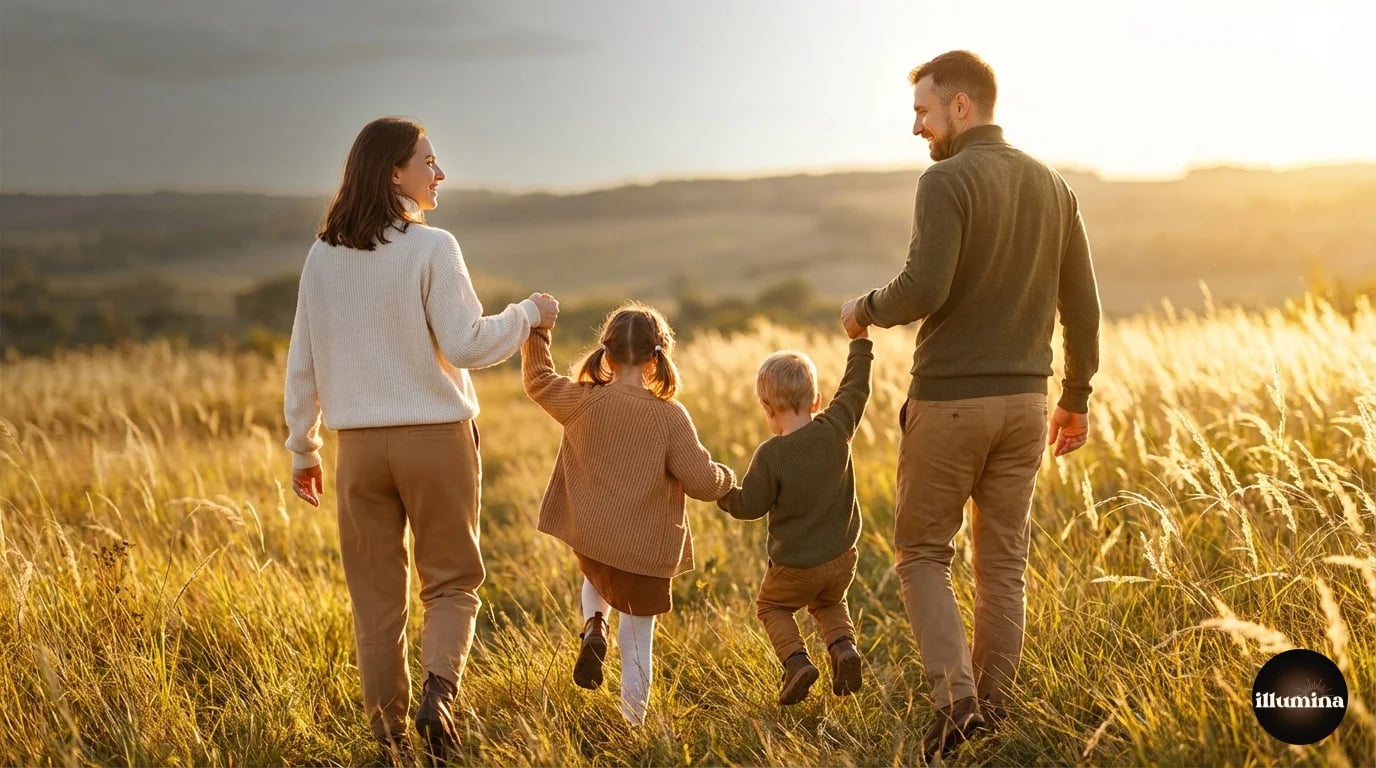
Outfit Coordination (Not Matching)
Matching outfits died in the 90s. Everyone in white shirts and jeans? Everyone in red? It looks like a uniform, and twenty years from now you'll wonder why you did that. What works now is a shared color palette where each person wears their own combination.
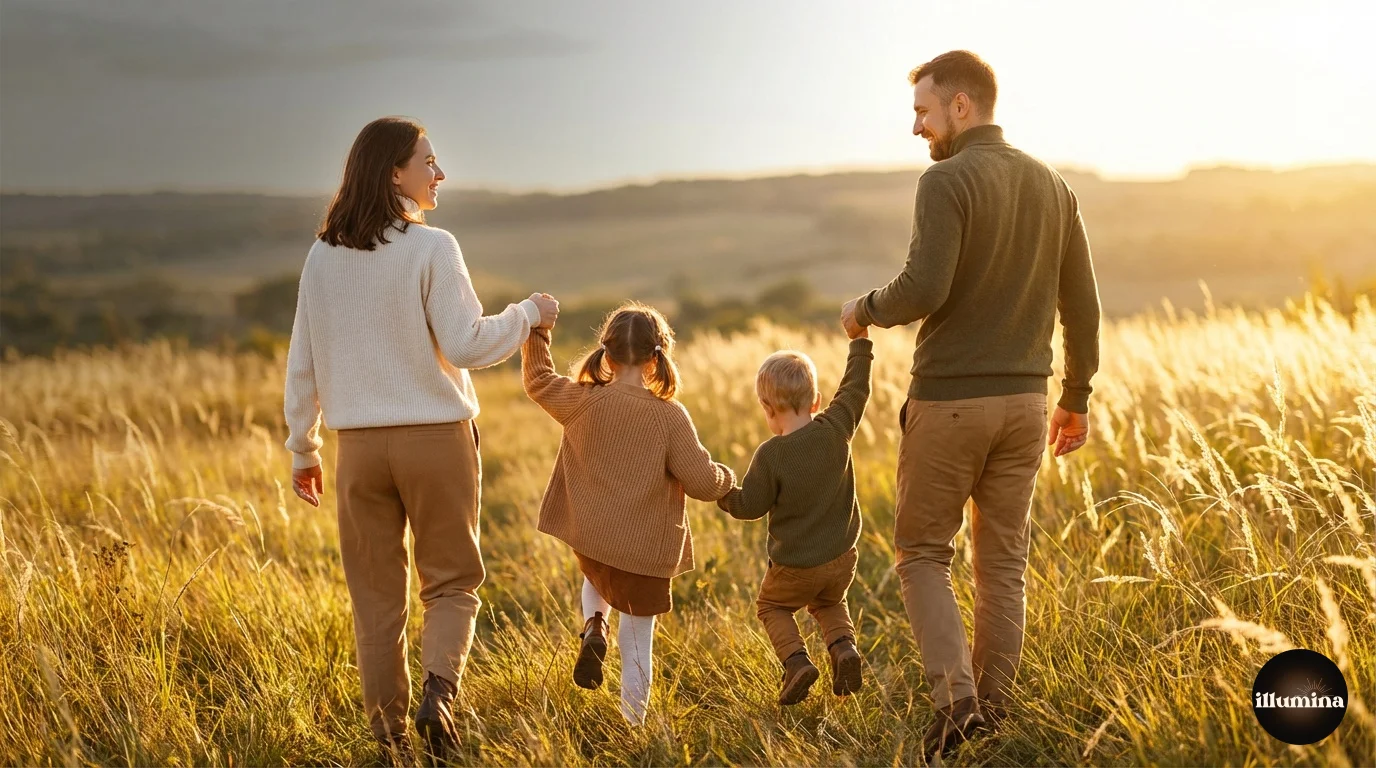
Pick three or four colors that complement each other. For a warm-toned session: cream, camel, olive, and rust. For cooler tones: charcoal, ivory, dusty blue, and sage. Each family member picks one or two colors from the palette and wears them in different pieces. Mom in an ivory dress with a camel cardigan. Dad in charcoal pants and an olive button-down. Kids mixed across all four. It looks intentional without looking coordinated by a stylist with a clipboard.
Texture is your friend. Cable knit, linen, corduroy, denim, leather belts, suede boots. Texture adds visual depth without the risk of busy patterns fighting each other or fighting the background. If someone wants a pattern, limit it to one person and keep it small scale. Dad in a subtle plaid works. The entire family in different plaids looks like a picnic blanket convention.
Avoid brand new, never-worn clothes. They look stiff and uncomfortable in photos because they are stiff and uncomfortable. Wear the outfit once or twice before the session so it drapes naturally and everyone moves normally in it.
Shoes matter more than people think, especially in full-length shots. Clean, coordinated footwear ties the look together. Dirty sneakers, beat-up flip flops, or one person in heels while everyone else is in boots breaks the visual consistency. You don't need to buy new shoes. Just make sure they don't distract.
For families with babies and toddlers, dress the baby first and build the family palette around whatever the baby is wearing. You can't negotiate with a one-year-old about outfit choices, and babies look best in soft neutrals anyway. Let the baby set the tone and match everyone else to them.
Location Ideas by Season
Spring
Blooming orchards, tulip fields, botanical gardens, any park with flowering trees. Spring light is soft and the colors are naturally vivid. The window is narrow though. Peak bloom lasts about two weeks, and if it rains you're done. Book the session for the week you expect peak bloom and have a rain date ready.
For families with allergies, check what's in bloom before you commit to a location. Nothing derails a session faster than a sneezing toddler with swollen eyes standing in a field of the exact flower they're allergic to.
Summer
Beaches at sunrise or sunset (midday beach light is brutal), lakesides, open fields, lavender farms. Summer gives you the longest golden hour window and the most location flexibility, but the heat is a factor. Schedule for early morning or late evening. Nobody looks good sweating through their outfit at 2pm in July.
If you're shooting at the beach, bring a change of shoes (sand ruins nice footwear), a brush for wind-blown hair between poses, and accept that kids will end up in the water before you're done. Build the wet-kid shots into the plan instead of fighting it.
Autumn
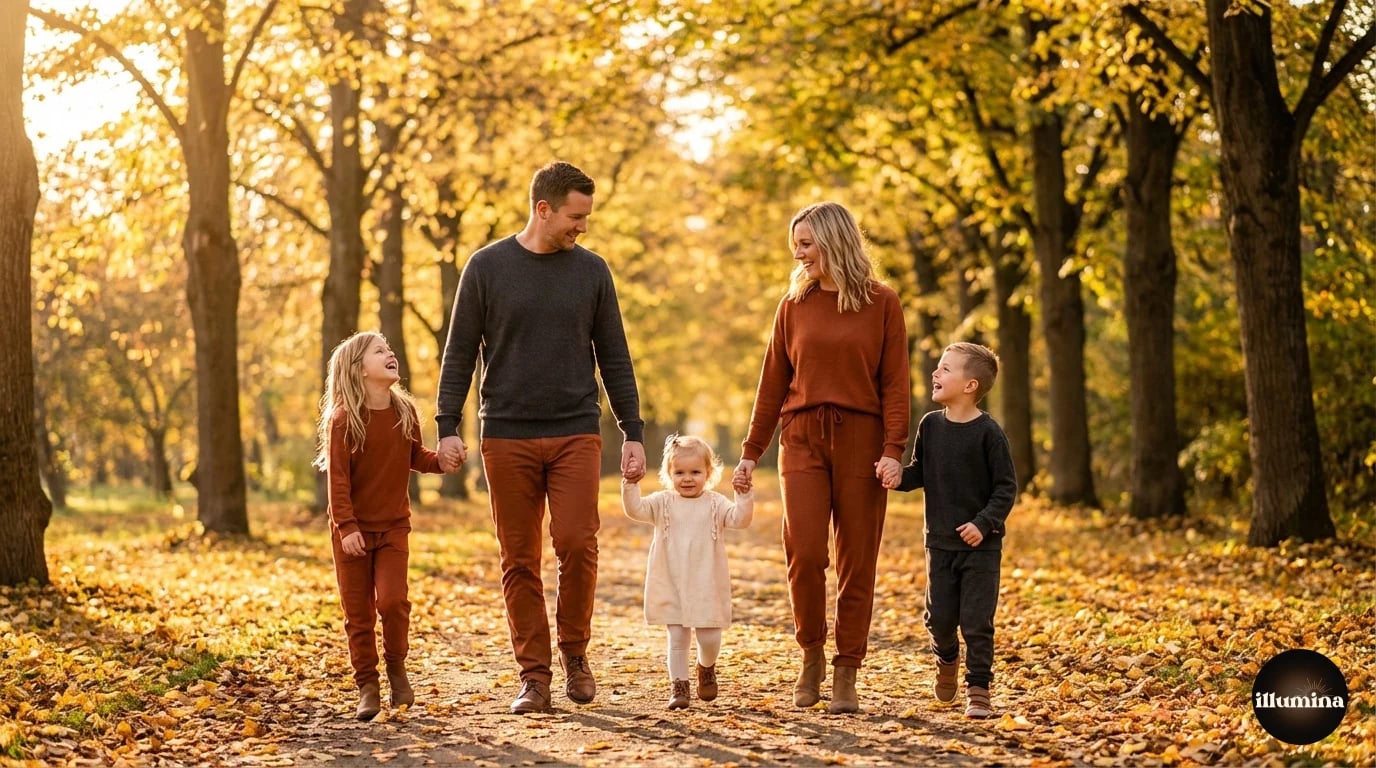
Peak foliage is the most popular time for family sessions, and for good reason. The colors are spectacular, the light goes golden early, and sweaters and boots photograph beautifully. Tree-lined roads, orchards after harvest, parks with mature maples and oaks, pumpkin patches (the scenic kind, not the crowded commercial ones).
Timing matters. Book early because every photographer in your area is fully booked during peak foliage. Late September through mid-November depending on your region. Check local foliage trackers and aim for the week of peak color. A week too early gives you mostly green. A week too late gives you bare branches.
Apple orchards are a personal favorite for fall sessions. The rows of trees create natural leading lines, the light filters through the canopy, and kids can pick apples between poses. Just call ahead to make sure the orchard allows photography sessions. Some charge a small fee, others are happy for the foot traffic.
Winter
Snow is gorgeous when it cooperates. Fresh snow on a quiet morning, evergreen trees, a field with a lone barn in the background. The challenge is keeping everyone warm enough to smile naturally. Layer thermals under the photo outfits, bring blankets for between shots, and keep the session short. Twenty minutes in the cold is plenty. Thirty is pushing it with kids.
If your area doesn't get picturesque snow, shift to an indoor or studio session. A living room with a Christmas tree, a cozy reading nook, a front porch with string lights. Home sessions are underrated for winter because everyone is comfortable, warm, and relaxed, which shows up in the photos.
Posing Families (Without It Looking Forced)
The stiff, everyone-staring-at-the-camera group shot is necessary but shouldn't be the whole session. Get it done in the first five minutes so it's out of the way. Then move on to the real work: making people interact with each other instead of performing for the lens.
Couples
Foreheads touching, eyes closed. This reads more intimate than a full kiss and it's comfortable for people who don't like PDA in front of a camera. Walking together and looking at each other instead of the camera. One person behind the other, arms wrapped around, both looking the same direction. The shoulder lean: one person leans their head on the other's shoulder while the taller person looks down at them.
For couples who feel awkward in front of a camera (most of them), movement helps. Walk together slowly, look at each other, talk about something real. What they had for breakfast, what they're doing this weekend, anything that gets a genuine reaction. The photographer shoots while they're talking. The best couple photos almost always happen between the poses, not during them.
Parents with Young Kids
Forget about everyone looking at the camera at the same time. It's not going to happen, and the photos where you tried look tense. Instead: parents look at the kids, kids do whatever they want. The connection between parent and child is what makes the photo work, not synchronized eye contact with a lens.
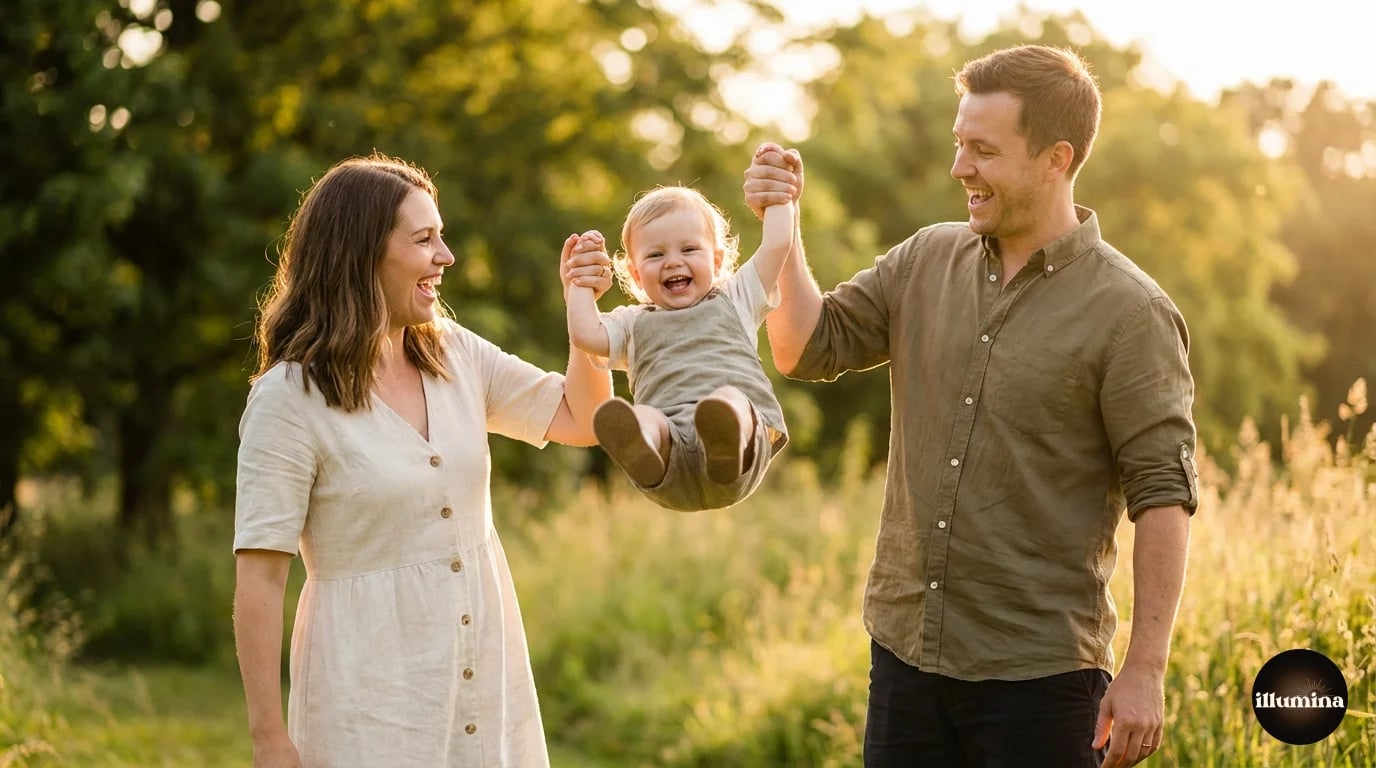
Toddler on dad's shoulders. Mom and dad lifting the kid between them (kids love being airborne). Family walking away from the camera, holding hands, with the kid in the middle. Sitting on a blanket reading a book together. Tickle fight. The genuine reactions from these setups produce better photos than any posed arrangement.
Schedule around nap time, not against it. A well-rested kid gives you 30 minutes of cooperation. A tired kid gives you 5 minutes and a meltdown. Shoot mid-morning or late afternoon, never right before or during nap time.
Families with Teens
Teens are the hardest age group for family photos because they're self-conscious and they've decided in advance that this is awkward. Two things help: give them something to do with their hands (a jacket over the shoulder, hands in pockets, leaning against something), and don't make them perform enthusiasm they don't feel. A subtle confident expression reads better on a teenager than a forced grin.
Sibling shots with teens work best when there's genuine interaction. Whisper a joke, play a song they know on your phone, reference an inside joke the family has. You're looking for the split second where the self-consciousness drops and something real comes through. It'll happen. Be ready.
Large and Extended Families
Get the big group photo done first, fast, while everyone is still present and patient. Tallest in back, kids in front, graduate or honored family member in the center. Take ten frames fast. Someone will blink in every single one, but with ten frames you'll find one where nobody is.
After the big group, break into subgroups: immediate families, grandparents with grandkids, siblings only, cousins together. These smaller groupings are where the real character photos happen. The big group shot goes on the wall. The subgroup shots go in albums and on phones.
Transform Your Photos
Give Your Photos the Wow Factor
Browse our collection of premium digital photo backdrops. 50 high-resolution print-ready backgrounds in each pack. Instant download.
Browse Backdrops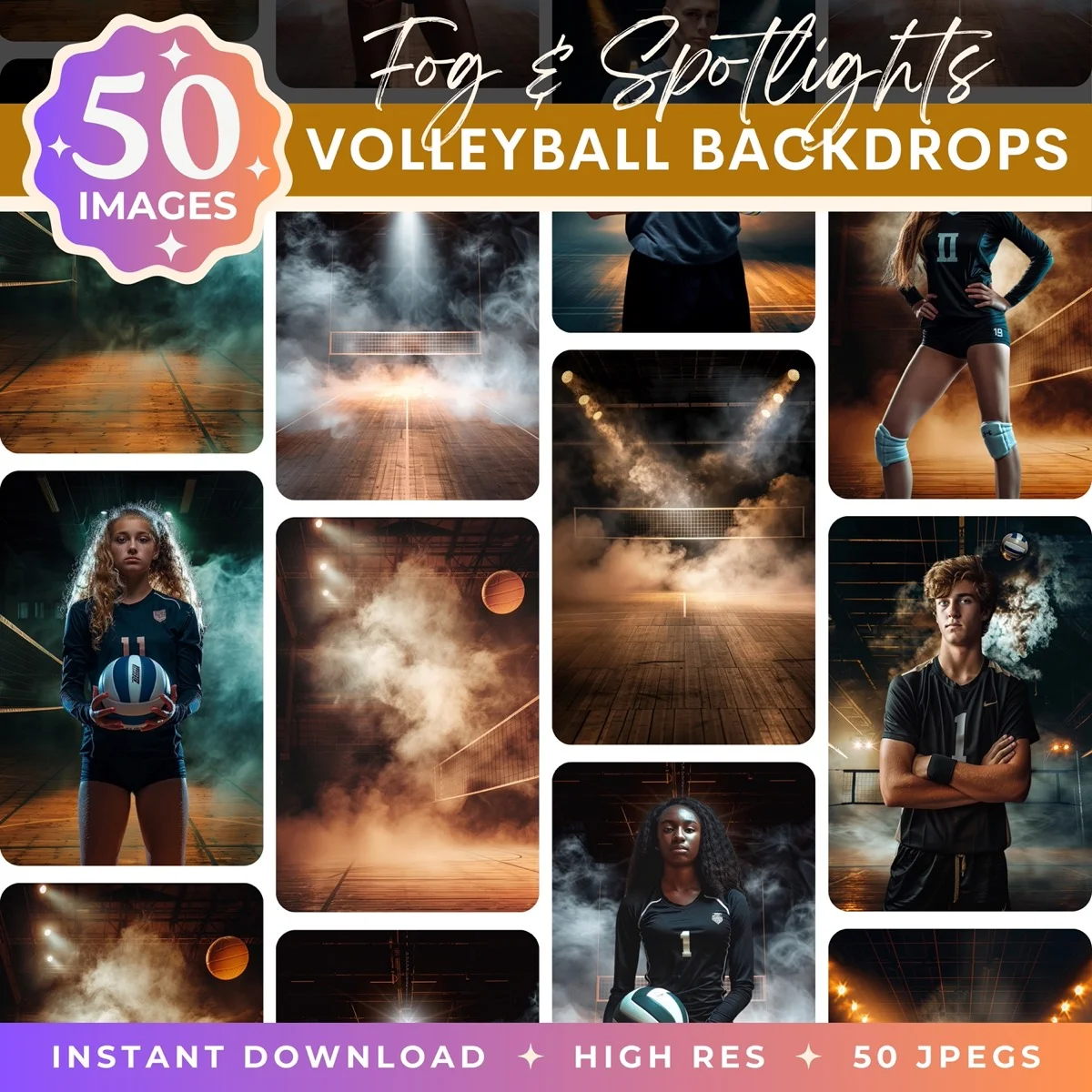

Kids: How to Get Good Photos Without Losing Your Mind
Kids under five don't pose. They perform for about 90 seconds, then they're done. The rest of the session is you following them around and catching moments. This is fine. Some of the best family photos ever taken are a photographer chasing a three-year-old through a field while the parents laugh in the background.
Bring snacks that don't stain (goldfish crackers, not Cheetos). Bring a favorite toy for bribery but keep it hidden until you need it. Let them run. Let them pick flowers. Let them sit in the dirt if they want to. You can Photoshop a grass stain but you can't Photoshop genuine joy.
For babies, plan around feeding time. A fed, burped, recently-napped baby in a warm environment will give you beautiful photos. A hungry baby will give you beautiful screaming photos. Time it right.
Don't save the family shot for last. Kids fall apart at the end. Get the must-have group photo in the first ten minutes while everyone still has energy, then spend the rest of the session on candids and smaller groupings.
Props and Personal Touches
The best family photo props aren't props at all. They're things the family already owns and uses. A well-loved quilt spread on the grass. The dog (always include the dog if they have one). A guitar someone plays. A favorite book they read together at bedtime. These items add personality without looking staged. Generic props from a rental company (vintage suitcases, wooden signs with the family name) date fast and look like everyone else's session.
Balloons photograph well but have a shelf life of about 30 minutes before they start drooping. If you're using them, blow them up right before the session starts. Metallic and clear balloons hold up longer than standard latex. Skip the balloon arch unless the family specifically wants one. They take forever to set up and they scream "Pinterest project" in photos.
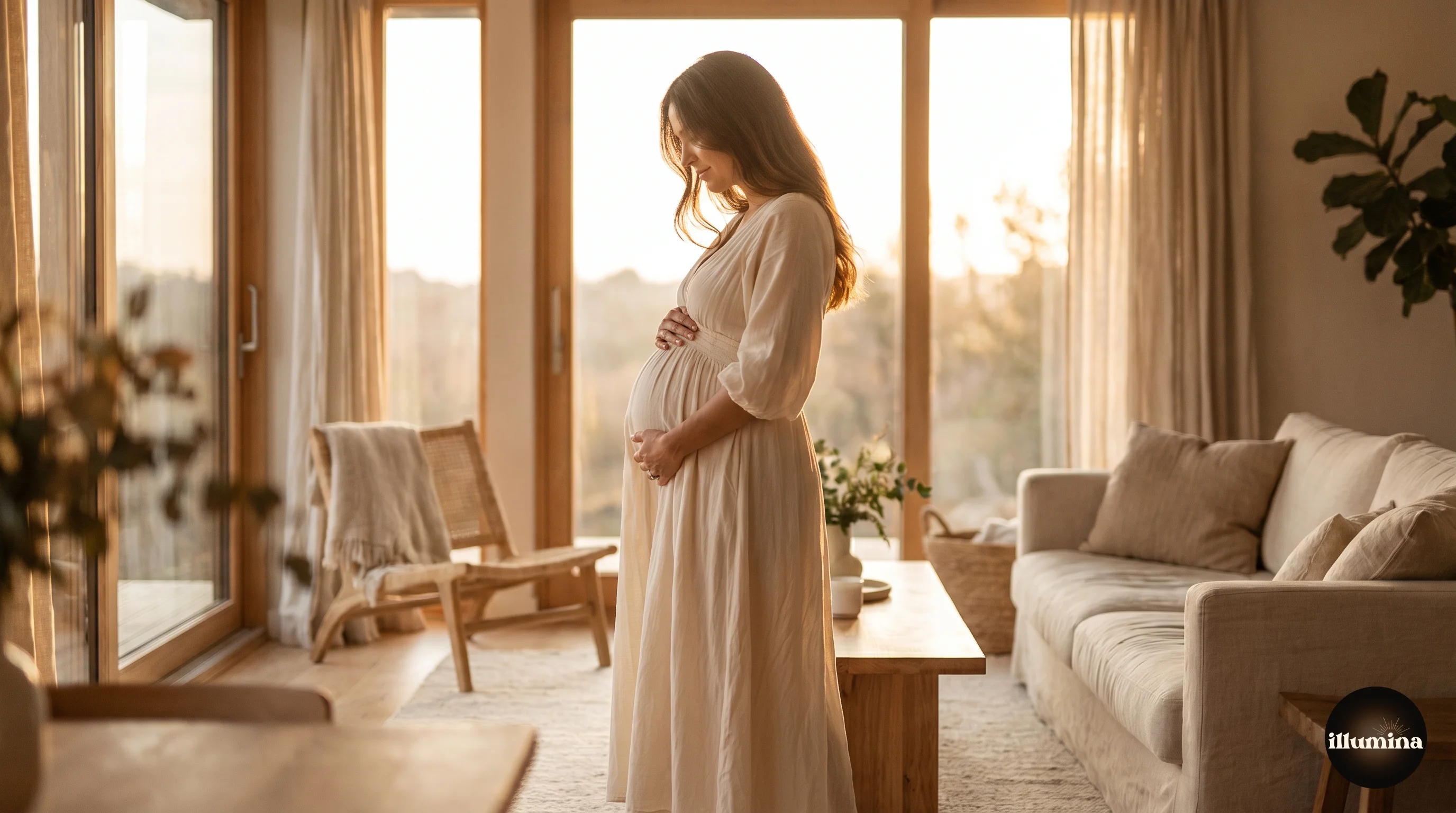
For milestone sessions (pregnancy announcement, gender reveal, adoption finalization, new home), a small sign or letter board with the news is fine. Keep the sign small enough that it's a detail, not the focal point. The family's reaction to the moment is what matters. The sign just provides context.
Pets are wonderful in family photos and an absolute nightmare to photograph. A calm older dog will sit with the family for one or two frames. A puppy will not sit for any frames. Have someone hold the leash out of the frame, get two good shots with the pet, and then let someone take the pet away for the rest of the session. Don't try to include the pet in every photo. You'll get ten shots of people wrestling the dog and none of people looking at each other.
What to Avoid
Matching character outfits. If the whole family is in Minions shirts, the shirts are the photo, not the family. Save the themed outfits for Halloween.
Too many location changes. Pick one or two spots within walking distance and stay there. Driving across town mid-session kills momentum and stresses everyone out, especially kids who just got comfortable.
Over-directing kids. Every instruction you give a child under six reduces their cooperation by about 30 seconds. Five instructions and they're done. Tell them where to stand, point them at their parents, and then just watch. The less you direct, the more they give you.
Waiting for perfect conditions. Overcast days produce gorgeous even light. A little wind adds movement to hair and fabric. Slightly muddy shoes look lived-in and real. The imperfect conditions often produce the most interesting images. Don't cancel a session because it's not sunny.
Lighting: When and How
Golden hour. Last 90 minutes before sunset. This is the single most impactful thing you can do for family photo quality. The light goes warm, shadows soften, skin tones glow, and even mediocre compositions look cinematic. If you can only remember one rule from this guide, it's this one.
If golden hour doesn't work with your schedule (nap conflicts, travel time, winter when sunset is at 4:30pm), go for open shade. Find a spot where the family is shielded from direct overhead sun but still gets plenty of ambient light. Under a large tree canopy, on the shaded side of a building, under a covered porch. The light is even and flattering, just less dramatic than golden hour.
Avoid midday sun. It creates harsh shadows under eyes, noses, and chins. Everyone squints. Skin looks shiny. Colors wash out. If midday is your only option, find deep shade and use a reflector to bounce light back into faces. But if you have any flexibility at all, wait for better light.
Using Digital Backdrops for Family Portraits
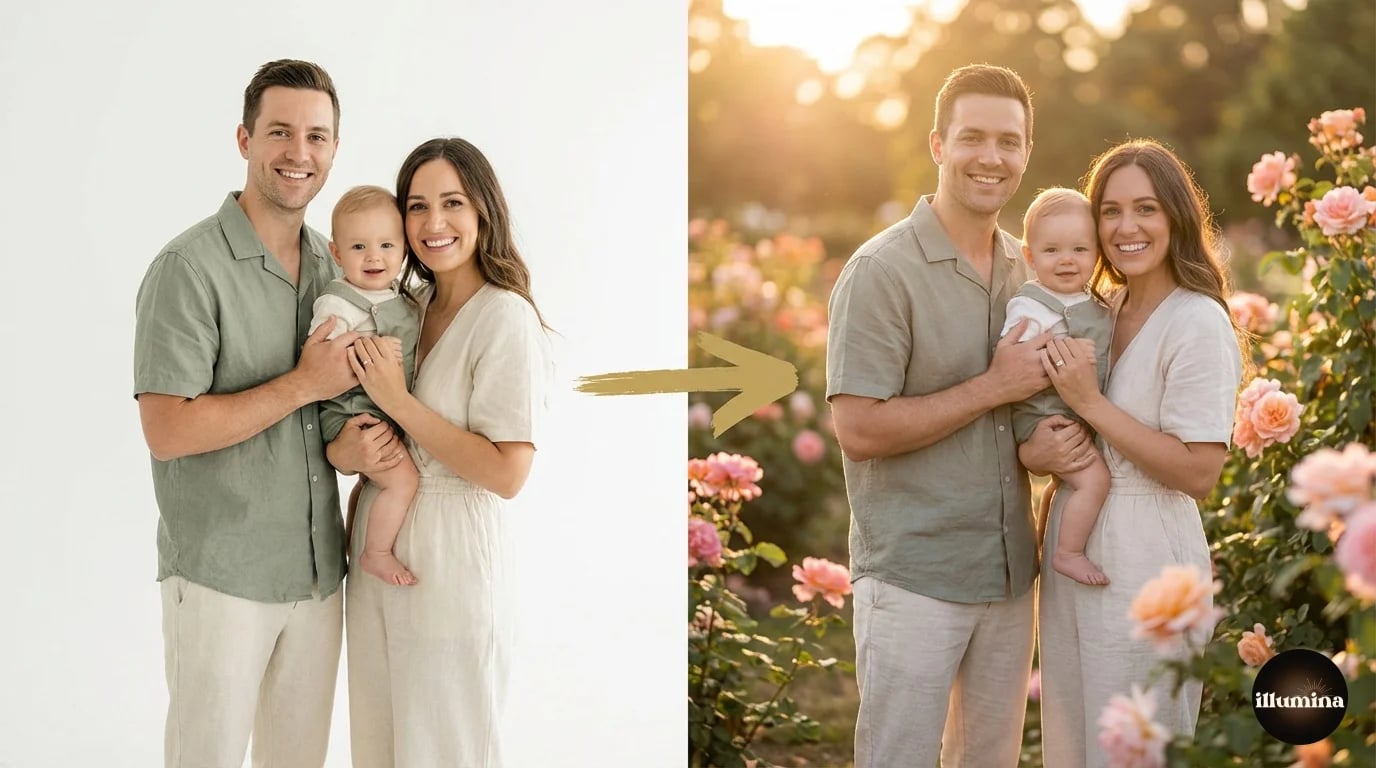
Not every family has access to a gorgeous autumn park or a professional studio. And sometimes the weather, the schedule, or the location just doesn't work out. Digital backdrops solve this by letting you shoot anywhere and composite the family into any scene afterward.
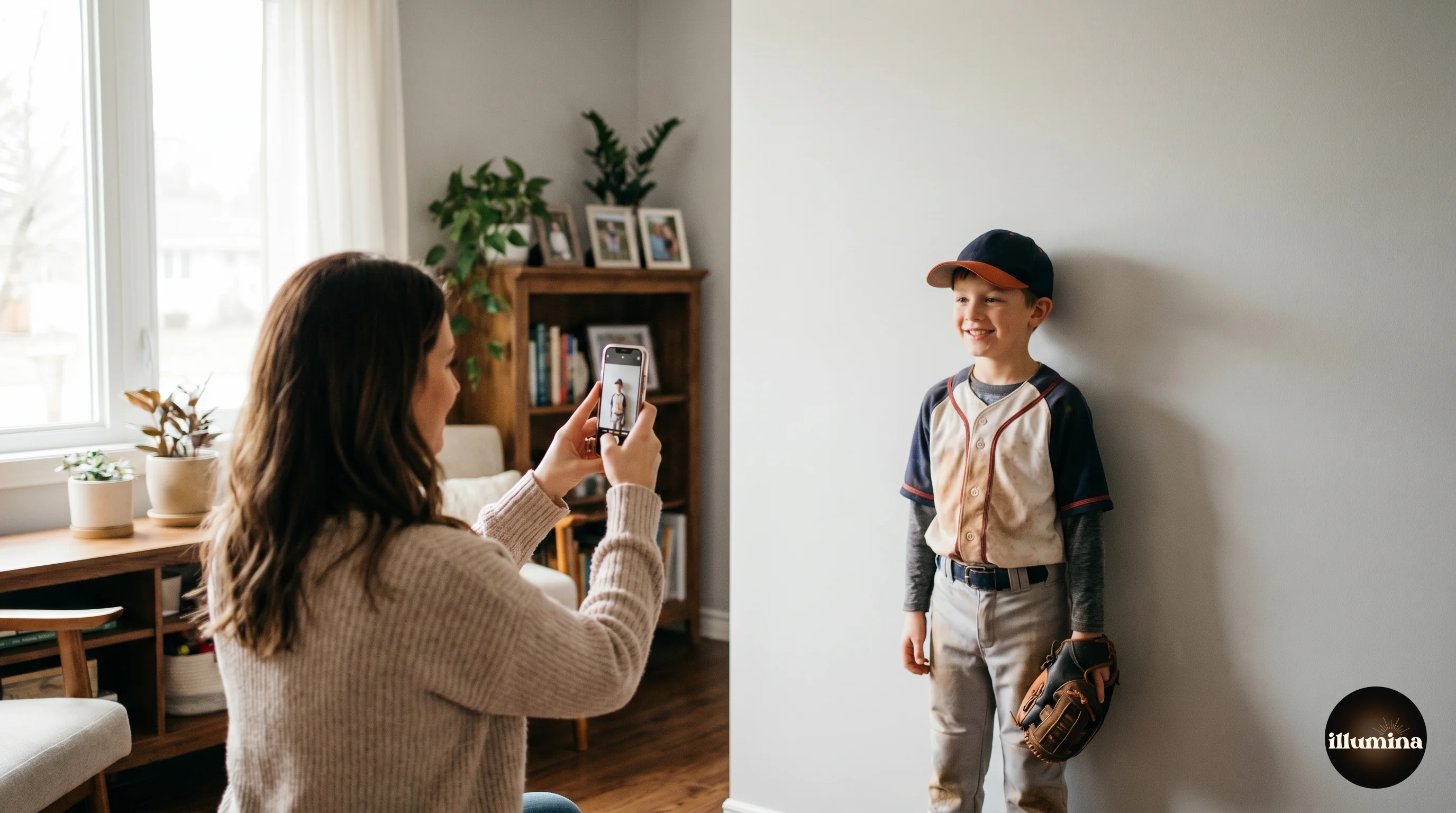
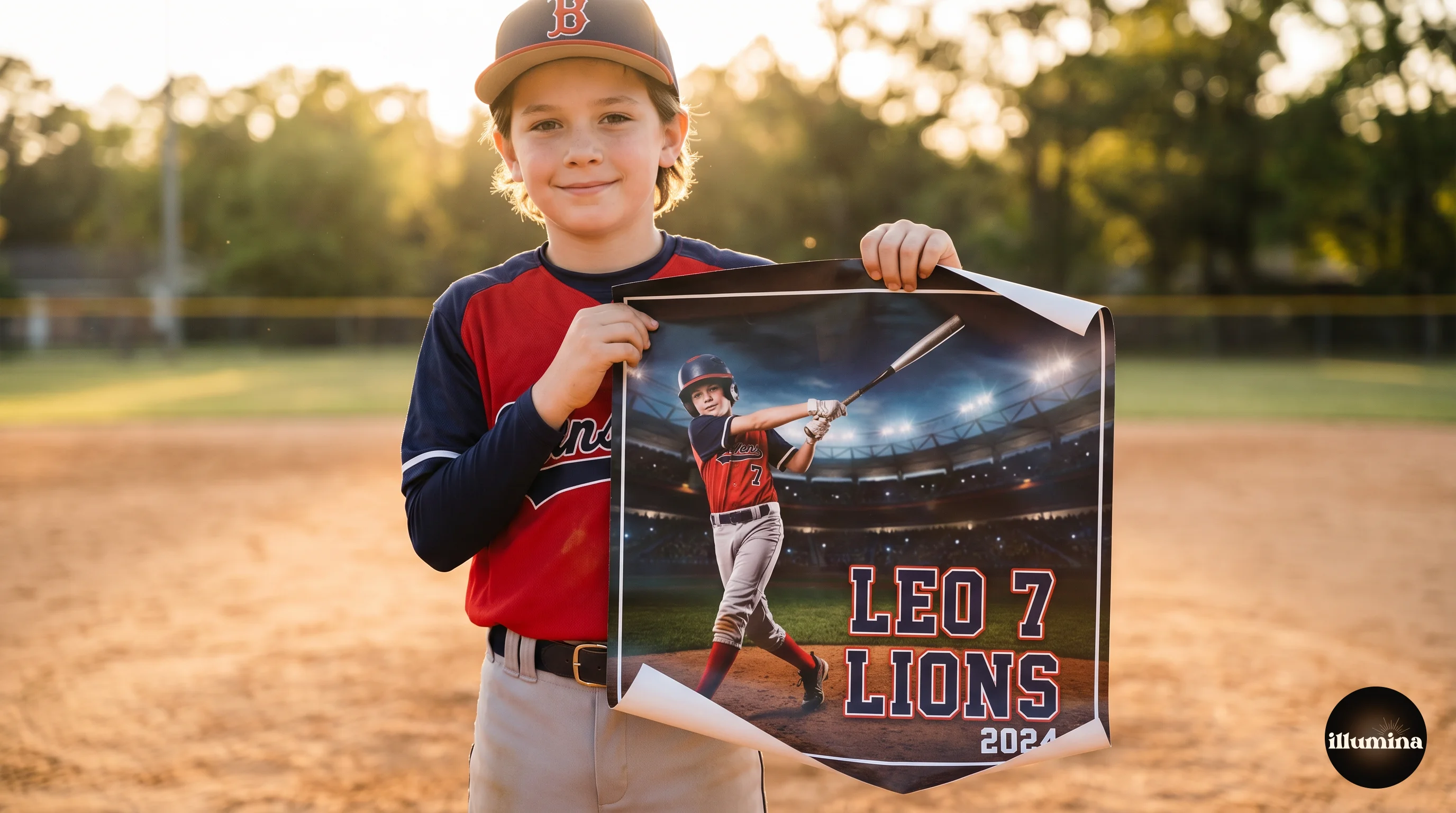
The workflow: photograph the family against a clean background (a plain wall, a pop-up backdrop, even a living room with the clutter cropped out). Remove the background in Photoshop or Canva. Place the cutout onto a professional backdrop scene. Adjust color temperature and lighting to match. Export.
This is especially useful for photographers who shoot mini sessions in a small rented space. You can offer ten different "location" looks from one 15-minute session, which means more variety for the client and more sessions per day for you. We walk through the full compositing process in our Canva compositing guide and our Photoshop background removal guide.
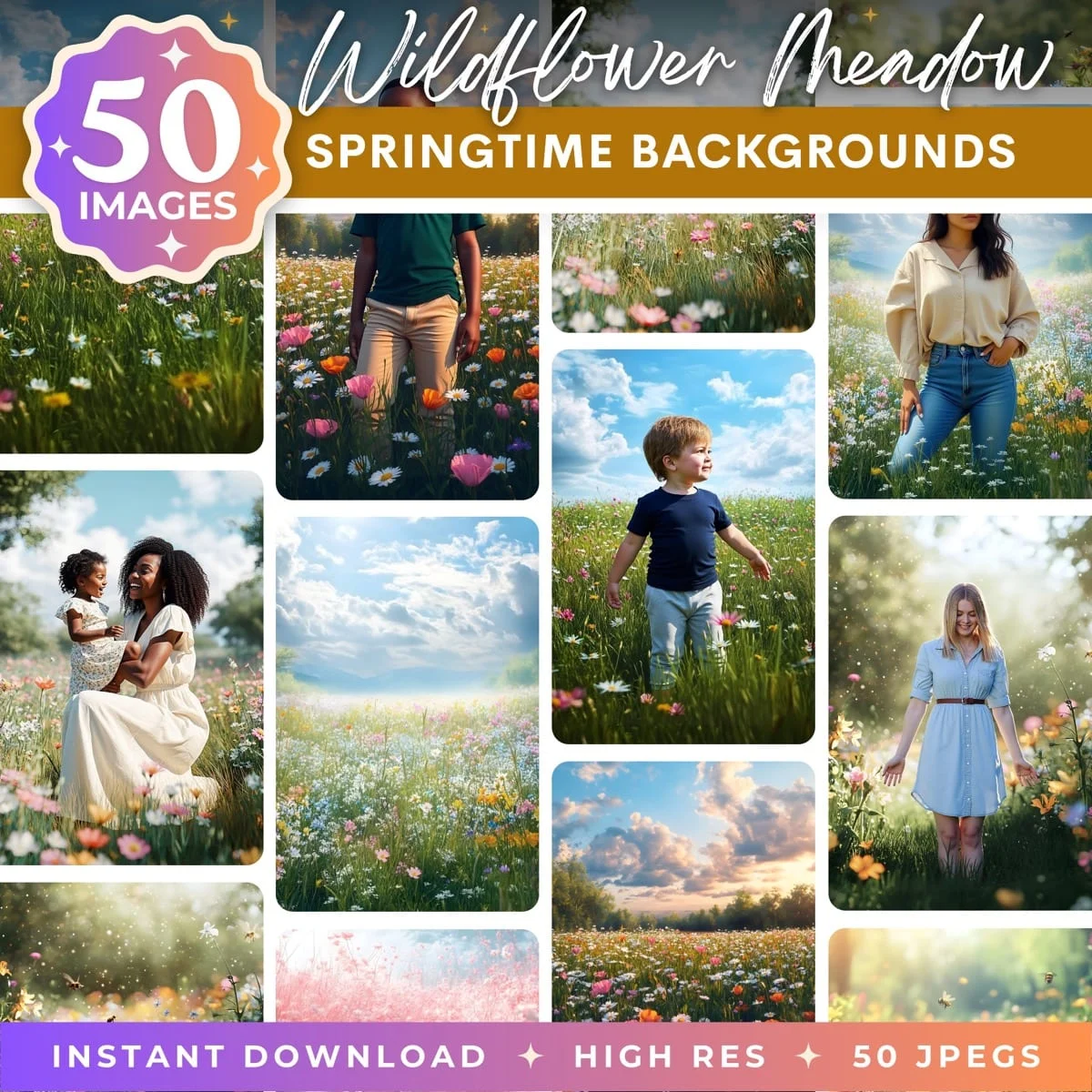
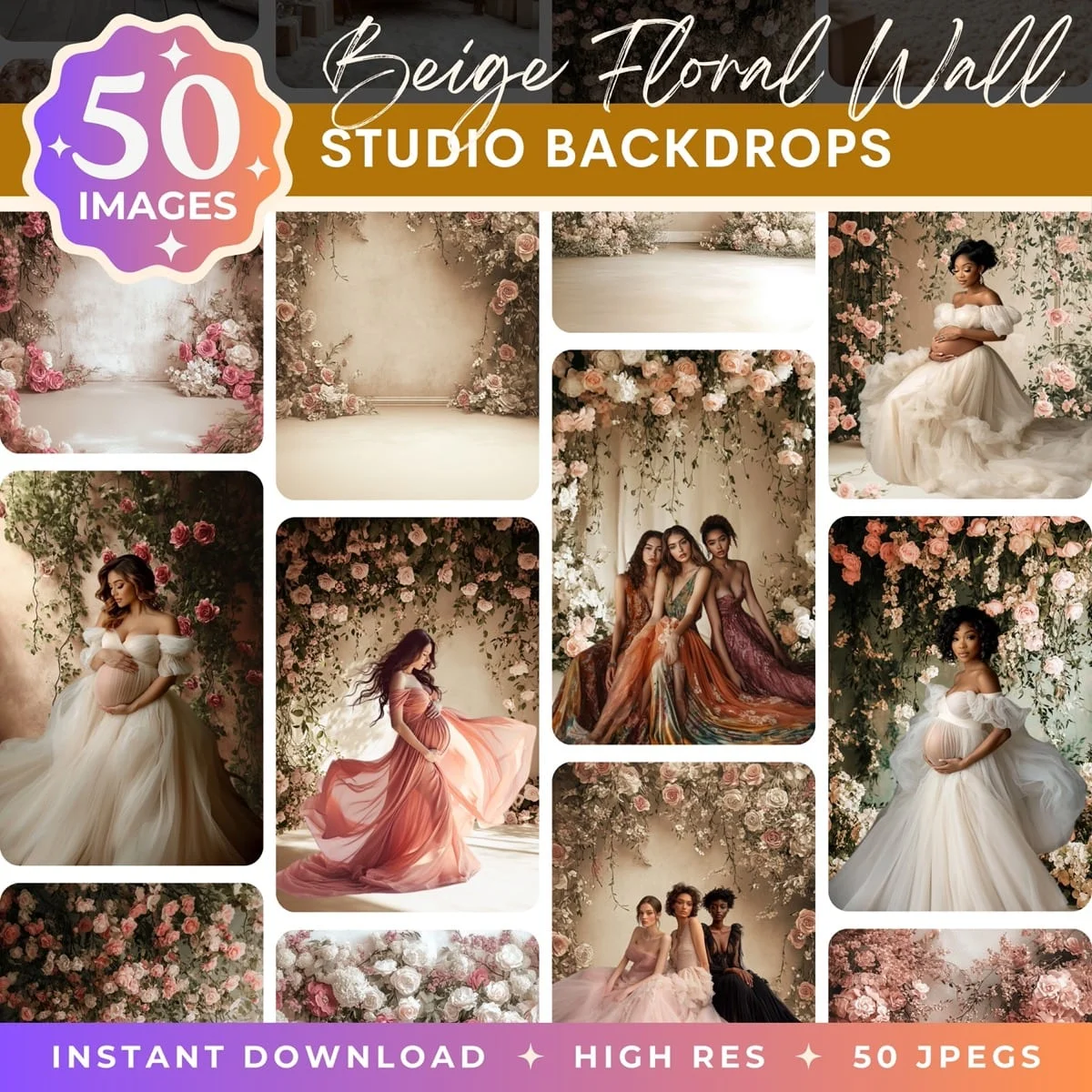
For backdrops designed specifically for family portrait compositing, with lighting and perspective that matches how families are typically photographed, browse what we offer at Illumina Backdrops. Every pack is built for this kind of work.
Beautiful scenes for family portrait compositing
Family photos don't need to be elaborate. Good light, coordinated clothes, a location with some character, and enough patience to let the real moments happen. The photos you'll treasure aren't the ones where everyone was perfectly posed. They're the ones where someone was mid-laugh, the toddler was running, and the light happened to be perfect.
Transform Your Photos
Give Your Photos the Wow Factor
Browse our collection of premium digital photo backdrops. 50 high-resolution print-ready backgrounds in each pack. Instant download.
Browse Backdrops