
Quick Answer
Starting a photography business with digital backdrops means you can offer clients studio-quality composite portraits without owning a massive studio or traveling to expensive locations. Buy a set of high-quality digital backdrops, learn the compositing workflow in Photoshop or Canva, and market yourself as a photographer who can place subjects anywhere from enchanted forests to professional headshot settings. Your startup costs stay low (camera, basic lighting, a plain backdrop, and a computer) while your creative output looks like you have access to dozens of premium locations.
This guide walks through the business model, essential gear, the compositing workflow, pricing your services, finding your niche, and marketing strategies that work specifically for digital backdrop photographers.
Why Digital Backdrops Are a Smart Business Model
Traditional portrait photography has a location problem. Beautiful locations are far away, require permits, depend on weather, and eat into your profit with travel time and gas. Studio photography solves the location problem but creates a cost problem: leasing a large space, buying multiple physical backdrops, and storing everything.
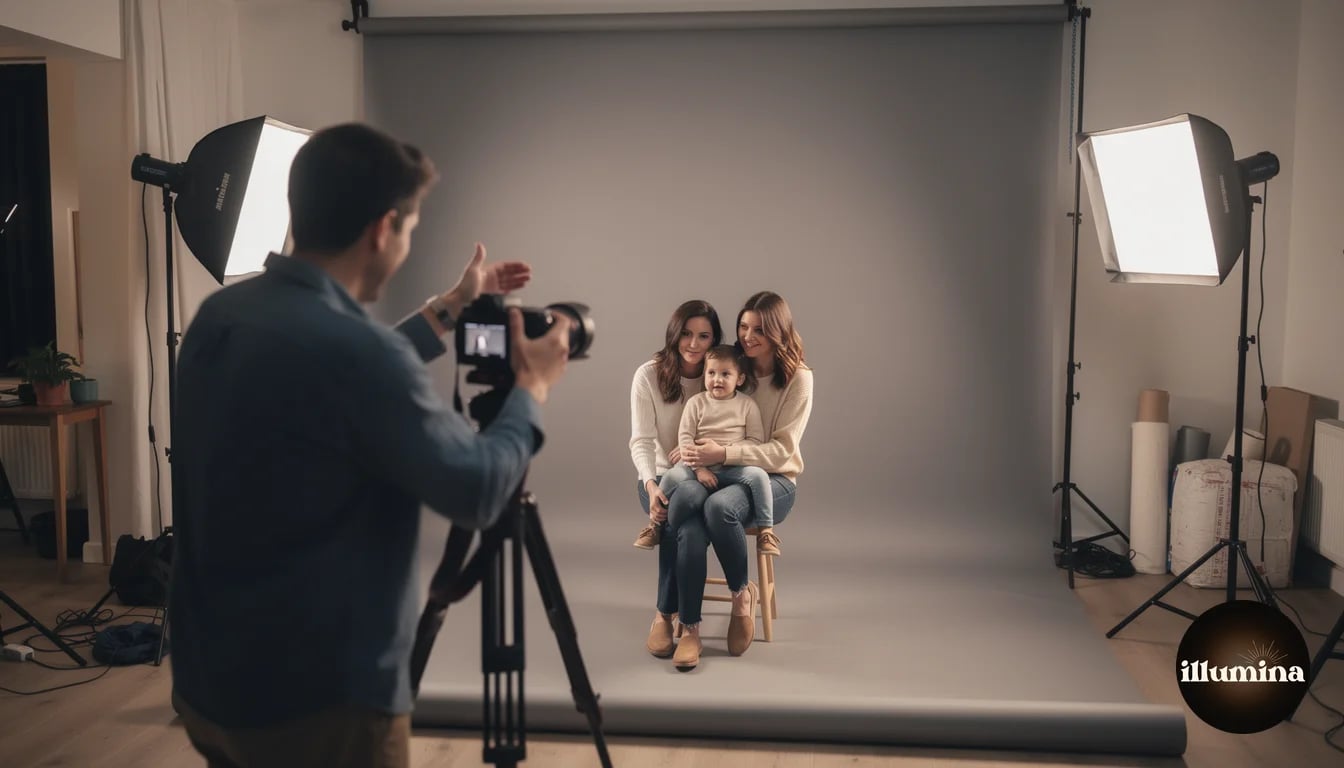
Digital backdrops eliminate both problems. You shoot in a small space with a plain backdrop (your garage, a spare bedroom, a rented studio by the hour) and composite the subject onto any scene you want in post-production. A single 10x12 foot space with gray seamless paper and two lights is enough to photograph families, seniors, athletes, babies, and professionals. The backdrop library on your hard drive replaces thousands of dollars in physical materials and location fees.
The math is compelling. A set of 50 digital backdrops costs $25-40 and lasts forever. A single physical muslin backdrop costs $50-150 and wears out. Digital backdrops never wrinkle, never fade, never need storage space, and you can use them for unlimited clients without any per-session cost. Your cost of goods is effectively zero after the initial purchase.
The other advantage is creative range. With physical backdrops, you offer maybe five to ten looks. With a digital library, you offer hundreds. A sports photographer can place athletes in stadiums, on fields lit with dramatic fog, or in front of fire and smoke effects. A family photographer can offer spring gardens, autumn forests, Christmas scenes, and beach sunsets all from the same small studio. That variety becomes a selling point that location-dependent photographers cannot match.
Essential Gear to Get Started
Camera and Lens
Any modern DSLR or mirrorless camera works. You do not need the latest flagship body. A Canon R6, Nikon Z6, Sony A7III, or even older models like the Canon 5D Mark IV are more than sufficient. The images will be composited in post, so resolution beyond 24 megapixels is nice but not critical.
For lenses, an 85mm f/1.8 is the workhorse for portrait compositing. The focal length creates natural compression that matches most digital backdrop perspectives, and the wide aperture lets you shoot at f/2.8-4 for clean separation from the backdrop. A 50mm f/1.8 works as a budget alternative and is better for tighter spaces. Avoid wide-angle lenses (35mm and below) for compositing work because the distortion makes subjects look unnatural when placed on backdrops shot at different focal lengths.
Lighting
Two lights is the minimum. One main light (a strobe or continuous LED with a large softbox) and one fill light or reflector. The main light goes at 45 degrees to the subject, and the fill or reflector goes on the opposite side to lift shadows. This classic two-light setup creates dimensional portraits that blend naturally with most digital backdrops.
Consistency matters more than equipment quality. Use the same lighting setup for every session so your subjects have consistent shadow direction and intensity. When the lighting on your subjects is consistent, they composite naturally onto any backdrop without needing to adjust shadows and highlights for each image individually.
Match your studio light temperature to your backdrops. Most digital backdrops simulate natural outdoor light (around 5500K). Set your studio lights to daylight balance so the color temperature matches. If your lights are warm (tungsten) and the backdrop is cool (daylight), the composite will look off no matter how perfect your selection work is.
Backdrop and Space
A 9-foot roll of Savage seamless paper in Thunder Gray (#27) is the industry standard for compositing work. Gray provides enough contrast against most clothing colors for clean selections, and it does not reflect color onto skin the way white or colored backdrops do. One roll costs about $30 and lasts dozens of sessions.
Your shooting space needs to be at least 8 feet wide and 12 feet deep to fit a family of four with room for the camera. Ceiling height of at least 8 feet avoids lighting issues. A spare bedroom, a garage with good climate control, or a rented studio space all work. You do not need a permanent commercial lease to start.
Software
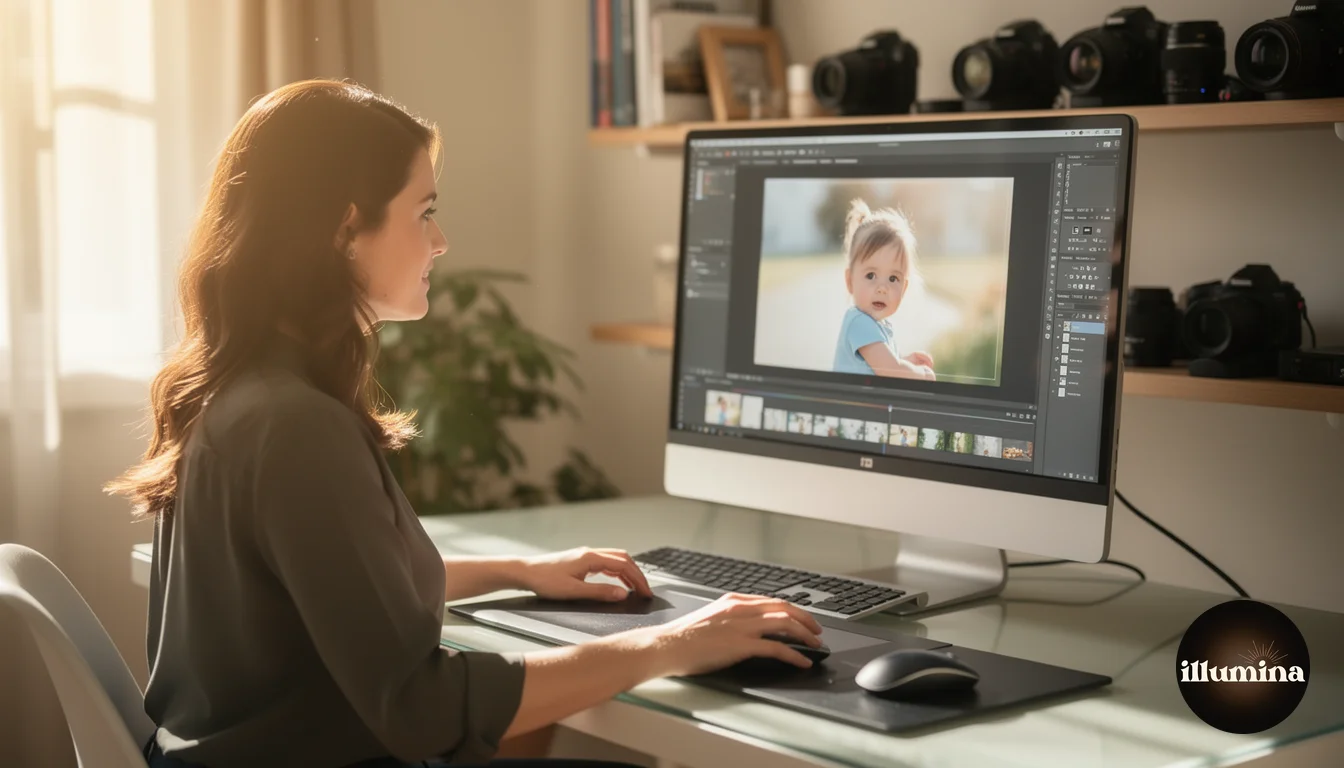
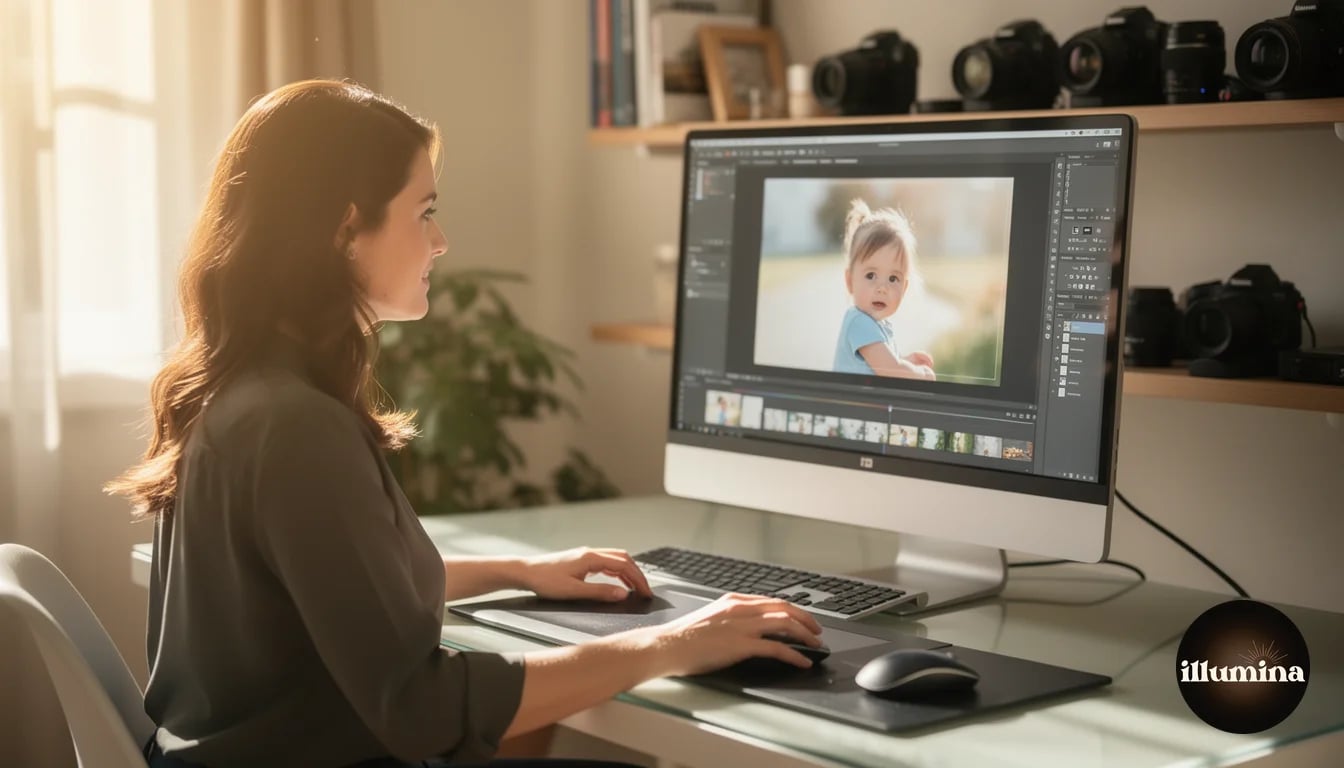
Adobe Photoshop is the professional standard for compositing. The Select Subject tool and Select and Mask workspace handle 90% of the selection work automatically, and you refine the edges manually. The monthly subscription is $10-20 depending on the plan.
Canva works for simpler composites and is free or low-cost. It cannot match Photoshop's edge refinement for complex subjects (curly hair, fine fabrics), but for clean-edged subjects on solid backdrops, it produces good results fast. Some photographers use Canva for quick turnaround work and Photoshop for portfolio-quality pieces.
The Compositing Workflow
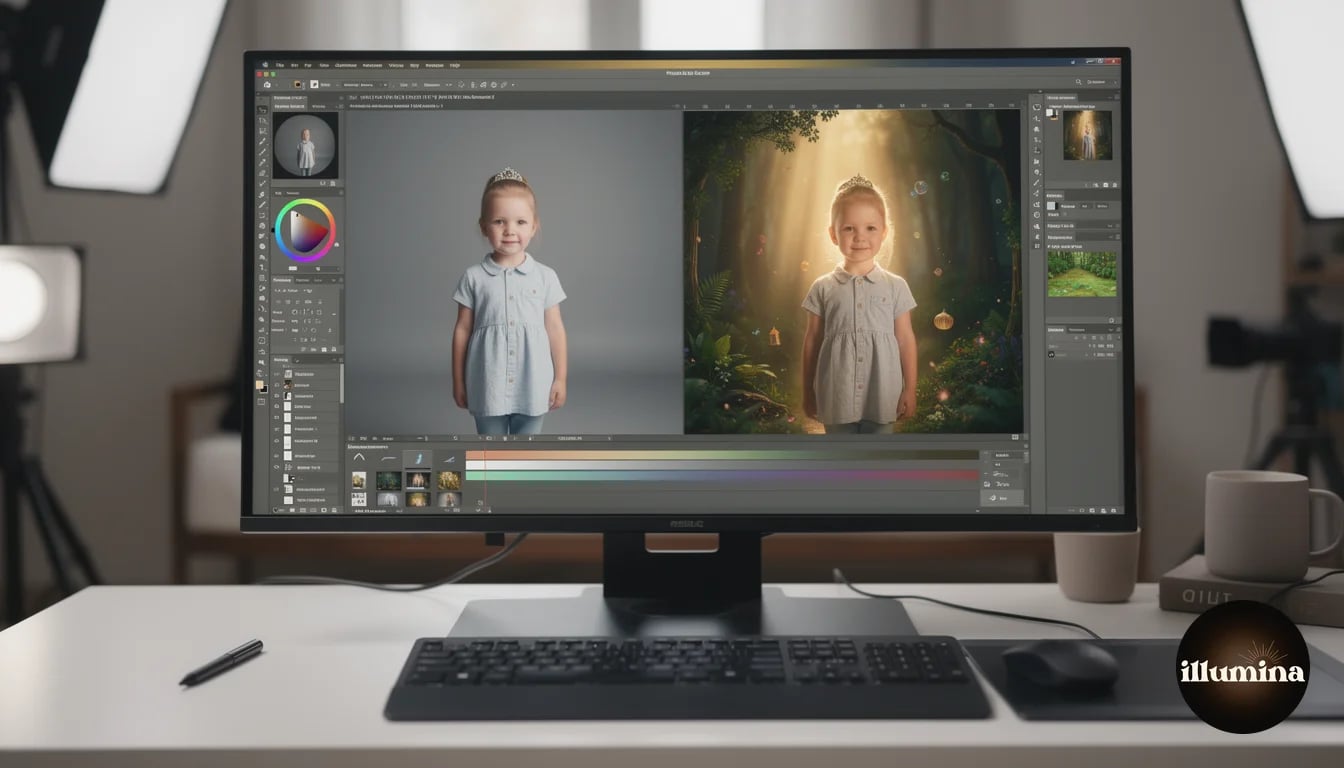
The workflow from camera to final image takes about 5-10 minutes per photo once you have it dialed in. Here is the process.
Step one: Photograph the subject against the gray backdrop with consistent lighting. Shoot at f/4-5.6 for enough depth of field to keep the entire subject sharp. Slightly overexpose the backdrop (but not the subject) to create cleaner edges for selection.
Step two: Open the image in Photoshop. Use Select Subject (one click) to create an initial selection. Refine the selection in Select and Mask, paying attention to hair edges, loose fabric, and any areas where the subject blends into the backdrop. Output as a layer mask.
Step three: Open the digital backdrop as a new layer behind the subject. Scale and position it so the horizon line and perspective make sense with the subject's position. The subject's eye level should roughly align with the backdrop's horizon.
Step four: Color match. Adjust the subject's color temperature, brightness, and contrast to match the backdrop. Use a Curves adjustment layer clipped to the subject layer. If the backdrop is warm and golden, warm up the subject to match. If the backdrop has blue shadows, add a touch of blue to the subject's shadow tones.
Step five: Add a subtle shadow beneath the subject to ground them in the scene. A soft, dark brush on a multiply layer at 20-30% opacity, placed at the subject's feet, prevents the floating cutout look. This single step makes the biggest difference between amateur and professional composites.
For a detailed walkthrough of every step, read our background replacement guide and Photoshop background removal tutorial.
Transform Your Photos
Give Your Photos the Wow Factor
Browse our collection of premium digital photo backdrops. 50 high-resolution print-ready backgrounds in each pack. Instant download.
Browse Backdrops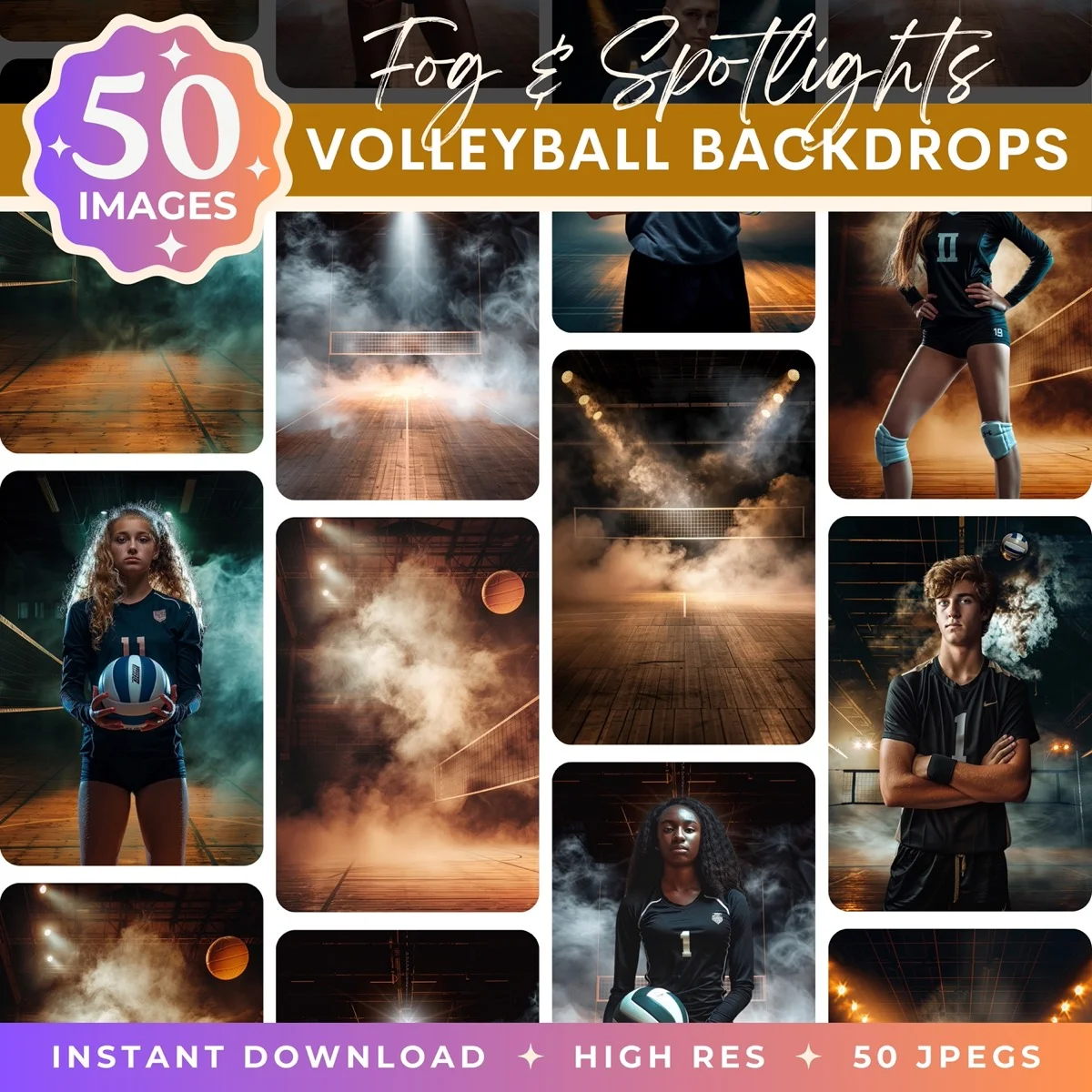

Finding Your Niche
Digital backdrop photography works across many niches, but specializing in one or two lets you build expertise and a targeted portfolio faster than being a generalist. Here are the niches where digital backdrops have the strongest demand.
Sports and Team Photography
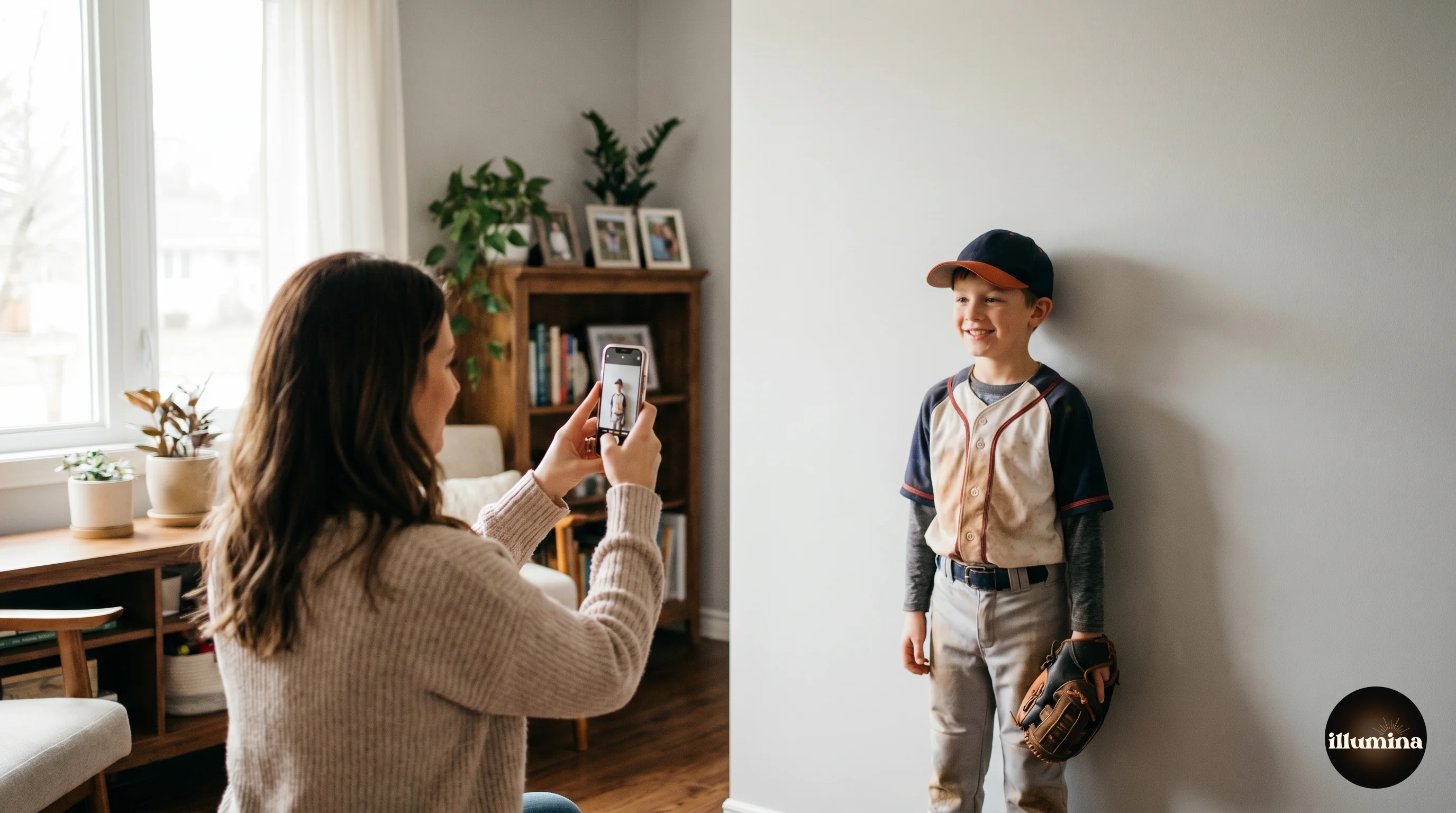
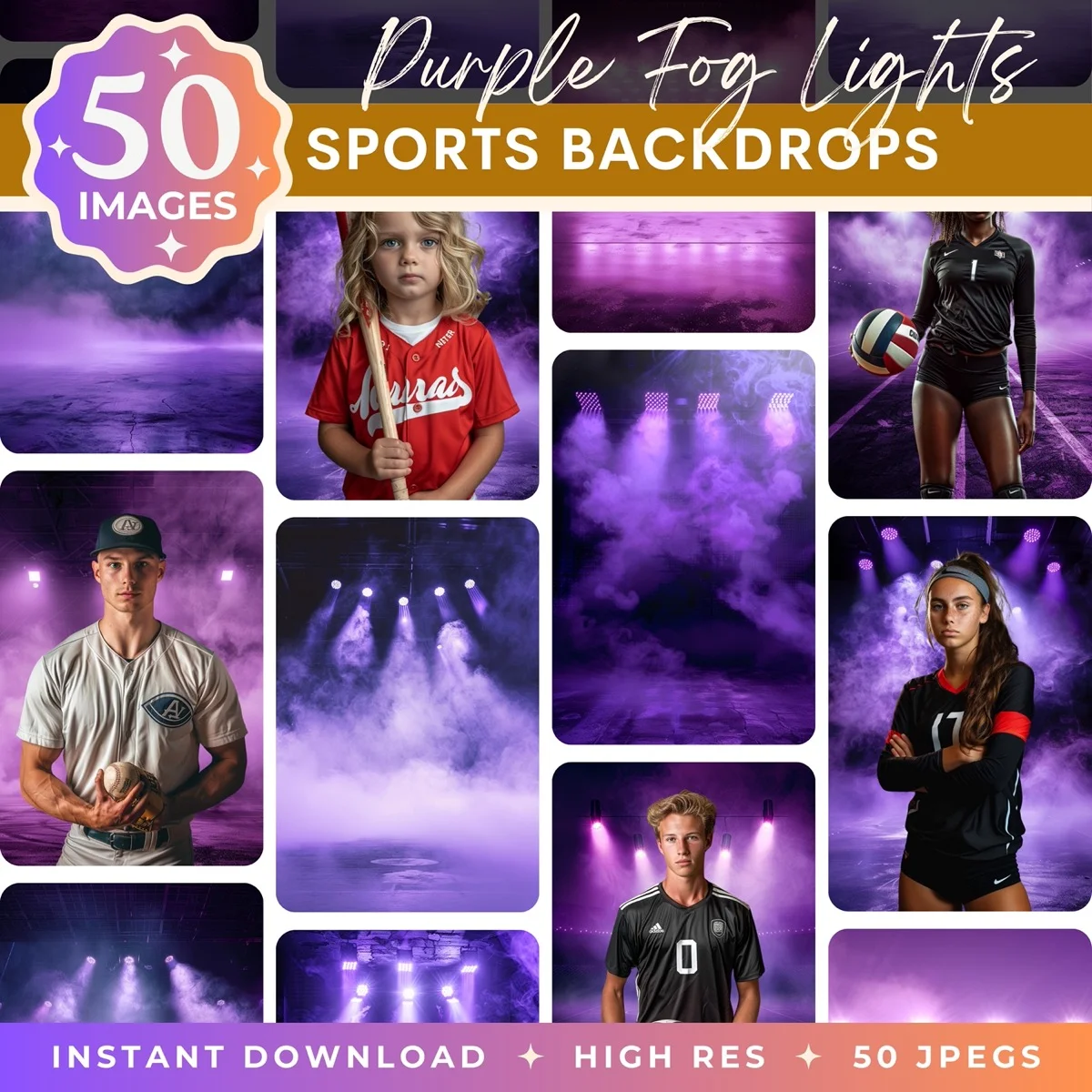
Youth sports photography is one of the biggest markets for digital backdrops. Parents want dramatic, professional-looking portraits of their kids in uniform, and digital backdrops deliver stadium lights, dramatic smoke effects, and field scenes that would be impossible to create on location at a local rec league field. Volume is the revenue driver: photograph every player on a team, composite each onto 2-3 backdrop options, and sell packages to parents. A single team of 15 players at $50-75 per package is $750-1,125 from one afternoon of shooting.
Senior Portraits
High school seniors want unique, creative portraits that stand out from the standard park bench photo. Digital backdrops let you offer urban grunge, neon city lights, dramatic skies, and editorial fashion looks from a simple studio session. Seniors are also more likely to share their photos on social media, which becomes free marketing when your work looks distinct from every other photographer in town.
Maternity and Newborn
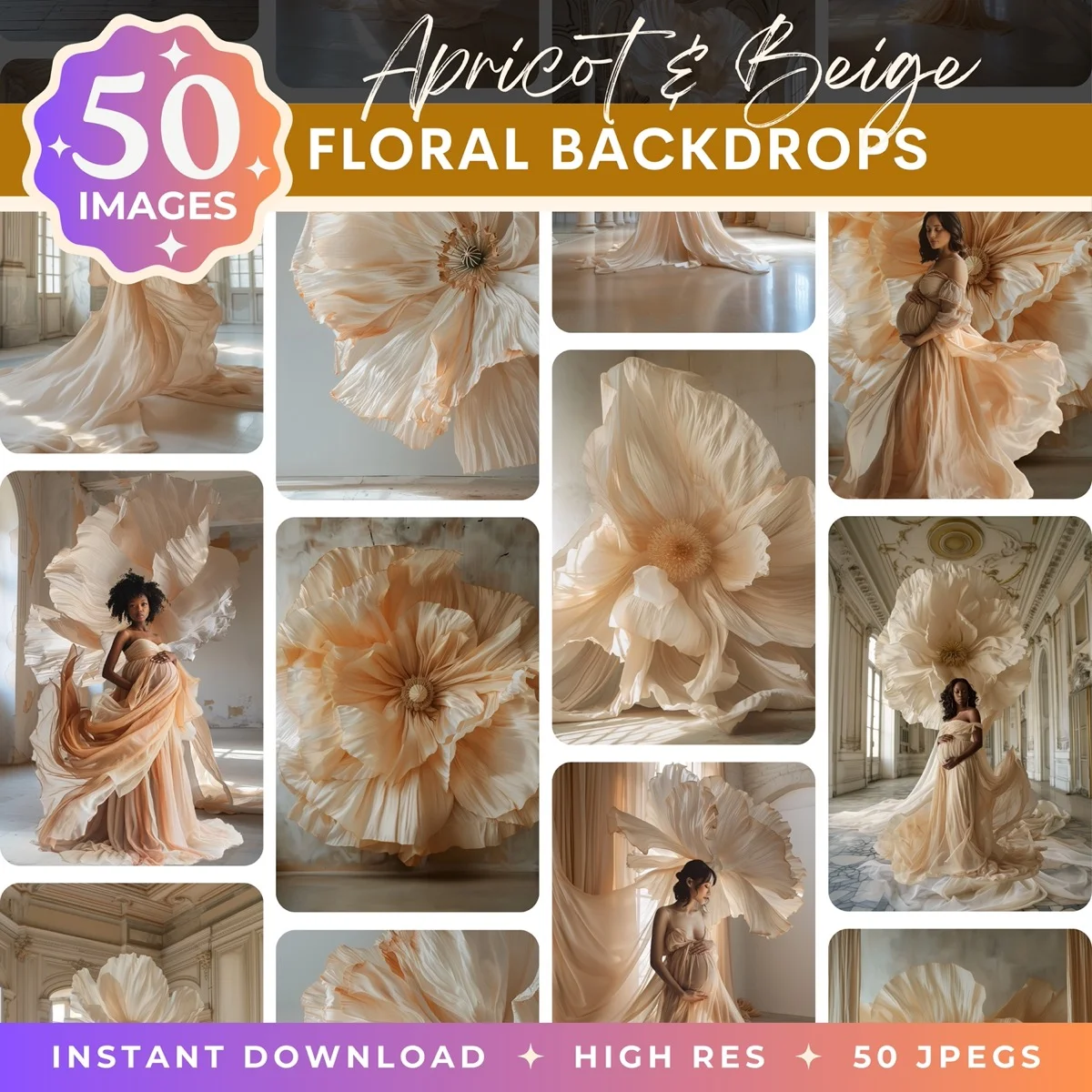
Maternity and newborn photography benefits enormously from digital backdrops because the subjects have limited mobility and comfort requirements. A pregnant woman at 38 weeks does not want to hike to a scenic overlook. A newborn cannot be safely transported to five different locations. Shooting in a controlled studio environment and compositing onto dreamy garden scenes, floral arrangements, or ethereal landscapes gives clients the beautiful imagery they want without any physical strain.
School and Event Photography
Volume school photography (picture day) is increasingly moving toward digital backdrop compositing. Photograph each student against a plain background, and offer parents a choice of 5-10 backdrop options for the final print. The school gets a modern, professional photo program, parents get choice and quality, and you process hundreds of students in a single day with minimal setup changes.
Pricing Your Services
Pricing digital backdrop photography is different from traditional portrait pricing because your per-session costs are lower but your post-production time is higher. Here is a framework.
Session fee: $100-200 for a 20-30 minute session. This covers your time, gear, and overhead. Some photographers waive the session fee and build it into the product pricing, but a session fee filters out tire-kickers and establishes that your time has value.
Digital images: $25-50 per fully edited composite image. A typical client orders 5-10 images, putting total revenue at $125-500 per session before prints. For sports and school photography, lower the per-image price ($10-15) and make it up on volume.
Packages: Bundle session + images + optional prints. A common structure: Basic ($150, session + 5 digital images), Standard ($250, session + 10 images + one 8x10 print), Premium ($400, session + all images + print credit). The premium tier should include enough value that 20-30% of clients choose it.
Price based on the final product, not your time. Clients do not care that compositing takes you 8 minutes per image. They care that the result looks like their child is standing in a professional stadium with dramatic lighting. Price for the perceived value of the output, not the hours of your input. A $50 composite image that took you 8 minutes is not overpriced. It is a professional product that required years of skill development to deliver.
Marketing Your Digital Backdrop Business

The biggest marketing challenge for digital backdrop photographers is demonstrating the quality of your work. Many potential clients assume composites look fake. Your job is to prove them wrong before they ever contact you.
Portfolio and Website
Your portfolio should lead with your best composite work, and it should not be obvious that they are composites. If a viewer cannot tell the difference between your composited images and a traditional on-location shoot, you have won. Include before-and-after comparisons on a dedicated page to show your process, but let the finished work speak first.
Include testimonials from real clients, ideally with their photos alongside their quotes. Social proof from other parents and families carries more weight than any self-promotion.
Social Media
Before-and-after transformation posts perform extremely well on Instagram and Facebook. The gray backdrop photo next to the finished composite is visually striking and immediately communicates your value proposition. These posts consistently get shared because people are fascinated by the transformation.
Post finished client work (with permission) regularly. Tag the location of your studio, use local hashtags, and engage with community groups. For sports photography specifically, tag the leagues, teams, and sports organizations in your area. One share from a local league's Facebook page can fill your booking calendar for the season.
Partnerships
Partner with local sports leagues, dance studios, schools, and daycare centers. Offer to photograph a team or class for free or at cost in exchange for being their recommended photographer. Once parents see the quality of your work on their own children, bookings follow. This is a long game strategy, but it builds a sustainable referral pipeline that paid advertising cannot replicate.
Connect with other photographers who do not offer compositing. Wedding photographers, event photographers, and photojournalists regularly get asked for portrait work they do not do. Become their referral partner for portrait and composite work, and refer your clients to them for services you do not offer. Mutual referrals cost nothing and benefit everyone.
Samples and Demos
Print sample composites and display them at your studio, at local businesses (with permission), and at community events. A framed 16x20 composite portrait sitting on an easel at a youth sports sign-up day will generate more inquiries than a month of Facebook ads. People need to see the quality in person to believe it, especially if they have only seen low-quality composites before.
Offer a free demo composite to one family per league or school. Photograph one family or one player for free, deliver a stunning composite, and let them share it. When other parents see it and ask where they got it, you have a warm lead pipeline that costs you 30 minutes of shooting and 10 minutes of editing. That is the cheapest and most effective marketing you will ever do.
Scaling the Business
Once your workflow is efficient and your client base is growing, there are several ways to scale without proportionally increasing your time.
Batch processing. Shoot multiple clients in the same session block (mini session format), then batch-process the composites. With consistent lighting and the same backdrop options, you can process 5-10 composites per hour once you are proficient. Sports teams of 15-20 players can be fully processed in an evening.
Backdrop variety as an upsell. Start with 2-3 backdrop options per niche, then expand. Clients who booked last year with three options will book again when you offer five new scenes. The backdrop cost ($25-40 per set) is negligible compared to the revenue each set generates across dozens of clients.
Outsource editing. Once your style and workflow are documented, train an editor (local or remote) to handle the compositing while you focus on shooting and client management. The compositing process is systematic enough to teach, and freeing yourself from the computer doubles your shooting capacity.
Add products. Printed composites on canvas, metal, or acrylic are high-margin products. A $15 print sold for $75-150 is standard in portrait photography. Sports composites on trading cards, posters, or magazine covers are popular add-ons that cost pennies to produce and sell for $15-30 each.
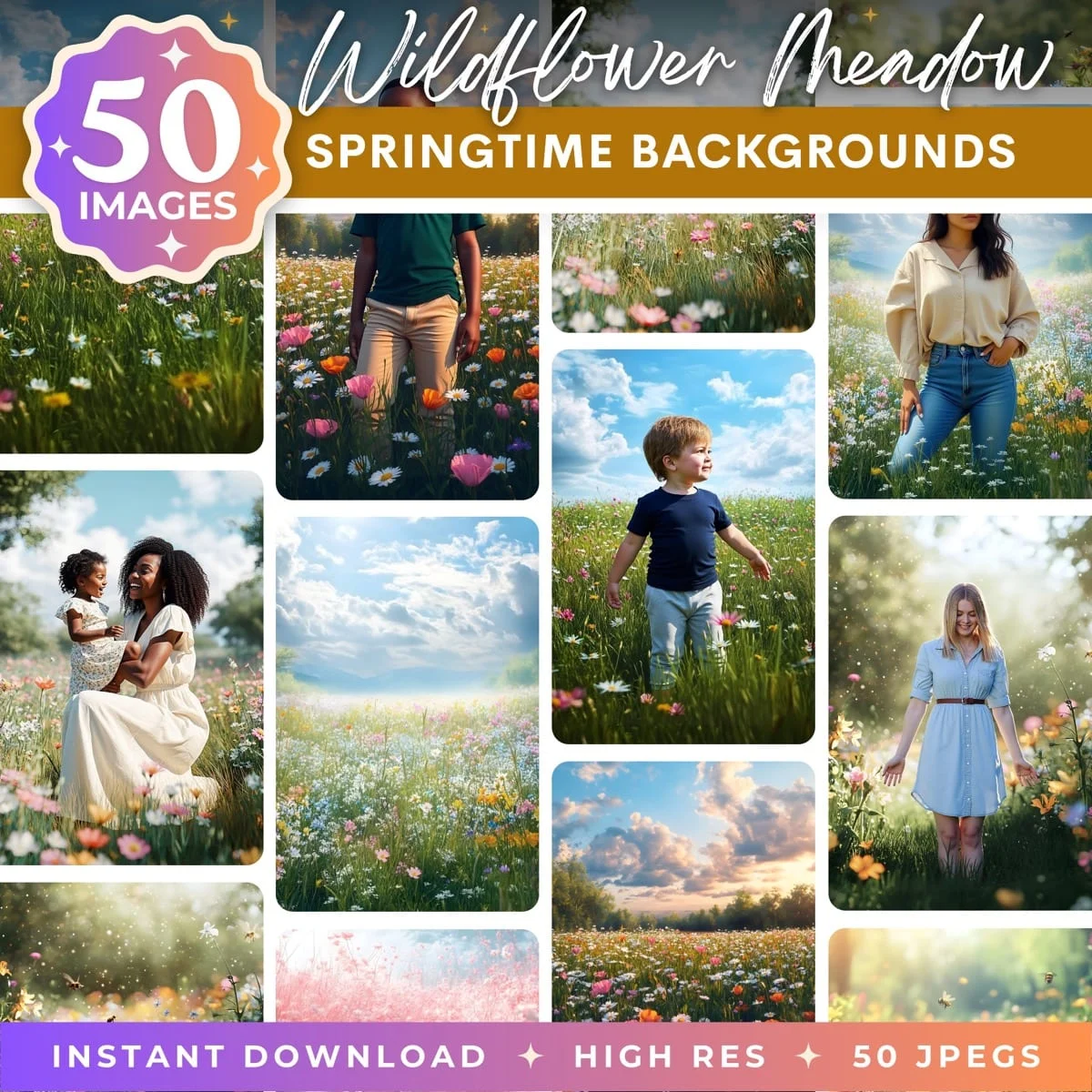
Professional backdrop collections for every photography niche


A digital backdrop photography business is one of the most accessible ways to enter professional photography. The startup costs are a fraction of a traditional studio, the creative possibilities are limitless, and the business model scales naturally as you add clients and backdrop variety. Start with one niche, master the compositing workflow, build a portfolio that proves the quality, and let the work sell itself. The families and athletes who see their portraits transformed from a gray studio shot into something cinematic will come back every season and bring their friends.
Transform Your Photos
Give Your Photos the Wow Factor
Browse our collection of premium digital photo backdrops. 50 high-resolution print-ready backgrounds in each pack. Instant download.
Browse Backdrops