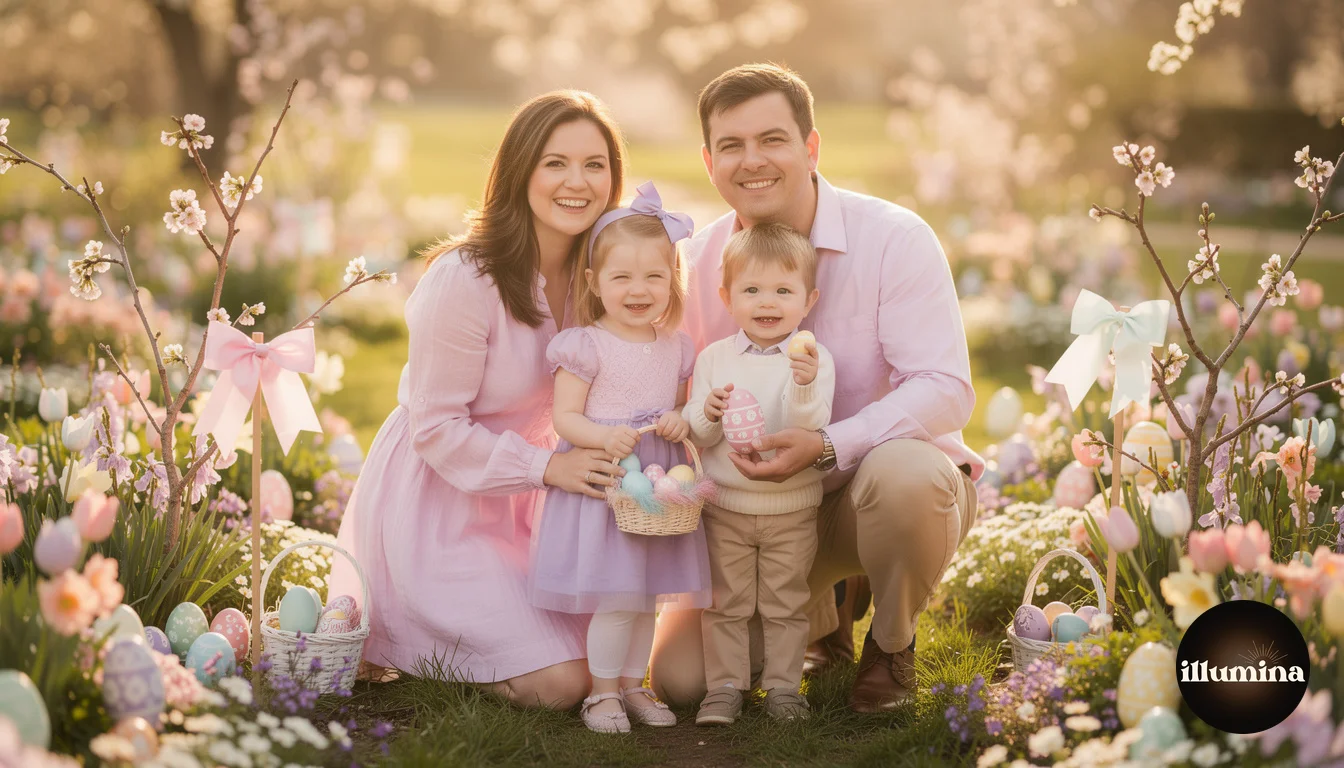

The Quick Answer
Spring mini sessions work best with a blooming location, a 20-minute time slot per family, and a simple setup that repeats without resetting between clients. Find one location with cherry blossoms, tulips, or flowering trees, set your lighting and angle once, and run families through back to back. The money is in volume: ten families at $150 each in a single afternoon is $1,500 for about four hours of shooting plus a few hours of editing.
This guide covers how to plan and price spring minis, the best locations and timing for peak bloom, setup and workflow for running multiple sessions efficiently, pose ideas that work in short time slots, and how to use digital backdrops to offer spring looks year-round regardless of what's blooming in your area.
What Makes a Mini Session Different
A mini session is a short, focused portrait session, usually 15-25 minutes, at a pre-chosen location with a fixed setup. Unlike a full session where the client picks the location, outfits, and timing, a mini session is photographer-led: you choose the spot, the time slot, and the look. Clients book a slot and show up.
The trade-off is clear. Clients get professional photos at a lower price than a full session (typically $100-200 vs $300-500+). Photographers get higher volume and less per-session overhead. You're not scouting a new location, planning a custom shoot, or spending two hours at one family's pace. You're running a production line, and that's not a criticism. It's a business model that works extremely well when executed right.
Spring minis are the most popular seasonal mini format because the blooms create a natural backdrop that sells itself. Parents don't need to be convinced that cherry blossoms look good in photos. They just need to know when and where to show up.
Planning and Pricing
When to Book
Announce spring minis 6-8 weeks before your target bloom date. In most of the US, that means announcing in late January or early February for March-April sessions. Peak bloom windows are short (one to two weeks for most flowering trees), so you need to book clients well in advance and give yourself flexibility on the exact date.
I recommend booking with a "bloom window" rather than a fixed date. Tell clients "sessions will be held during the first two weeks of April, exact dates confirmed one week before based on bloom status." This gives you the flexibility to shift if the bloom is early or late, which happens more often than you'd think.
Track local bloom dates for two or three years before planning minis around them. Note when the cherry trees peaked, how long the bloom lasted, and whether rain knocked the petals off early. This data lets you predict the window more accurately than guessing each year.
How to Price
Price based on your market, but a common structure for spring minis is: $150-200 for a 20-minute session, includes 10-15 edited digital images. Print packages and additional images available as add-ons. This is lower than your full session rate (which it should be, because the session is shorter and the setup is shared across multiple clients) but high enough that ten sessions in a day generates meaningful revenue.
Some photographers offer two tiers: a basic package (10 images, digital only) and a premium package (all images plus a print credit or a mini album). The premium upsell converts about 30-40% of clients and adds $50-100 per booking without adding significant shooting time.
How Many to Book
For a single afternoon of spring minis during golden hour (typically 4:30-7:30 PM), you can run 8-10 sessions at 20 minutes each with 5-minute buffer between each. That's about three hours of shooting. Some photographers do a morning block too (9-11 AM) for families with young kids who nap in the afternoon.
Don't overbook. If every session runs exactly 20 minutes with no delays, you'll finish on time. But kids have meltdowns, families arrive late, and the light changes faster than you expect at the end of the day. Build in a 15-minute buffer after every third session so small delays don't cascade into the rest of the schedule.
Location Scouting
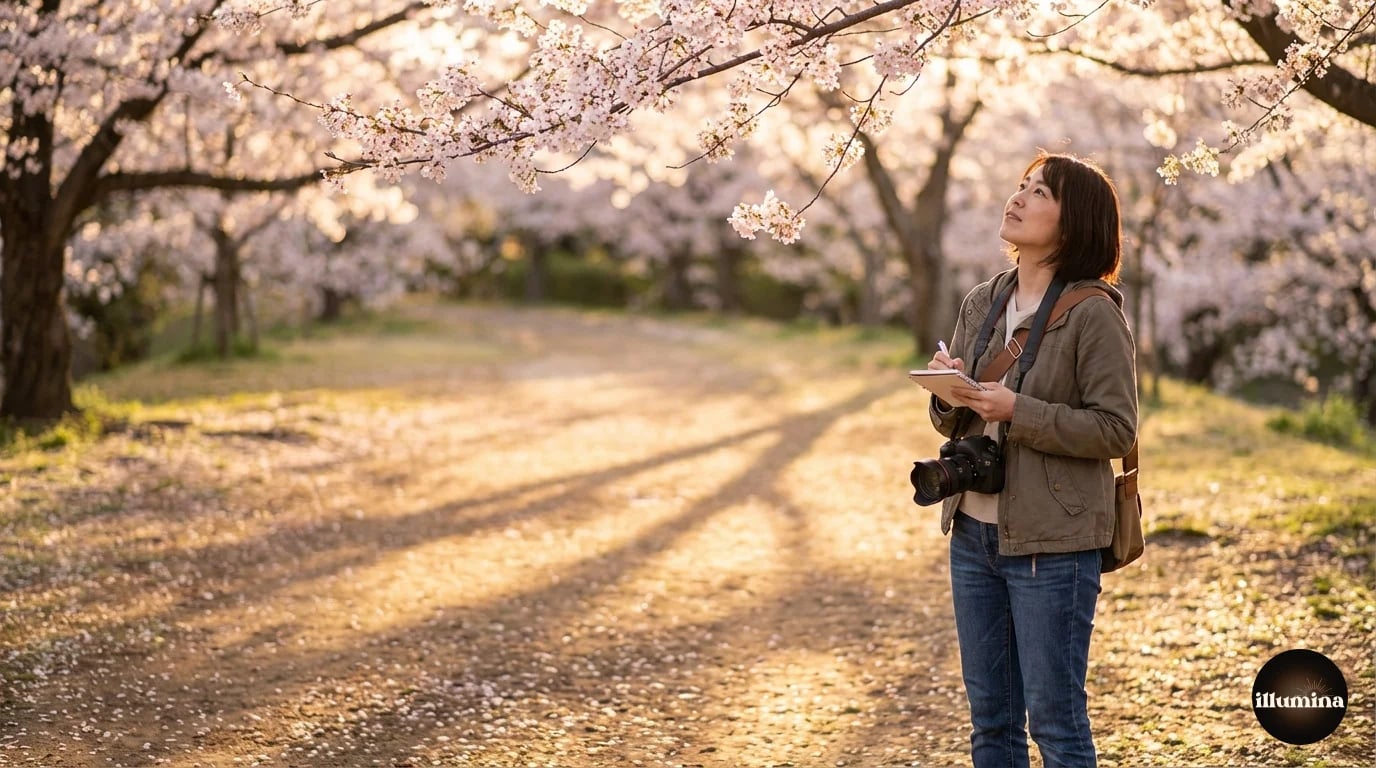
The location is your product. Clients are booking spring minis because of where you're shooting, not because of you specifically (don't take that personally, it's just how seasonal minis work). The prettier the location, the easier the sell.
Cherry Blossoms and Flowering Trees
The gold standard for spring minis. A row of cherry trees in full bloom creates a natural tunnel of pink that photographs beautifully from any angle. Look for parks, botanical gardens, university campuses, and residential streets with mature flowering trees. Get permission before you set up a commercial shoot on public or private property. Most parks require a permit for professional photography, and getting caught without one can cost you the location permanently.
Tulip Fields and Flower Gardens
If your area doesn't have cherry blossoms, tulip farms and botanical gardens offer equally stunning spring color. The rows of tulips create leading lines and the color variety (red, yellow, purple, pink) gives each family a different look depending on where you position them in the field.
Some tulip farms charge a per-photographer fee for commercial shoots. Call ahead. The fee is usually modest ($25-50) and the location is worth every penny. Don't try to sneak a professional shoot into a farm that only allows personal photography. It's not worth the risk to your reputation.
Green Parks with Good Light
Not every spring mini needs flowers. A park with mature trees, fresh green grass, and good golden hour light works well. The spring green is vibrant after winter's gray, and the soft foliage creates a natural backdrop that flatters every skin tone. The advantage of a non-bloom location is that it's available for weeks instead of days, giving you more scheduling flexibility.
Your Own Backyard or Studio
Some photographers create a spring set in their backyard or studio using faux flowering branches, potted flowers, and spring-themed props. This gives you total control over the look and zero weather dependency. The trade-off is authenticity. Real cherry blossoms in a real park have a depth and light quality that's hard to replicate with a set.
The middle ground: shoot in your studio against a plain backdrop and composite onto a spring scene using digital backdrops. The subject gets the controlled studio environment and the final image gets the blooming location. We cover this workflow in our Canva compositing guide and studio shooting guide.
Transform Your Photos
Give Your Photos the Wow Factor
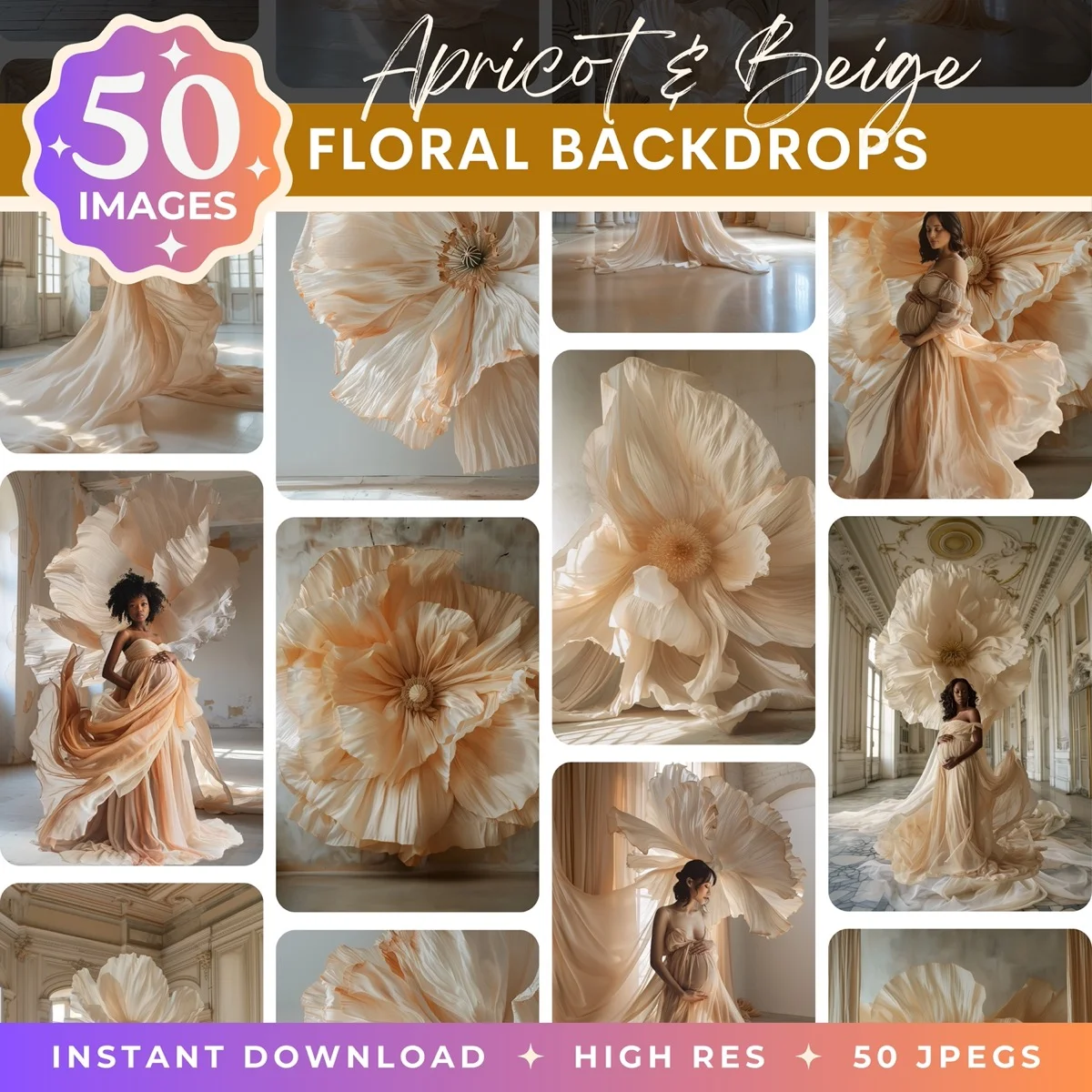
Browse our collection of premium digital photo backdrops. 50 high-resolution print-ready backgrounds in each pack. Instant download.
Browse Backdrops


The Session Workflow
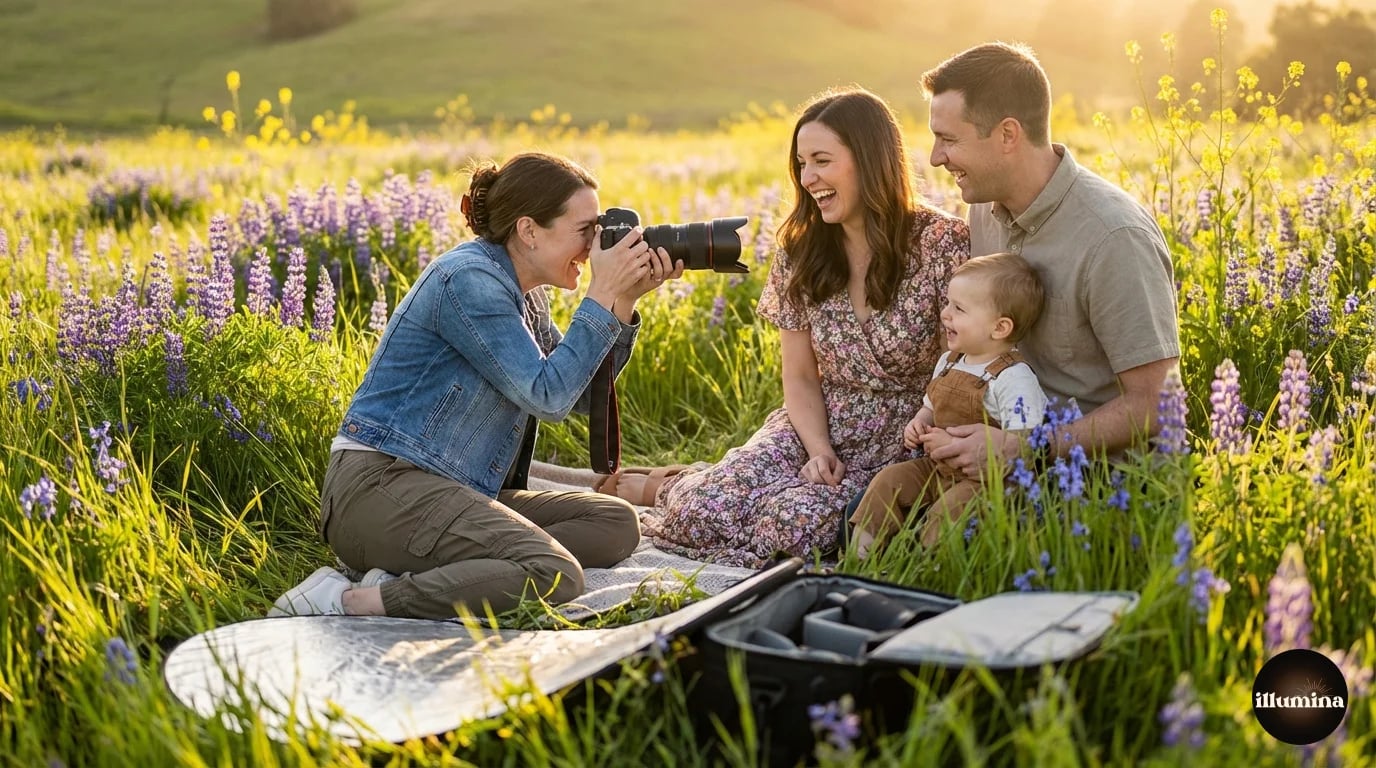
Efficiency is everything in minis. You have 20 minutes per family and no time for experimentation. Plan your shot list in advance and execute it the same way for each family.
A 20-Minute Shot List
Minutes 1-3: Family arrives, quick outfit check, walk to the spot. While walking, chat with the kids so they get comfortable with you before the camera comes up.
Minutes 3-8: Full family group shot. Get the must-have first. Everyone looking at camera, then everyone looking at each other. Two compositions: wide with environment, tight with faces.
Minutes 8-13: Couple/parents alone (if they want it), then individual kids. For couples, foreheads together works fast. For kids, let them pick flowers, run, twirl. Candid energy, burst mode.
Minutes 13-18: Candid family interaction. Walking together, kids on shoulders, family sitting on a blanket. Direct them into the setup and then stop directing. Let them interact while you shoot.
Minutes 18-20: One last look at the group shot to make sure you got it, then wrap. Thank them, tell them when to expect delivery, and greet the next family.
Get the group shot in the first five minutes. Kids fall apart toward the end. If you save the must-have family photo for last, you're gambling that a tired three-year-old will cooperate at minute 18. They won't.
Between Sessions
Don't move your setup between families. Same spot, same angle, same settings. The consistency is the point. Each family gets the same beautiful location and light. What changes is the people, the outfits, and the interactions. If the light shifts significantly (which it will as sunset approaches), adjust your exposure but keep the composition the same.
Have water, snacks, and a few small toys (bubbles, a pinwheel) ready for the next family's kids. A two-year-old who's been waiting in the car for twenty minutes arrives hungry and impatient. A goldfish cracker and some bubbles buy you three extra minutes of cooperation.
Pose Ideas for Short Sessions
Every pose needs to work in under a minute. No elaborate setups, no complex positioning. Here are the reliable ones.
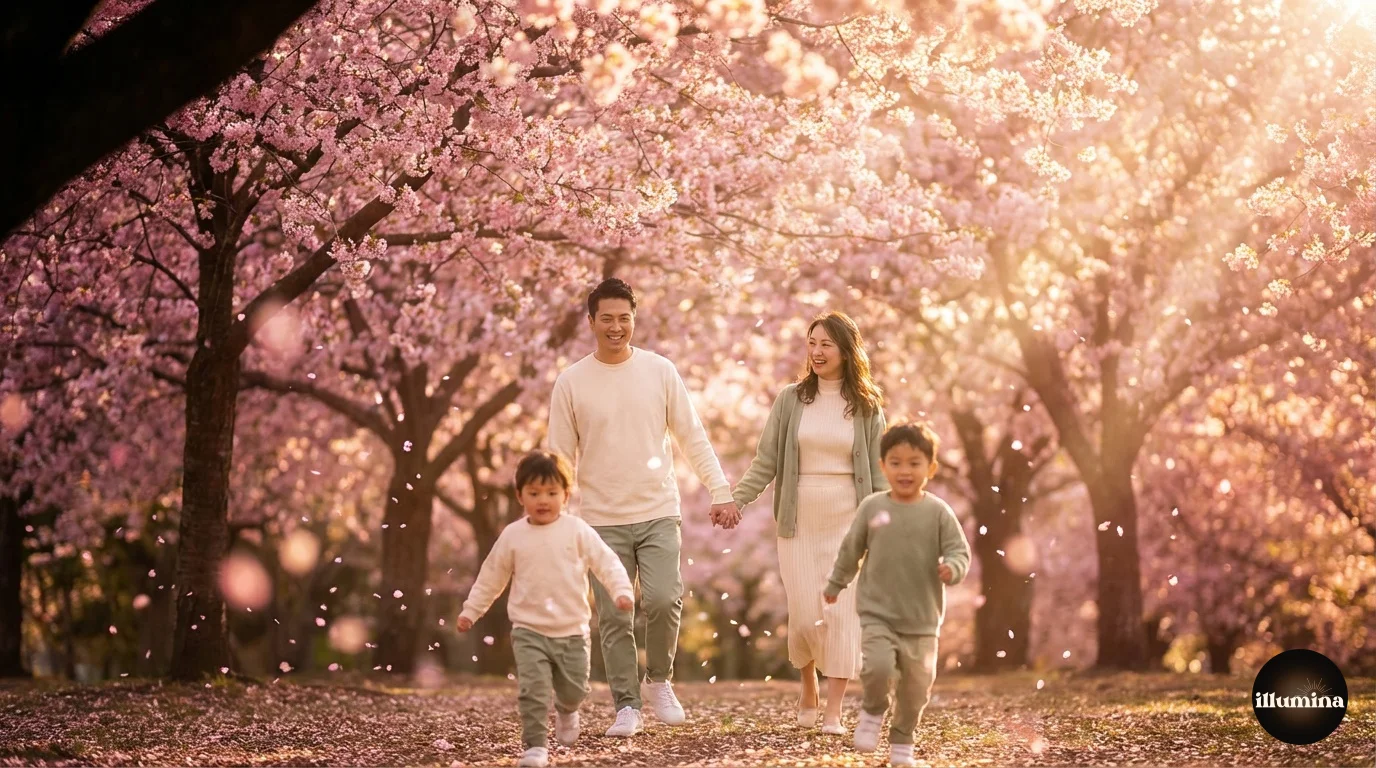
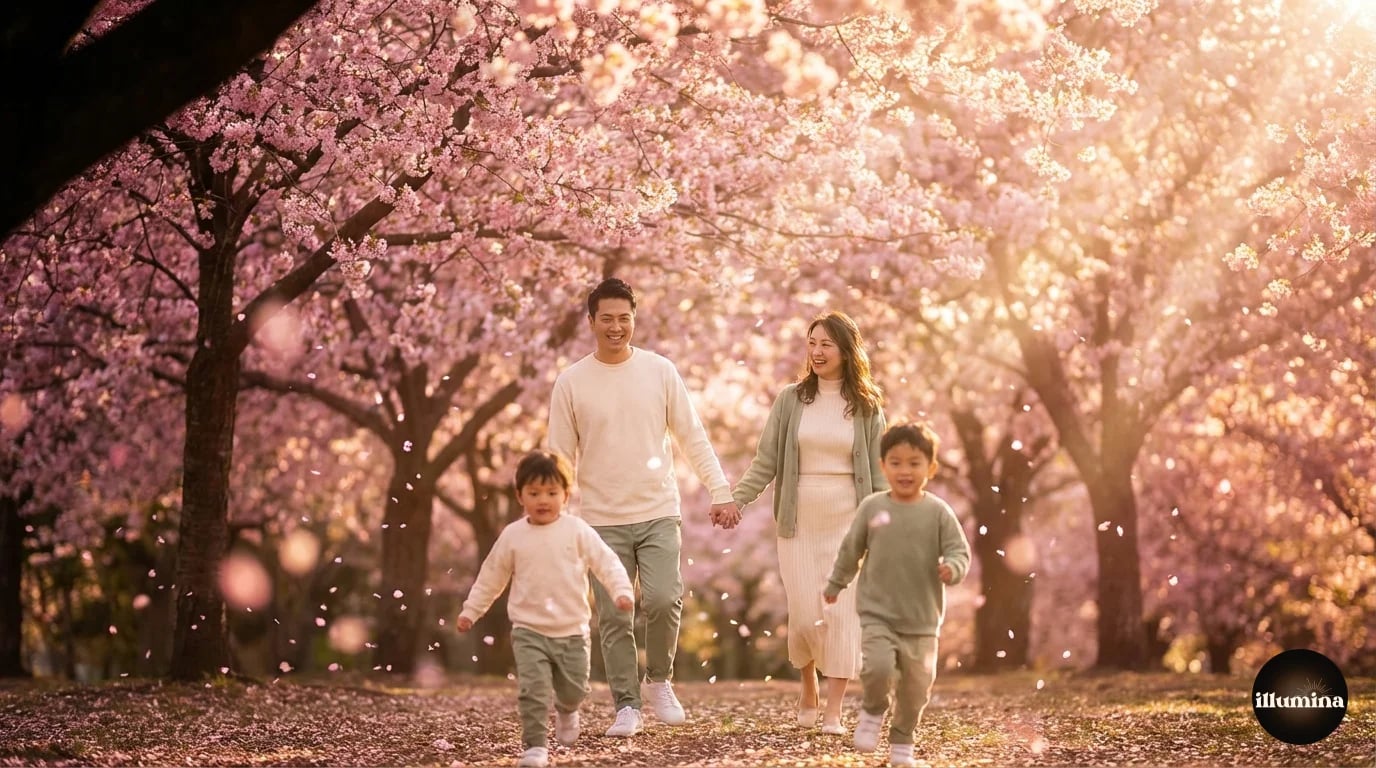
Family walking toward the camera, holding hands, looking at each other. Takes five seconds to set up. Produces warm, natural frames every time. Works for any family size.
Parents lifting the youngest child between them. The kid goes airborne, everyone laughs. Burst mode captures genuine joy. This is the shot that sells the session because parents see it and immediately imagine it framed on their wall.
Kids running ahead of the parents on a path. Parents walk slowly, kids sprint, you shoot from the front. The energy contrast between relaxed adults and sprinting children creates a dynamic image with real personality.
Everyone sitting on a blanket in a loose group. No rigid posing. Just proximity and interaction. Mom adjusting a kid's collar, dad tickling someone, the baby grabbing a flower. You're documenting a moment, not constructing one.
Individual kid portraits: have them smell a flower, pick up a petal, look through the branches. The interaction with the spring environment gives them something to do besides staring at a stranger with a camera.
For couples without kids, lean into the romance of the setting. Walking under the blossoms holding hands, forehead to forehead with petals falling behind them, sitting on a bench with the tree canopy overhead. Spring is inherently romantic, and the backdrop does most of the emotional work. Two or three couple-only frames in the final gallery give parents a photo of themselves that isn't about the kids, which is rarer and more valued than they'd expect.
For extended families or groups of three generations, the wide environmental shot works best. Everyone walking together down a blossom-lined path, grandparents in the middle, generations fanning out on either side. The scale of the trees and the width of the group create a sense of occasion that a tight crop can't match.
Using Digital Backdrops for Year-Round Spring Minis

The biggest limitation of spring minis is the bloom window. You get one to two weeks of peak blossoms, and if it rains or the bloom is late, your entire schedule is at risk. Digital backdrops remove that dependency.
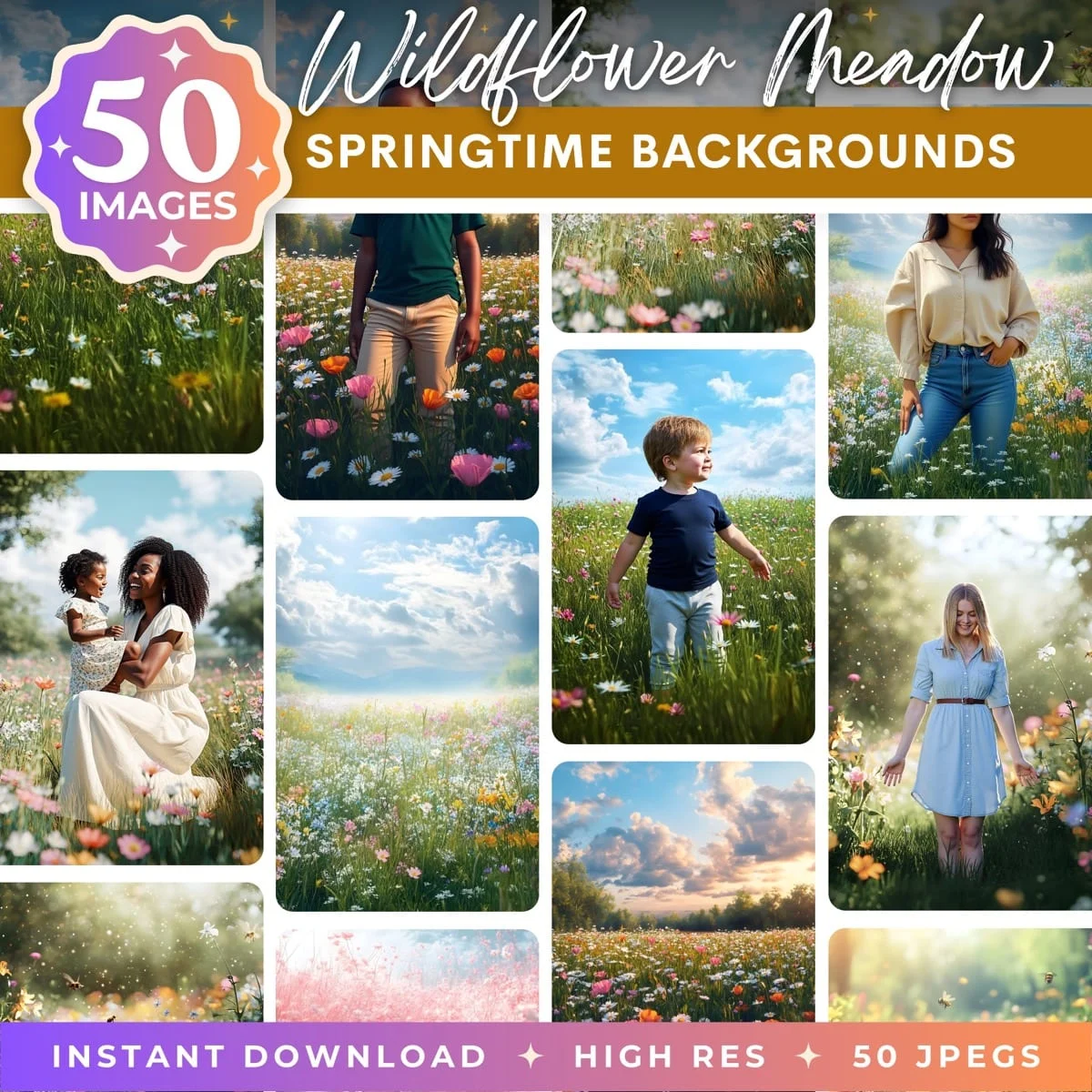
Shoot families in your studio against a gray or white backdrop any time of year. Remove the background. Drop them onto a gorgeous spring scene: cherry blossoms, wildflower meadows, tulip gardens, sunlit orchards. The composite looks like it was shot on location, but you controlled the environment, the schedule, and the weather.
This approach also lets you offer "spring minis" in January or February for families who want spring cards or announcements before the actual bloom season. Valentine's Day and Easter timing both benefit from having spring backdrops available before spring arrives.
For spring backdrops designed for portrait compositing, browse Illumina Backdrops. The scenes are built with the lighting and perspective that match studio-lit portraits.
Offer digital spring minis during winter as a pre-season product. Families who want spring cards for Easter or Mother's Day will book in February if the option exists. You fill a quiet month on your calendar and they get the look they want weeks before anything blooms.
Editing and Delivery
Batch edit. The whole point of shooting at the same location with the same settings is that your editing preset applies to every image with minimal adjustment. Create a base edit (exposure, white balance, tone curve) on the first image of the day, sync it across all frames, then do individual touch-ups as needed. A full spring mini day of 80-100 selected images should take 2-3 hours to edit, not 2-3 days.
Deliver within one week. Clients are excited, the bloom is still in the cultural moment, and a fast turnaround generates social shares while the season is relevant. A two-week delivery means they're posting cherry blossom photos when everyone else has moved on to summer. Speed matters for seasonal content.
Include a social-sharing image in the delivery. One horizontal image optimized for Facebook covers and one square or 4:5 vertical for Instagram. Watermark it lightly with your logo. When the client posts it (and they will, immediately), your branding goes in front of their entire network. That organic exposure is worth more than any paid ad for booking next year's sessions.
Send a follow-up email two weeks after delivery asking for a Google review. Spring mini clients who loved their photos are the most likely to leave five-star reviews because the experience is fresh and the results exceeded their expectations. A direct link to your Google Business review page in the email makes it frictionless.
Marketing Your Spring Minis
Start posting teasers 8 weeks before the sessions. Behind-the-scenes of you scouting the location, a photo of last year's bloom from the same spot, a countdown to booking day. Build anticipation so that when you open bookings, your existing audience is ready to grab slots.
Use last year's spring session photos in your marketing (with client permission). Nothing sells a spring mini better than seeing what a previous family got from one. If you're running spring minis for the first time, offer two or three free sessions to families in exchange for using the images in marketing. The cost of a few free sessions is far less than trying to sell a product nobody has seen.
Instagram and Facebook are the primary channels. Pin a booking post, add a link-in-bio to your booking page, and post consistently during the 6-week lead-up. One post per week is enough. Don't spam. Let the images do the work.
Word of mouth is your most powerful channel for minis. After your first year, returning clients and their referrals should fill 50-70% of your spring slots. Make it easy for them: send a "spring minis are back" email to last year's clients two weeks before you announce publicly. Give them first access to booking. They feel valued, you fill slots early, and the public announcement launches with "limited availability" which creates urgency.
For client communication, an automated email sequence after booking works well: a what-to-wear guide, a what-to-expect timeline, a "one week out" bloom status update, and a day-of reminder with the exact location pin. This reduces no-shows and last-minute questions that eat into your shooting time.
Blooming scenes for spring portrait compositing

Spring minis are the most profitable seasonal offering for portrait photographers. The blooms create demand you don't have to manufacture, the short format lets you serve more clients in less time, and the per-afternoon revenue can match or exceed what a single full session brings in. Find the trees, plan the workflow, and let spring do the selling for you.
Transform Your Photos
Give Your Photos the Wow Factor
Browse our collection of premium digital photo backdrops. 50 high-resolution print-ready backgrounds in each pack. Instant download.
Browse Backdrops